

Hazardous waste consulting helps businesses identify, manage, and dispose of dangerous materials in full compliance with federal and state regulations – without the risk of costly violations or environmental harm.
Here’s what a hazardous waste consultant typically does for you:
- Classifies your waste under EPA and RCRA regulations (listed, characteristic, or acutely hazardous)
- Manages permits and reporting, including RCRA Part B applications and biennial reports
- Conducts site assessments and audits to find compliance gaps before regulators do
- Creates written safety plans and emergency response procedures
- Trains your staff on RCRA, DOT hazmat, and OSHA requirements
- Handles disposal logistics from waste profiling through final disposal (cradle-to-grave)
- Responds to spills and emergencies with 24/7 support
- Minimizes waste generation to cut costs and reduce regulatory burden
Managing hazardous waste is one of the most regulated – and most misunderstood – responsibilities a business can face.
The rules are layered. Federal EPA standards set the baseline. But states can go further, adding stricter definitions, shorter reporting windows, and tighter handling requirements. Miss a deadline or mislabel a drum, and you’re looking at serious fines. For a high-level overview of federal hazardous waste rules, businesses often start with the EPA hazardous waste program.
Most businesses don’t have in-house experts who live and breathe RCRA regulations. That’s exactly where hazardous waste consulting comes in.
A good consultant doesn’t just tell you what the rules are. They act as an extension of your team – handling the paperwork, the inspections, the training, and the disposal logistics so you can focus on running your business.
This guide covers everything you need to know: from waste classification and profiling to minimization strategies, audit prep, and how to choose the right consulting partner.
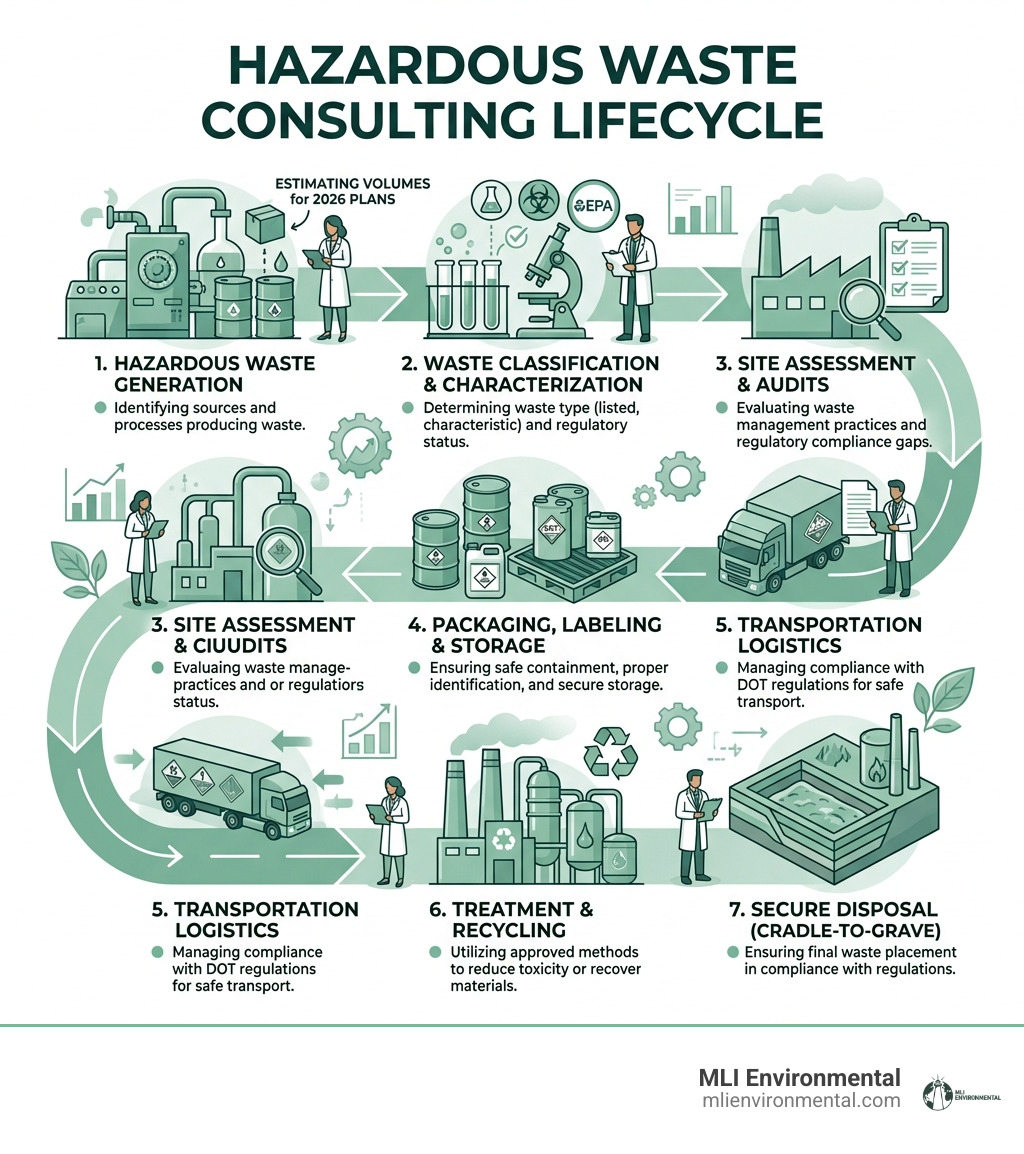
Core Services in Hazardous Waste Consulting
When you engage with hazardous waste consulting, you aren’t just hiring a “waste hauler.” You are partnering with technical experts who understand the lifecycle of every chemical on your property. In April 2026, the complexity of these materials has only increased, making professional EHS Consulting more critical than ever.
Typical services begin with comprehensive site assessments. A consultant walks through your facility to identify every waste stream, from the obvious (used solvents) to the obscure (expired lab chemicals or contaminated rags). Once identified, they assist with hazardous waste management consulting & minimization services to ensure you aren’t generating more waste than necessary.
Other core services include:
- Environmental Remediation: Handling the cleanup of contaminated soil or groundwater.
- Permitting: Navigating the complex world of RCRA Part B permits and local air or water discharge licenses.
- Decommissioning Projects: Managing the total cleanup and closure of industrial sites, which can involve massive quantities of PCBs, lead, and chlorinated solvents.
- Emergency Spill Response: Providing a 24/7 lifeline when things go wrong, ensuring that spills are contained and reported to the proper authorities immediately.
Specialized Expertise in Hazardous Waste Consulting
Modern waste streams require specialized knowledge. For example, the rise of lithium batteries and e-cigarette waste has introduced new fire and toxicity risks that traditional waste programs aren’t always equipped to handle. Consultants provide Onsite Hazardous Waste Services specifically tailored to these high-risk items.
Another area of growing concern is PFAS (per- and polyfluoroalkyl substances). As regulations tighten around these “forever chemicals,” businesses need experts to help with sampling, cleanup, and disposal. Furthermore, pharmaceutical waste management has become highly technical; some consultants utilize proprietary databases of over 450,000 National Drug Codes to ensure every medication is classified correctly before it leaves the facility.
Regulatory Reporting and Permitting Support
Paperwork is the bane of most facility managers. Hazardous waste consulting firms take this burden off your plate by managing EPA identification applications and hazardous waste disposal & hazardous materials management documentation.
For Large Quantity Generators (LQGs), biennial reporting is a major milestone that requires tracking every ounce of waste generated over a two-year period. Consultants ensure these reports are accurate to avoid the red flags that trigger audits. They also provide CERS (California Environmental Reporting System) assistance for those with regional requirements and manage the constant cycle of permit renewals to keep your facility operational.
Navigating RCRA Compliance and Waste Classification
The Resource Conservation and Recovery Act (RCRA) is the backbone of waste law. Under RCRA, the “generator” is responsible for determining if a waste is hazardous. This is done through waste characterization and profiling.
Consultants conduct Hazmat Safety Compliance Audits to look at your Safety Data Sheets (SDS) and physical waste samples. They determine if a waste is:
- Listed Waste: Specifically named on one of four EPA lists (F, K, P, or U lists).
- Characteristic Waste: Exhibits ignitability, corrosivity, reactivity, or toxicity.
One of the most important concepts to understand is cradle-to-grave responsibility. This means your business is legally responsible for its waste from the moment it is created until it is destroyed or safely interred. Even if a third-party transporter spills your waste on the highway, you are still liable. This is why Unbiased and Confidential Hazmat Audits for You are so valuable—they protect your liability by ensuring every step of the process is handled correctly.
Federal vs. State-Specific Regulations
While the EPA sets the federal floor, states often set the ceiling. In New England states like Maine, New Hampshire, and Massachusetts, state-specific requirements can be much more stringent than federal rules. A waste might be considered “non-hazardous” by the EPA but “state-regulated” in Maine, requiring specific manifests and disposal at licensed facilities.
Your consultant will help you determine your generator status, which dictates how much waste you can store and for how long:
- LQG (Large Quantity Generator): Generates 1,000 kg or more of hazardous waste per month.
- SQG (Small Quantity Generator): Generates between 100 kg and 1,000 kg per month.
- VSQG (Very Small Quantity Generator): Generates less than 100 kg per month.
The Importance of Accurate Waste Profiling
A waste profile is a document that describes the chemical properties and underlying hazardous constituents (UHCs) of a waste stream. It is the “passport” for your waste. Without an accurate profile, disposal facilities will not accept the material.
Consultants offer Chemical Audits Consultation to build these profiles using Waste Analysis Plans. This ensures that the manifest system—the tracking document that follows the waste from your site to the disposal facility—is perfectly aligned with the actual contents of the drums. This level of detail is the ultimate liability protection for your business.
Strategic Waste Minimization and Safety Planning
Why pay to dispose of waste when you can stop making it in the first place? Hazardous waste consulting emphasizes “source reduction.” By mapping your waste streams, consultants can often find ways to substitute less toxic chemicals or implement on-site recycling.
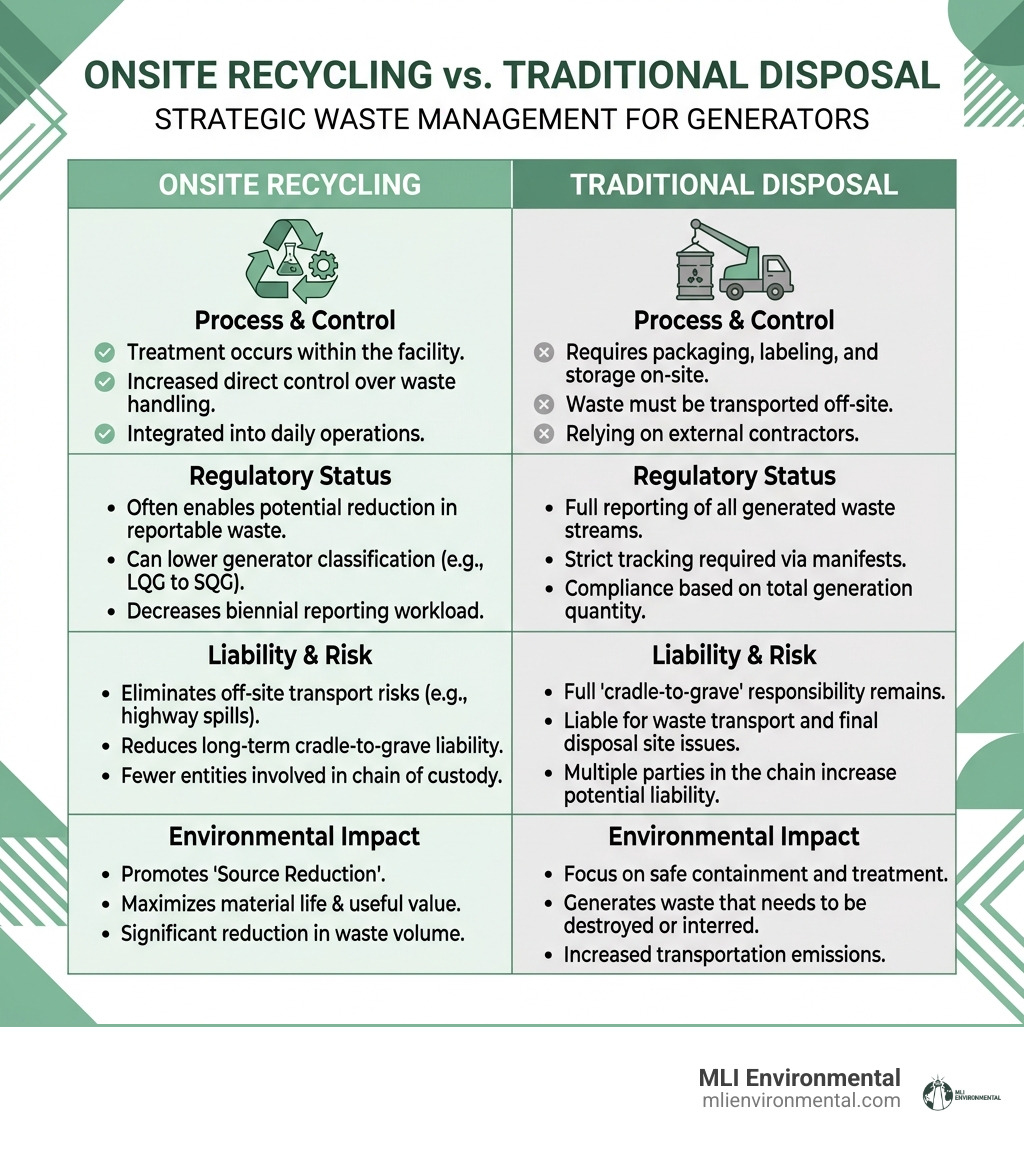
In some cases, on-site recycling solutions for chemicals and solvents can reduce your reportable hazardous waste by as much as 80%. This doesn’t just save money on disposal fees; it can also drop your generator status from an LQG to an SQG, drastically reducing your regulatory paperwork. This is a primary reason Why Your Business Needs On-Site EHS Consultation Services. Proper planning, such as developing Chemical Hygiene Plans, keeps your workplace safe and saves significant capital over time.
Developing Comprehensive Written Safety Plans
If an inspector walks into your facility, the first thing they will ask for is your paperwork. You are required to have Written Safety Plans that detail how you handle hazardous materials and what you do in an emergency.
A consultant helps you Understand Key Components of Written Safety Plans, including:
- Contingency Plans: What to do during a fire, explosion, or spill.
- Emergency Response: Identifying your emergency coordinators and evacuation routes.
- Facility Chemical Hygiene Plans: Specific protocols for laboratory environments to ensure Facility Chemical Hygiene Plan compliance.
Training and Workforce Safety
Regulations require that any employee involved in hazardous waste management receive regular training. This isn’t a one-and-done deal; RCRA and DOT hazmat training require initial sessions and periodic refreshers.
Expert consultants bring years of combined experience to these sessions, making “dry” regulatory topics engaging. Whether it’s OSHA Hazcom or Effective Chemical Hygiene Plans for Laboratory Safety, the goal is to ensure your workforce knows how to protect themselves and the environment. This is especially vital in educational settings, where School Health Safety Audits help protect students and staff alike.
Overcoming Common Compliance Challenges
Compliance is hard. Between staff turnover and changing regulations, it’s easy for things to slip through the cracks. Some of the Top 10 Most Common Hazardous Waste Violations include open containers, missing labels, and failure to conduct weekly inspections.
Consultants help you Prepare for EPA Inspections by identifying these issues during mock audits. They provide a Hazardous Waste Inspection Checklist for EPA Visits to help your team maintain daily compliance. Common “fail” points, such as recordkeeping errors or improper waste dating, often rank among the Top 7 Reasons Hazardous Waste Management is Out of Compliance.
Preparing for Audits and Inspections
The best way to survive an audit is to act as if one is happening every day. Third Party Audits & Inspections provide a fresh set of eyes on your facility. A consultant will help you get Ready for an EPA Audit by reviewing your manifests, training records, and storage areas.
Using a Complete End-of-Year Hazardous Waste Inspection To-Do List ensures you don’t head into the new year with unresolved compliance gaps. When you are Ready for an EPA Inspection, the process becomes a routine verification rather than a stressful event.
Frequently Asked Questions about Hazardous Waste Consulting
What should I look for when selecting a hazardous waste consulting firm?
Look for a firm with deep regulatory experience and a presence in your specific region. For example, if you are in Bangor or Lewiston, Maine, you need a consultant who understands Maine’s Department of Environmental Protection (DEP) rules, which differ from federal standards. Ensure they offer turnkey services—meaning they can handle everything from the initial audit to the final disposal.
How do consultants help reduce cradle-to-grave liability?
They do this by vetting every vendor in the chain. A consultant ensures that the transporter is licensed and the disposal facility (TSDF) is in good standing with the EPA. By maintaining perfect documentation and accurate waste profiles, they ensure that if a legal issue arises, you have the evidence to prove you followed every regulation to the letter.
Can a consultant help my business change its generator status?
Yes. Through waste minimization, chemical substitution, and on-site recycling, many businesses can reduce their monthly waste generation. If you drop below the 1,000 kg/month threshold for an LQG, your consultant can help you re-notify the EPA to change your status to an SQG, saving you time and money on reporting.
Ready to Simplify Hazardous Waste Compliance?
Hazardous waste management should not slow down your operation or keep you guessing about compliance. With MLI Environmental, you get practical guidance from experienced professionals focused on safer facilities, stronger documentation, and fewer regulatory surprises. Whether you need support for a one-time project or ongoing Onsite Hazardous Waste Services, our team can help you move forward with confidence.
Ready to take the guesswork out of your environmental program? Learn How to Get Compliant and see the difference that professional consulting can make.
Contact our experts for comprehensive hazardous waste management today to protect your business, your employees, and the environment.