

The hazardous materials table is a federally regulated reference in 49 CFR § 172.101 that specifies how to classify, label, package, and transport dangerous goods legally and safely.
Quick answer — what does the hazardous materials table tell you?
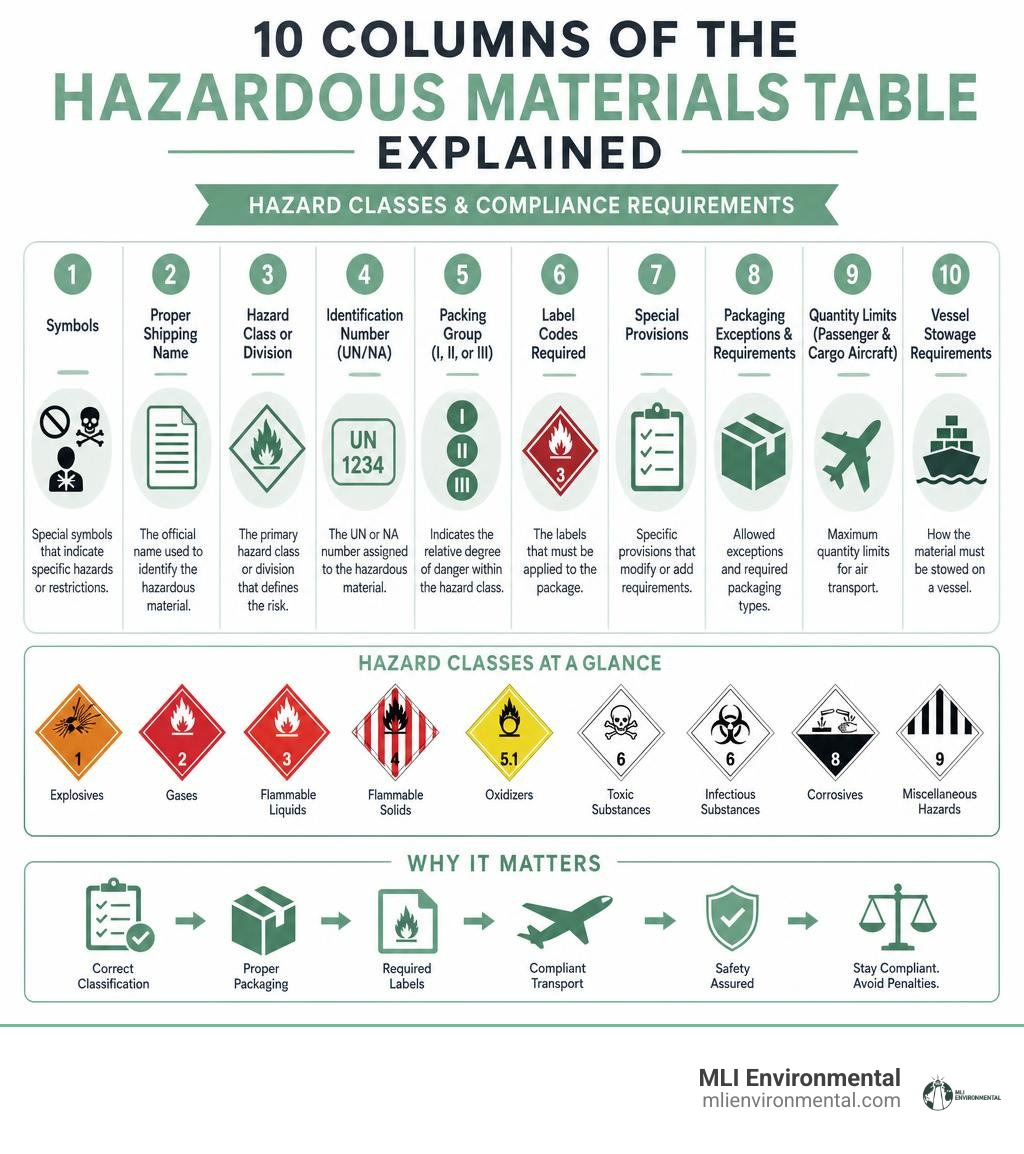
| Column | What It Covers |
|---|---|
| 1 | Symbols (forbidden, poison inhalation hazard, etc.) |
| 2 | Proper shipping name |
| 3 | Hazard class or division |
| 4 | Identification number (UN/NA) |
| 5 | Packing group (I, II, or III) |
| 6 | Label codes required |
| 7 | Special provisions that modify standard rules |
| 8 | Packaging exceptions and requirements |
| 9 | Quantity limits for passenger and cargo aircraft |
| 10 | Vessel stowage requirements |
If you ship, store, or dispose of dangerous goods, this table is not optional reading — it’s the law.
Over 4,000 hazardous materials are listed in the table, covering everything from explosives and flammable liquids to toxic substances and lithium batteries. Each entry tells you precisely what you can ship, how to package it, and what happens if you get it wrong.
For many businesses, that’s where the problem starts. The table is dense, technical, and easy to misread. A single mistake — wrong packing group, missing label, incorrect quantity — can mean fines, delays, or serious safety incidents.
This guide breaks the table down into plain language so you can understand what each column means, how classifications work, and how to stay compliant under current June 2026 regulations.
Understanding the Structure of the Hazardous Materials Table
To the untrained eye, looking at the hazardous materials table in 49 CFR § 172.101 is a bit like reading ancient hieroglyphics. It is a massive, multi-columned spreadsheet listing thousands of chemicals, compounds, and mixtures. However, once you understand its basic architecture, it becomes an incredibly logical and practical tool.
The primary purpose of the table is to provide a standardized, universal system for identifying and preparing dangerous goods for transportation. Whether you are shipping a small container of lab chemicals out of Boston, Massachusetts, or coordinating a large-scale industrial waste pickup in Portland, Maine, the table ensures that everyone—from the shipper to the truck driver to emergency first responders—knows exactly what is in the cargo.
To help shippers navigate this massive registry, resources like the [PDF] 1.0 – HAZARDOUS MATERIALS TABLE workbook offer guided exercises. But before diving into the workbook, you must understand the core definitions. According to the Department of Transportation (DOT), the process always starts with correctly defining hazardous materials. If a material meets the federal criteria for being hazardous, it must be located in this table to determine its shipping requirements.
Decoding Columns 1 through 5 of the Hazardous Materials Table
The first five columns of the table establish the material’s identity and primary hazards. This is where you lay the groundwork for your entire shipment.
- Column 1: Symbols: This column contains letters that act as “modifiers” for how the entry is treated. For example:
- G: Identifies generic or “not otherwise specified” (n.o.s.) entries, which require a technical name in parentheses on the shipping papers.
- A: Indicates the material is regulated only when transported by aircraft (unless it is a hazardous substance or waste).
- W: Means the material is regulated only when transported by vessel.
- D: Identifies proper shipping names appropriate for domestic transportation but which may not be recognized internationally.
- I: Identifies proper shipping names preferred for international transportation.
- +: Fixes the proper shipping name, hazard class, and packing group, even if the material does not strictly meet the hazard class definition.
- Column 2: Proper Shipping Name (PSN): This is the official name you must use on shipping papers and package markings. It is written in Roman (non-italic) type. Italicized words are descriptive but are not part of the official shipping name.
- Column 3: Hazard Class or Division: This column identifies the primary danger of the material. It points directly to one of the nine DOT hazard classes. To understand how these classes are organized, you can read about the various Classes of Hazardous Materials and how they dictate transport rules.
- Column 4: Identification Number: This is the four-digit UN (United Nations) or NA (North American) number. UN numbers are recognized globally, while NA numbers are typically used for domestic shipping within the United States and Canada.
- Column 5: Packing Group: Designated by Roman numerals I, II, or III, this column indicates the degree of danger presented by the material:
- Packing Group I: Great danger (requires the most robust packaging).
- Packing Group II: Medium danger.
- Packing Group III: Minor danger.
For a deeper dive into these initial parameters, you can review The Hazmat Table Unpacked: What Each Column Means to master the foundational steps of compliance.
Navigating Columns 6 through 10 of the Hazardous Materials Table
Once you have identified the material, the remaining five columns explain how to package, label, and route your shipment.
- Column 6: Label Codes: This column tells you which hazard labels must be affixed to the outside of the package. The codes correspond directly to the hazard classes listed in Column 3. If multiple codes are listed, the first represents the primary hazard, and subsequent codes represent subsidiary hazards.
- Column 7: Special Provisions: This column contains alphanumeric codes that apply unique restrictions or allowances to the material. These codes can completely change your packaging, testing, or transport requirements. To decode these complex markers, check out What’s the Deal with Column 7? Decoding Hazmat Special Provisions.
- Column 8: Packaging Authorizations: This column is split into three sub-columns that refer you to specific sections of 49 CFR Part 173:
- 8A (Exceptions): Lists sections that may excuse you from certain packaging requirements (e.g., limited quantities).
- 8B (Non-bulk): Specifies the packaging requirements for standard containers (such as boxes, drums, or jerricans).
- 8C (Bulk): Specifies the packaging requirements for large-scale shipments (such as cargo tanks or portable tanks).
- Column 9: Quantity Limitations: This column is split into two parts, dictating the maximum net quantity of hazardous material allowed per package when traveling by Passenger Aircraft/Rail or Cargo Aircraft Only. If an entry says “Forbidden,” you cannot ship that material via that mode of transport under standard regulations.
- Column 10: Vessel Stowage Requirements: For shipments moving by water, this column specifies where the cargo must be loaded on the ship (e.g., “Category A” means on deck or under deck, while other categories are highly restrictive). It also lists specific numeric codes for handling requirements, such as keeping the material away from heat sources.
To see how these columns interact in real-world scenarios, you can read The Hazmat Table Unpacked: What Each Column Means for You.
Classification and Hazard Classes in Hazmat Shipping
Before you can safely ship any chemical or commercial product, you must determine its hazard class. The DOT divides dangerous goods into nine distinct hazard classes, some of which are further divided into divisions to pinpoint risk.
Let’s look at a quick comparison of how common hazard classes and packing groups align in the hazardous materials table:
| Hazard Class | Common Name | Typical Packing Groups | Example Material |
|---|---|---|---|
| Class 2.1 | Flammable Gas | None (not assigned) | Propane |
| Class 3 | Flammable Liquid | I, II, III | Gasoline, Ethanol |
| Class 4.1 | Flammable Solid | II, III | Sulfur |
| Class 5.1 | Oxidizer | I, II, III | Hydrogen Peroxide |
| Class 6.1 | Toxic Substance | I, II, III | Chloroform |
| Class 8 | Corrosive | I, II, III | Sulfuric Acid |
| Class 9 | Miscellaneous | III | Lithium-ion Batteries |
Packaging, Quantity Limits, and Vessel Stowage Requirements
Once you have identified the proper hazard class and packing group, the hazardous materials table directs you to the specific packaging standards required for transport.
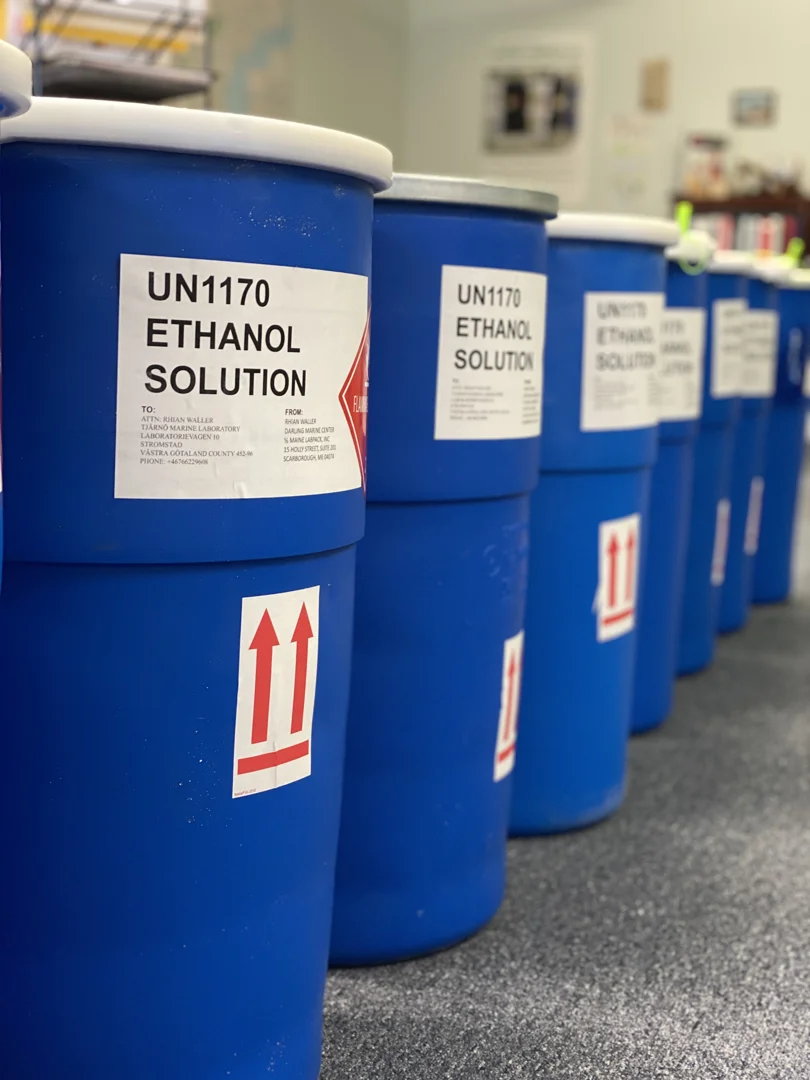
Column 8 is your gateway to 49 CFR Part 173. For example, if Column 8B lists “202” for a non-bulk liquid, you must open 49 CFR § 173.202 to find the list of authorized outer packages (like steel drums or fiberboard boxes) and inner receptacles.
If you are shipping smaller quantities, Column 8A (Exceptions) is your best friend. It may direct you to “Limited Quantity” provisions, which can exempt you from certain labeling and specification packaging requirements, saving your business time and money.
However, you must also respect the transport limits in Column 9. If you are shipping via air cargo out of Manchester, New Hampshire, or Boston, Massachusetts, you must ensure your package does not exceed the maximum net quantity allowed per package. Exceeding these limits can result in cargo being rejected at the airport or heavy regulatory penalties.
For ground transportation, shipping routes are also heavily regulated. If you are moving hazardous shipments through New England, you should always consult the National Hazardous Materials Route Registry – By State | FMCSA to ensure your drivers stay on authorized hazmat roads.
Additionally, local emergency planners maintain strict guidelines to protect local communities. For instance, the [PDF] Hazardous Materials Emergency Response Plan outlines how local agencies in Northern Maine (Aroostook County) respond to transport incidents, highlighting the critical importance of accurate shipping papers and packaging.
Handling Special Cases: Forbidden, N.O.S., and Stabilized Materials
The hazardous materials table is designed to handle every possible chemical scenario, including materials that are too dangerous to transport under normal conditions and generic mixtures.
- Forbidden Materials: If the word “Forbidden” appears in Column 3, or if a specific mode of transport is restricted in Column 9, the material cannot be shipped. This typically applies to highly unstable compounds that are prone to explosive decomposition.
- N.O.S. (Not Otherwise Specified) Entries: When shipping a mixture or a proprietary chemical blend that doesn’t have a dedicated name in the table, you must use an “n.o.s.” entry (e.g., Flammable liquids, n.o.s.). This requires you to identify the technical chemical name of the active hazard in parentheses on your shipping papers and package markings.
- Stabilized and Wetted Materials: Some chemicals are so reactive that they must be chemically stabilized or “wetted” with water or a solvent to prevent them from exploding or catching fire during transit. The table lists specific entries for wetted substances that must be maintained at the specified moisture levels.
These special cases require expert classification. For example, highly toxic chemicals must follow the strict guidelines in the Hazardous Waste Materials Guide: Poison, while miscellaneous hazards, such as lithium batteries, require the specialized rules in the Hazardous Waste Guide: Class 9 Hazardous Materials.
On an industrial scale, the state closely monitors these activities. Shippers can review historical data and state-wide trends in the [PDF] Biennial Hazardous Waste Activities Report – Maine.gov to see how businesses manage compliance and waste reduction.
Frequently Asked Questions about Hazmat Compliance
What is the purpose of the 49 CFR § 172.101 table?
The purpose of the table is to provide a single, comprehensive, and legally binding reference for identifying, classifying, labeling, packaging, and transporting hazardous materials within the United States. It ensures that shippers, carriers, and emergency responders have access to identical safety information. For additional regulatory context and state-specific safety guidelines, you can consult the References | Maine Emergency Management Agency portal.
How do special provisions modify standard packaging?
Special provisions in Column 7 can impose extra safety measures or grant relief from standard regulations. For example, a special provision might state that a material can only be transported in specific types of stainless steel drums, or it might allow a higher quantity limit if certain stabilizing agents are added to the mixture.
What are the quantity limits for passenger aircraft?
Quantity limits for passenger aircraft are found in Column 9A of the table. These limits are typically very low (often restricted to 1 liter or 1 kilogram, or marked as “Forbidden”) to protect passengers and crew from the immediate dangers of hazardous cargo in an enclosed cabin environment.
Build Hazmat Compliance with MLI Environmental
Navigating the hazardous materials table is a complex but essential part of maintaining regulatory compliance and keeping supply chains moving safely. A single misstep can lead to severe fines, shipment rejections, or hazardous spills.
For businesses throughout New England—from Boston and Worcester, Massachusetts, to Concord, New Hampshire, and Portland, Maine—MLI Environmental offers the certified expertise needed to handle these challenges. They specialize in international and domestic shipping of dangerous goods, hazardous materials logistics, and waste disposal.
Let the certified professionals at MLI Environmental take the guesswork out of your logistics. Contact them today to learn more about their comprehensive Dangerous Goods Shipping Services and ensure your shipments are fully compliant.