
The hazardous materials table columns are the 10 labeled sections of the regulatory table found in 49 CFR 172.101, and each one tells you something specific about how a material must be identified, packaged, labeled, and transported. Here’s a quick overview:
| Column | What It Covers |
|---|---|
| 1 | Symbols indicating special shipping conditions |
| 2 | Proper shipping names |
| 3 | Hazard class or division |
| 4 | UN or NA identification numbers |
| 5 | Packing group (I, II, or III) |
| 6 | Required label codes |
| 7 | Special provisions |
| 8 (A/B/C) | Packaging authorizations |
| 9 (A/B) | Quantity limits for air and rail |
| 10 | Vessel stowage requirements |
If you ship, store, or handle hazardous materials, this table is the foundation of everything you do. Miss a column, and you risk a violation or worse, an incident.
The table lists over 3,000 commonly transported hazardous materials, organized alphabetically. It’s the first place regulators, shippers, and logistics teams go when they need to know the rules for a specific material.
But for many people, reading it feels like decoding a foreign language. Each column uses codes, abbreviations, and cross-references that aren’t obvious at first glance.
This guide breaks down all 10 columns in plain language, so you can use the table with confidence.
The Purpose of the Hazardous Materials Table (49 CFR 172.101)
The Hazardous Materials Table (HMT) is the heart of the Pipeline and Hazardous Materials Safety Administration (PHMSA) regulations. Located within 49 CFR 172.101, its primary job is to ensure that every person in the supply chain, from the manufacturer in Manchester, New Hampshire, to the truck driver in Worcester, Massachusetts, is on the same page regarding safety.
When defining hazardous materials, the government doesn’t leave things to chance. The HMT provides a standardized “recipe” for transport. If you follow the instructions found in the hazardous materials table columns, you ensure that the material is in the right container, has the right warning labels, and isn’t placed in a dangerous environment (like a passenger plane) where it doesn’t belong.
Without this table, the transportation of chemicals, fuels, and even common items like lithium batteries would be a chaotic guessing game. By centralizing these rules, the Code of Federal Regulations creates a universal language for safety that protects the public, the environment, and the workers handling the goods.
Breaking Down the 10 Hazardous Materials Table Columns
Navigating the HMT can be intimidating because it contains over 3,000 entries. These entries are listed alphabetically by their “Proper Shipping Name.” Think of it as a massive dictionary of danger.
To use the table effectively, you must understand that the columns work together. Information in Column 1 might change how you interpret Column 2, and Column 5 will dictate which parts of Column 8 you need to look up. It is a regulatory framework designed for cross-referencing.
Decoding Symbols and Names in the Hazardous Materials Table Columns
The first two columns in the hazardous materials table set the stage for the entire shipping process. If you get these wrong, everything that follows the labels, the boxes, and the paperwork will also be wrong.
Column 1: The Symbols
Column 1 contains six specific symbols that act as “modifiers” for the rest of the entry.
- (+) Plus Sign: The most restrictive symbol. It “fixes” the proper shipping name, hazard class, and packing group. Even if your specific material doesn’t technically meet the definition of that class, you must ship it that way because it poses a significant risk to human health.
- (A) Aircraft: This means the entry applies specifically to materials transported by air.
- (W) Water: This indicates the entry applies to materials transported by vessel.
- (D) Domestic: These entries are for transportation within the U.S. only.
- (I) International: These entries are for international transportation.
- (G) Generic: This is a very common symbol. It indicates that the shipping name is “generic” (like “Flammable liquids, n.o.s.”). When you see a ‘G’, you are required to provide the technical name of the hazardous chemical in parentheses on the shipping papers.
Column 2: Proper Shipping Names
Column 2 lists the names of the materials. When reading this column, only the text that is not in italics is part of the “Proper Shipping Name.” Italicized text is there for description or to help you find the right entry, but you shouldn’t write it on your shipping forms. For example, you might see “Acetaldehyde ammonia“, where only “Acetaldehyde ammonia” is the official name. Understanding the classes of hazardous materials is vital here to ensure you select the name that best fits your substance.
Classification and Identification
Once you have the name, the next few hazardous materials table columns tell you exactly what kind of hazard you are dealing with and how to identify it globally.
Column 3: Hazard Class or Division
This column identifies the primary hazard of the material. There are nine primary classes, ranging from explosives (Class 1) to corrosives (Class 8) and miscellaneous (Class 9).
- If you see the word “Forbidden,” it means exactly what it says: the material cannot be transported under any circumstances because it is too unstable or dangerous.
- You might also see “ORM-D” in older texts, but be aware that this designation officially ended on December 31, 2020.
Column 4: Identification Numbers
This column provides a four-digit number preceded by “UN” or “NA.”
- UN (United Nations): These are used for international and domestic shipping.
- NA (North American): These are used for domestic shipping within the U.S. and Canada only. Some materials that don’t have a UN number are assigned an NA number.
Column 5: Packing Groups
The Packing Group (PG) tells you the degree of danger the material poses:
- PG I: Great danger (Requires the strongest packaging).
- PG II: Medium danger.
- PG III: Minor danger.
If you are shipping flammable liquids, the packing group is often determined by the flashpoint and boiling point of the liquid. Some materials, like most Class 2 gases, do not have packing groups assigned because their packaging is dictated by different pressure standards.
Packaging and Handling Requirements
Knowing what the material is is only half the battle. The next set of hazardous materials table columns tells you how to “dress” the material for its journey.
| Packing Group | Degree of Danger | Example Requirements |
|---|---|---|
| I | Great | High-integrity steel drums, strict testing |
| II | Medium | Standard UN-rated plastic or metal containers |
| III | Minor | Lighter-duty packaging allowed |
Column 6: Label Codes
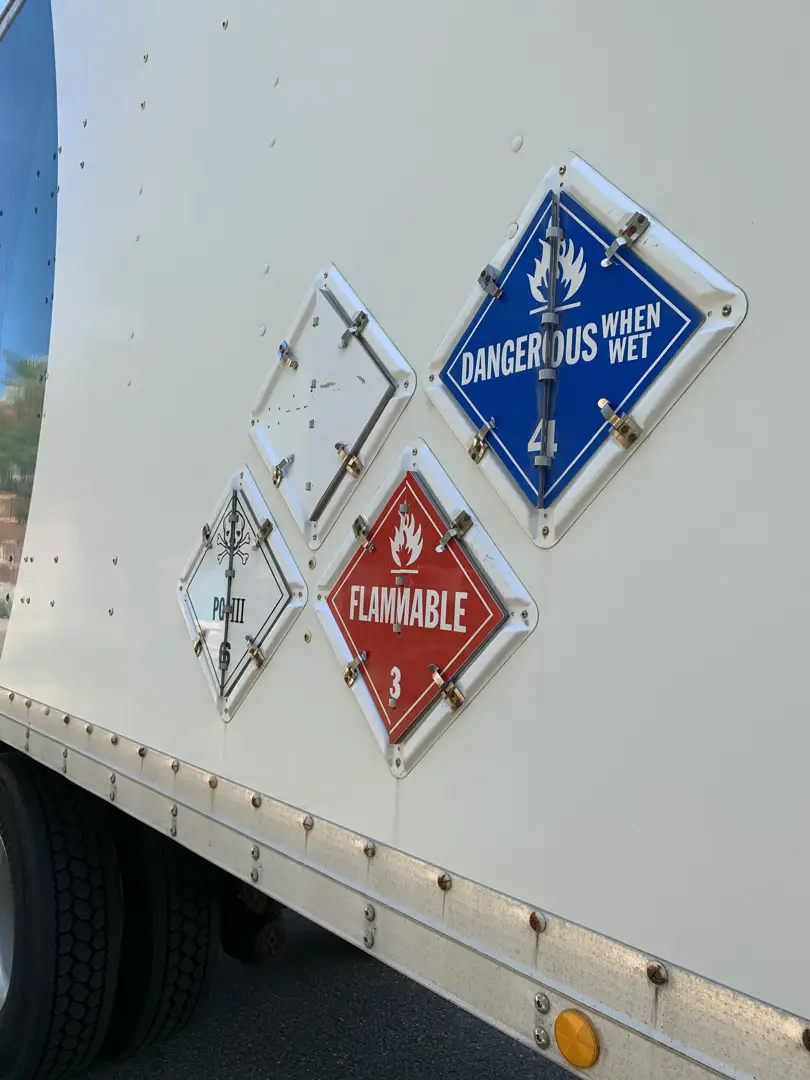
Column 6 tells you which hazard labels must be applied to the outside of the package. These codes correspond to the hazard classes in Column 3. For example, a “3” means a Flammable Liquid label is required. If multiple codes are listed, the first one is the primary hazard, and the others are “subsidiary” hazards.
Column 7: Special Provisions
This column is often a list of alphanumeric codes (like B1, IB2, or T4). These are “extra rules” that apply to that specific material. You must look up these codes in 172.102 to see if there are special requirements for the type of tank used, the temperature of the material, or even the material of the gasket.
Column 8: Packaging Authorizations
This column is split into three sub-sections that tell you which part of the 49 CFR Part 173 to look at for packaging instructions:
- 8A (Exceptions): Provides references for small quantity or “limited quantity” exceptions.
- 8B (Non-bulk): Instructions for standard drums, boxes, and jerricans.
- 8C (Bulk): Instructions for large totes, tanker trucks, and rail cars.
If you’re dealing with corrosive liquids, Column 8 is your best friend. It ensures you don’t put an acid in a container that it will eat through!
Transport Limits and Vessel Stowage in Hazardous Materials Table Columns
The final hazardous materials table columns focus on where the material can go and how it should be stored while in transit.
Column 9: Quantity Limitations
This column is split into 9A and 9B.
- 9A (Passenger Aircraft/Rail): Tells you the maximum amount of the material allowed on a passenger plane. Many hazardous materials are marked “Forbidden” here.
- 9B (Cargo Aircraft Only): Tells you the maximum amount allowed on a dedicated cargo plane. These limits are usually much higher than 9A.
Column 10: Vessel Stowage
If the material is going on a ship, Column 10 provides the stowage category (A through E). These categories tell the crew whether the material can be stored “on deck” (where it can be easily reached or washed overboard in an emergency) or “under deck” (where it is protected from the elements but harder to reach). It also includes codes for specific handling, like “keep away from heat” or “stow away from heavy metals.” This is particularly important for Class 9 hazardous materials, which often include marine pollutants.
Compliance and Training Standards
Reading the hazardous materials table columns isn’t just a good ideait’s the law. Under 49 CFR 172.704, any employee who “affects hazardous materials transportation safety” must receive training. This includes anyone who:
- Loads or unloads hazmat.
- Prepares hazmat for transportation (packaging/labeling).
- Operates a vehicle used to transport hazmat.
- Is responsible for the safety of transporting hazmat.
Training must occur within 90 days of employment and be refreshed every three years. Part of this training involves performing a hazardous waste determination to ensure that materials are correctly identified before they ever touch the Hazardous Materials Table. If you are operating in areas like Portland, Maine, or Burlington, Vermont, staying compliant with these federal standards is essential to avoid heavy fines and ensure the safety of your local community.
Frequently Asked Questions
What is the difference between UN and NA identification numbers?
UN (United Nations) numbers are recognized globally and are used for both international and domestic shipments. NA (North American) numbers are only recognized in the United States and Canada. Often, NA numbers are used for materials that the U.S. regulates as hazardous, but the rest of the world might not (like certain “Consumer Commodities”).
What do the Packing Groups I, II, and III signify?
They signify the degree of danger. PG I is “Great Danger,” PG II is “Medium Danger,” and PG III is “Minor Danger.” The packing group dictates how strong the packaging must be. A PG I material requires a package that has passed more rigorous drop and pressure tests than a PG III material.
What does the “+” symbol mean in Column 1?
The plus sign (+) means that the proper shipping name, hazard class, and packing group for that entry are fixed by the Associate Administrator. You cannot change them, even if your testing suggests the material fits a different class. This is usually done for materials that have a history of causing human health issues that aren’t fully captured by standard lab tests.
Contact the Professionals at MLI Environmental
The hazardous materials table columns are more than just a list of rules; they are a comprehensive safety system. By understanding how to navigate these 10 columns, you ensure that hazardous goods move across New England from the busy streets of Boston to the quiet roads of Northern Maine without incident.
Navigating these regulations can be complex, especially when dealing with international shipments or specialized waste disposal. MLI Environmental is a trusted leader in the hazardous materials and waste management industry. Their certified professionals specialize in international and domestic dangerous goods shipping and hazardous materials logistics, providing the quick, safe service you need to stay compliant.
If you need expert help managing your hazardous materials or ensuring your shipments meet every regulatory requirement, explore the Dangerous Goods Shipping Services offered by MLI Environmental today. Whether you are in Concord, New Hampshire, or Springfield, Massachusetts, professional guidance is just a click away.