
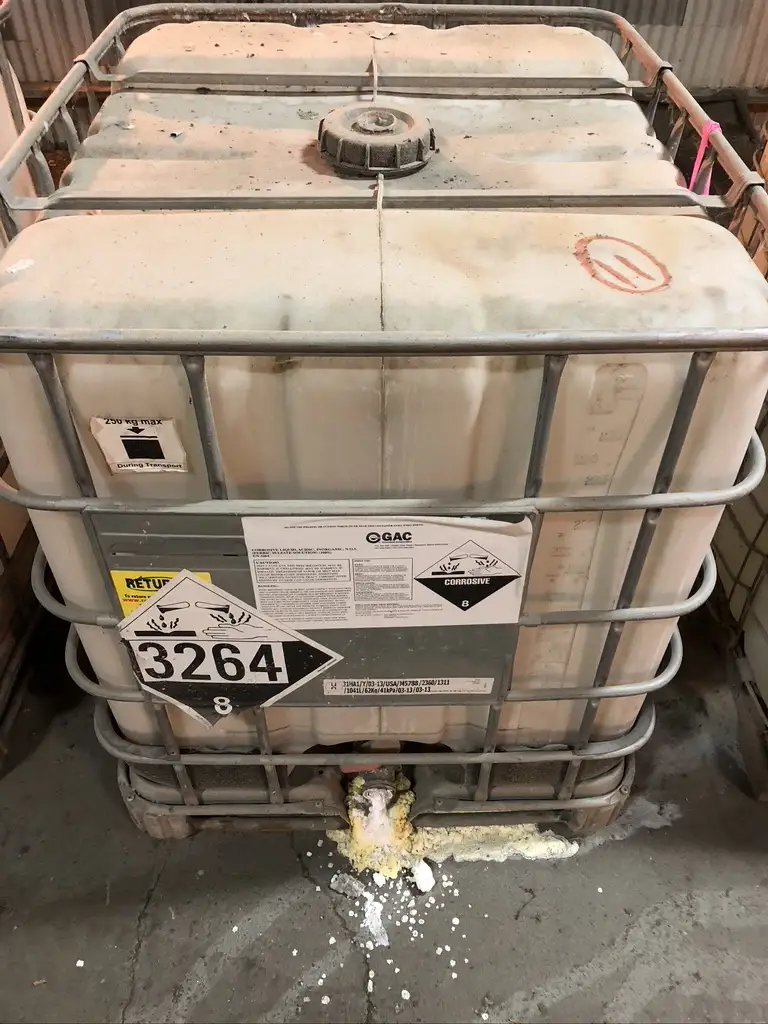
Dangerous cargo handling is the set of regulated procedures used to safely classify, package, label, document, transport, and store hazardous materials across all modes of transport.
Here’s a quick breakdown of what it involves:
- Classification — Identifying which of the 9 UN hazard classes your material falls into
- Packaging — Using UN-approved containers rated for your specific hazard
- Labeling and marking — Applying correct hazard labels, UN numbers, and placards
- Documentation — Completing Shipper’s Declarations, Safety Data Sheets, and manifests
- Segregation — Keeping incompatible substances separated during storage and transit
- Emergency preparedness — Having spill response plans, PPE, and incident reporting ready
Getting any of these steps wrong isn’t just a compliance headache — it can be catastrophic.
In 2015, a warehouse fire at the port of Tianjin, China, triggered a series of explosions that killed 173 people, left 8 missing, and injured around 800 more. The root cause? Improper storage of hazardous chemicals.
That’s an extreme case. But the risks show up in smaller ways every day. An analysis of roughly 9,500 container terminal insurance claims — totaling around $400 million — found that 68% were caused by poor operations and processes, not weather or bad luck.
And the stakes are only growing. More than 1.25 million dangerous goods shipments move by air every year. With air cargo growth projected at 4.9% annually, the volume of hazmat moving through global supply chains is rising fast.
If your organization ships, stores, or disposes of hazardous materials, understanding the rules isn’t optional. The regulations are complex, they vary by transport mode, and they change regularly. This guide breaks it all down — starting with the 9 UN classes every handler needs to know.
The 9 UN Classes of Hazardous Materials
To keep the world from accidentally exploding (or melting, or becoming radioactive), the United Nations established a harmonized system for classifying dangerous goods. This system divides hazardous materials into nine distinct classes based on the specific type of risk they pose.
| UN Class | Hazard Type | Common Examples |
|---|---|---|
| Class 1 | Explosives | Dynamite, fireworks, ammunition |
| Class 2 | Gases | Propane, oxygen, aerosols |
| Class 3 | Flammable Liquids | Gasoline, acetone, certain paints |
| Class 4 | Flammable Solids | Magnesium, phosphorus, matches |
| Class 5 | Oxidizers & Organic Peroxides | Hydrogen peroxide, ammonium nitrate |
| Class 6 | Toxic & Infectious Substances | Cyanide, medical waste, biological samples |
| Class 7 | Radioactive Material | Uranium, medical isotopes |
| Class 8 | Corrosives | Sulfuric acid, sodium hydroxide (lye) |
| Class 9 | Miscellaneous | Lithium batteries, dry ice, magnetized material |
Class 1: Explosives
These are substances or articles that can cause a mass explosion, a projection hazard, or a fire hazard. Class 1 is unique because it is divided into six sub-divisions (1.1 through 1.6) based on the severity and nature of the explosion. For example, Division 1.1 represents a mass explosion hazard (like rocket fuel), while 1.4 represents a minor hazard (like signal flares).
Class 2: Gases
This class covers compressed, liquefied, or dissolved gases. They are further categorized into flammable gases (2.1), non-flammable/non-toxic gases (2.2), and toxic gases (2.3). Even a “safe” gas like nitrogen can be dangerous if it displaces oxygen in a confined space.
Class 3: Flammable Liquids
Perhaps the most common class in dangerous cargo handling, these liquids give off flammable vapors at specific temperatures (known as the flash point). From the fuel in a tanker to the hazmat chemical transport of laboratory solvents, Class 3 requires strict ignition source control.
Class 4: Flammable Solids
These materials are liable to cause fire through friction, moisture absorption, or spontaneous chemical changes. They include self-reactive substances and those that emit flammable gases when they come into contact with water.
Class 5: Oxidizing Substances and Organic Peroxides
Oxidizers don’t necessarily burn themselves, but they yield oxygen, which can cause or contribute to the combustion of other materials. Organic Peroxides are even more temperamental; they are thermally unstable and may burn rapidly or react dangerously with other substances.
Class 6: Toxic and Infectious Substances
Class 6.1 includes poisons that can cause death or serious injury if swallowed, inhaled, or touched. Class 6.2 covers infectious substances—materials known or suspected to contain pathogens like bacteria or viruses.
Class 7: Radioactive Material
Any material containing radionuclides where both the activity concentration and the total activity exceed specified values falls here. This includes everything from industrial density gauges to isotopes used in cancer treatments.
Class 8: Corrosives
These substances cause full-thickness destruction of intact skin tissue or have a severe corrosion rate on steel or aluminum. Interestingly, even within Class 8, you must be careful; mixing an acid with an alkali can cause a violent reaction, even though they share the same class.
Class 9: Miscellaneous
This is the “catch-all” for materials that pose a danger during transport but don’t fit the other eight definitions. The most famous resident of Class 9 is the lithium battery, which has become a major focus for aviation safety in recent years.
Global Regulations and Compliance Standards
Navigating dangerous cargo handling is like learning four different languages at once. Depending on how your goods are moving, you must answer to different international and national masters.
The UN Model Regulations
Often called the “Orange Book,” these regulations provide the framework that almost all other codes are built upon. They ensure that a “Class 3 Flammable Liquid” in Boston is recognized as the same thing in Burlington.
The IMDG Code (Maritime)
The International Maritime Dangerous Goods Code is the bible for sea transport. It became mandatory in 2004 under the SOLAS convention. It provides detailed instructions on how to stow hazardous containers on ships to prevent them from reacting with each other or the sea.
IATA DGR (Aviation)
The International Air Transport Association’s Dangerous Goods Regulations are updated annually (unlike the biennial UN updates). Because planes experience pressure and temperature shifts, IATA standards are often much stricter than ground transport rules. You can find DOT/IATA compliance support to help navigate these yearly changes.
ADR (Road Transport)
In many regions, road transport is governed by the ADR (Agreement concerning the International Carriage of Dangerous Goods by Road). For those operating in the UK or parts of Europe, the Carriage of Dangerous Goods Manual – HSE is a critical resource for local enforcement.
Terminal and Storage Standards
Once the cargo leaves the vehicle, the risks don’t vanish. Guidelines such as those in the Safe storage and handling of containers carrying dangerous goods and hazardous substances | Cefic Library help terminal operators manage the unique risks associated with storing intermodal transport units (ITUs).
Essential Protocols for Dangerous Cargo Handling
Safety in hazardous logistics isn’t about luck; it’s about a series of redundant, meticulous steps. If one link in the chain breaks, the whole system can fail.
1. Classification Accuracy
Everything starts here. If you misclassify a chemical, every subsequent safety measure—the packaging, the label, the stowage—will be wrong. Shippers are legally responsible for identifying the correct UN number, proper shipping name, and packing group (I, II, or III, representing high, medium, and low danger).
2. UN-Approved Packaging
You can’t just use any old cardboard box. Hazardous materials must be placed in packaging that has been tested to withstand drops, stacking pressure, and, in the case of air transport, pressure differentials. Using professional hazmat packaging services ensures that your containers meet the rigorous “Performance Oriented Packaging” (POP) standards.
3. Marking and Labeling
Labels are the “voice” of the cargo. They tell handlers exactly what they are dealing with at a glance.
- Labels are the diamond-shaped stickers (at least 100mm per side) placed on individual packages.
- Markings include the UN number and Proper Shipping Name.
- Placards are the larger versions of labels placed on the outside of vehicles or containers.
4. Segregation of Incompatible Substances
This is the “keep-away” rule. Certain chemicals, when mixed, create toxic clouds or explosions. For example, you generally cannot store Class 8 corrosives near Class 4.1 flammable solids. Segregation tables in the IMDG or IATA manuals provide the specific distances or barriers required between different classes.
5. Personal Protective Equipment (PPE)
Handlers must be equipped with PPE tailored to the specific hazard. This might include flame-resistant clothing for Class 3 liquids, respirators for Class 6 toxins, or specialized gloves for Class 8 corrosives.
Documentation and Emergency Response Procedures
In dangerous cargo handling, if it isn’t documented, it didn’t happen—and if it’s documented incorrectly, you’re in trouble.
The Dangerous Goods Declaration (DGD)
The DGD is a legal contract where the shipper certifies that the cargo has been prepared perfectly according to the rules. It must include the 24/7 emergency contact number, the exact sequence of the “shipping description” (UN Number, Name, Class, Packing Group), and a signed certification statement.
Safety Data Sheets (SDS)
Formerly known as MSDS, these documents provide the “DNA” of the chemical. They include 16 sections covering everything from physical properties to first-aid measures. No hazardous shipment should move without an accessible SDS.
Emergency Response and Spills
Even with the best shipping hazardous materials best practices, accidents can happen. Every facility and vehicle should have:
- An Emergency Response Guidebook (ERG): Used by first responders to identify hazards quickly.
- Spill Containment Kits: Including absorbents, neutralizers, and booms to prevent chemicals from reaching drains or soil.
- Incident Reporting: Under regulations like CERCLA, certain “reportable quantities” of spills must be disclosed to authorities immediately.
Mode-Specific Requirements for Dangerous Cargo Handling
How you handle a barrel of chemicals depends entirely on whether it’s on a truck, a ship, or a plane.

Maritime and Road Dangerous Cargo Handling
Sea transport involves massive scale. A single container ship can carry thousands of hazardous containers.
- Stowage Planning: Planners must ensure that “on-deck” vs. “under-deck” requirements are met. Some chemicals can’t be stored in confined spaces where vapors might build up.
- Vessel Document of Compliance: Not every ship is allowed to carry every type of hazmat. The Master must ensure the vessel is certified for the specific cargo.
- Road Safety: For ground transport, route planning is essential. Many jurisdictions prohibit hazmat trucks from using specific tunnels or bridges. Drivers often need a specific hazmat endorsement on their commercial license. You can learn more about hazmat ground shipping requirements to stay compliant on the road.
Aviation Standards for Dangerous Cargo Handling
The sky is a less forgiving environment than the ocean.
- Pressure Differentials: Liquids that are fine at sea level might leak at 30,000 feet as internal pressure expands. Packaging for air must be pressure-tested.
- Temperature Sensitivity: Cargo holds can get extremely cold or unexpectedly warm, affecting the stability of certain Class 5 substances.
- Lithium Batteries: Due to the risk of “thermal runaway,” there are strict limits on the State of Charge (SoC) for batteries shipped as cargo on aircraft. For more details, see our guide on dangerous goods air shipping.
Frequently Asked Questions about Hazardous Materials
What training is required for personnel handling dangerous goods?
Anyone involved in the supply chain—from the person packing the box to the driver and the office staff preparing the paperwork—must receive training. For air transport, IATA requires training to be refreshed every two years. In the US, OSHA and DOT have specific standards for “hazmat employees.” Are you sure your team is up to speed? Check out transporting hazardous materials: are you qualified? for a self-assessment.
How are lithium batteries classified for transport?
Lithium batteries are generally Class 9, but they are split into two main types:
- UN3480/3481: Lithium-ion (rechargeable, like in phones or e-bikes).
- UN3090/3091: Lithium-metal (non-rechargeable, like in watches).
The rules change based on whether the battery is “contained in equipment,” “packed with equipment,” or shipped alone. For a deep dive, see the complete guide to shipping lithium batteries.
What are the most common documentation errors?
The most frequent mistakes include:
- Incorrect Order: The UN number must come first in the shipping description.
- Missing Emergency Contact: It must be a 24/7 monitored number, not a general office line that goes to voicemail at 5 PM.
- Vague Descriptions: Using “Paint” instead of the Proper Shipping Name “Paint related material.”
To avoid these pitfalls, review our guide to hazmat shipping papers.
Ready to Handle Dangerous Goods More Safely?
Mastering dangerous cargo handling is about more than just avoiding fines; it’s about building a safety culture that protects your employees, your community, and the environment. From the rocky coasts of Maine to the busy hubs of Massachusetts and New Hampshire, staying compliant requires constant vigilance and expert knowledge.
Regulations will continue to evolve as new technologies (like sodium-ion batteries) enter the market and global trade patterns shift. By staying informed and partnering with experts, you can ensure your operations remain efficient and, most importantly, safe.
MLI Environmental is a trusted leader in the hazardous materials and waste management industry. They specialize in international and domestic dangerous goods shipping, hazardous materials logistics, and waste disposal. Known for their certified professionals and quick, safe service, they help businesses across New England—from Portland and Bangor to Boston and Worcester—navigate the complexities of hazardous waste management and shipping. Don’t leave your compliance to chance; make sure your team has the support they need to handle the world’s most dangerous goods with confidence.