
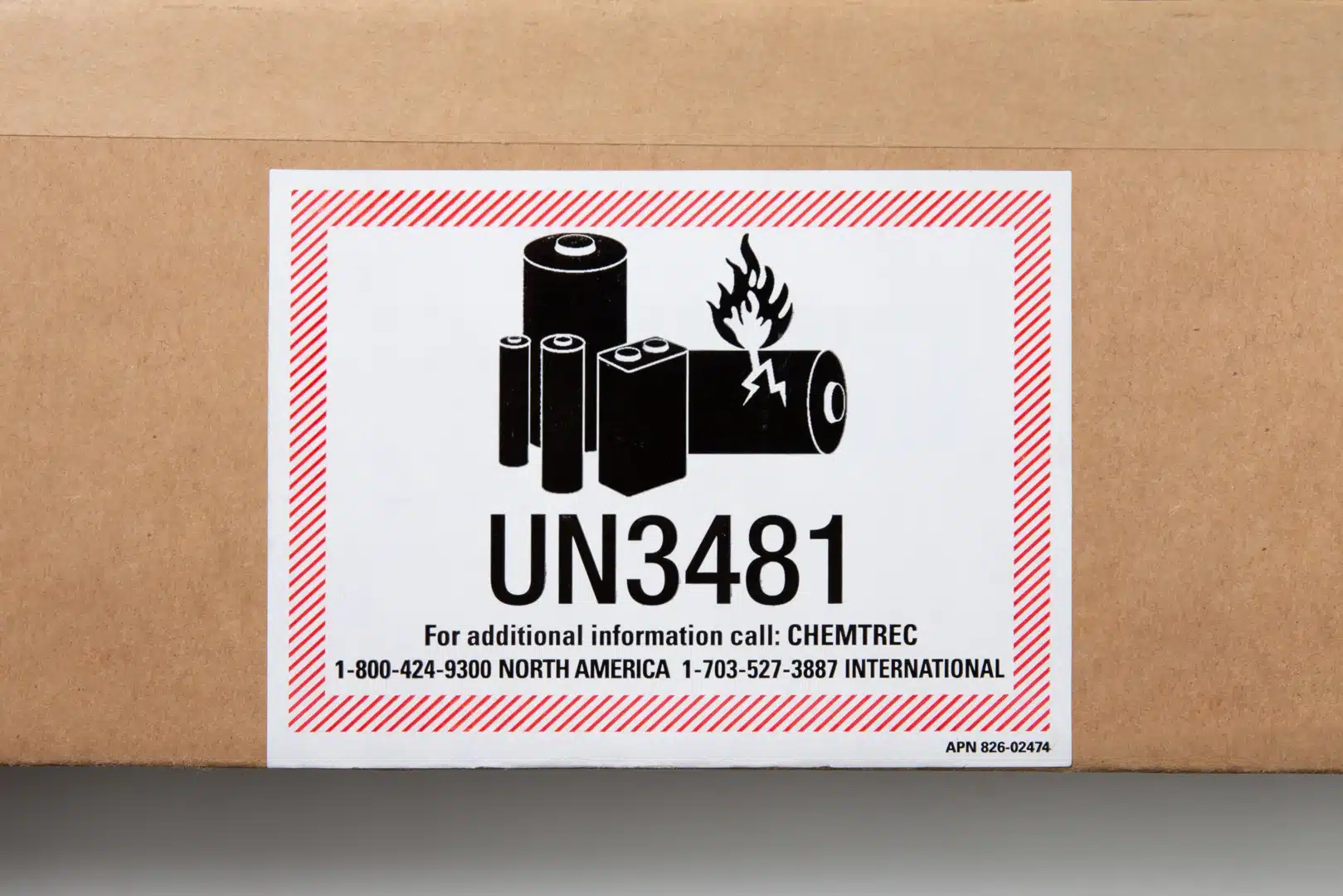
Lithium battery shipping is classified as hazardous materials transport under federal regulations because these power sources pose serious fire and explosion risks during transit. Whether you’re shipping a laptop, wireless headphones, or electric vehicle batteries, you must follow strict packaging, labeling, and documentation rules.
Quick Reference: Key Requirements for Shipping Lithium Batteries
| Battery Type | Size Threshold | UN Number | Air Transport | Labeling Required |
|---|---|---|---|---|
| Lithium-ion (standalone) | 2100Wh | UN3480 | Cargo only, 30% charge | Yes |
| Lithium-ion (in equipment) | 2100Wh | UN3481 | Allowed with limits | Yes (if >100Wh) |
| Lithium metal (standalone) | 2g | UN3090 | Restricted | Yes |
| Lithium metal (in equipment) | 2g | UN3091 | Allowed with limits | Yes (if >2g) |
The stakes are high. According to the FAA, lithium battery incidents during air transport can lead to smoke, fire, or extreme heat that aircraft suppression systems cannot control. A single cell in thermal runaway can ignite an entire shipment through fiberboard packaging.
Every lithium battery shipment, regardless of size, is considered a Class 9 hazardous material under the Hazardous Materials Regulations (49 CFR). This means you need to understand proper classification, packaging standards, and marking requirements before handing any package to a carrier.
The regulations vary significantly by transport mode. Ground shipping via USPS allows larger battery sizes (up to 300Wh for highway transport) than air shipping, which restricts lithium-ion batteries to 100Wh or less for most commercial shipments. Damaged, defective, or recalled batteries face even stricter rules; they’re completely banned from aircraft.
This guide breaks down the complex requirements into practical steps you can follow. We’ll show you how to calculate watt-hour ratings, select the correct UN identification number, package batteries to prevent short circuits, and determine when you need hazmat training or special permits.
Essential Regulations for Lithium Battery Shipping
Navigating lithium battery shipping requires a firm grasp of the “big three” regulatory frameworks. Depending on whether your package is traveling by highway in New England or by air across the ocean, different rules apply.
- 49 CFR (Title 49 of the Code of Federal Regulations): This is the primary set of rules for domestic shipping within the United States. Section 173.185 is the “holy grail” for lithium battery shippers, detailing everything from packaging to exceptions for smaller batteries.
- IATA DGR (International Air Transport Association Dangerous Goods Regulations): If your shipment is going by air, you must follow IATA rules. These are often stricter than ground regulations, particularly regarding state-of-charge and quantity limits.
- IMDG Code (International Maritime Dangerous Goods Code): For shipments moving by vessel, the IMDG Code provides the safety standards to prevent maritime fires.
The Pipeline and Hazardous Materials Safety Administration (PHMSA) acts as the primary oversight body in the U.S. Their Lithium Battery Guide for Shippers 49 CFR is an essential tool for staying compliant.
One of the most critical requirements for any lithium battery is UN 38.3 testing. Before a battery can be offered for transport, the manufacturer must prove it has passed a series of rigorous tests simulating altitude, thermal extremes, vibration, shock, external short circuits, and overcharge. Shippers should always verify that their batteries have a “Test Summary” available from the manufacturer.
When choosing a shipping method, it is important to understand the differences between hazardous ground and air shipping. Ground transport is generally more “forgiving” for larger batteries, while air transport has a hard cap on many standalone battery types.
| Requirement | Ground (Highway/Rail) | Air (Passenger/Cargo) | Vessel (Ocean) |
|---|---|---|---|
| Max Wh (Small Battery) | ≤ 300 Wh | ≤ 100 Wh | ≤ 100 Wh |
| State of Charge (SoC) | No limit | ≤ 30% (Standalone Ion) | No limit |
| Damaged Batteries | Allowed (Special Permit) | Strictly Forbidden | Allowed (Special Permit) |
Classifying Your Shipment: Small vs. Fully Regulated
To ship correctly, you must first determine if your battery is “small” (excepted) or “fully regulated.” This classification isn’t based on the physical size of the battery, but on its energy capacity or lithium content.
For lithium-ion batteries—the rechargeable kind found in phones and laptops—classification is based on Watt-hours (Wh). For lithium metal batteries—the non-rechargeable kind found in watches or smoke detectors—the lithium content is measured in grams.
If a shipment is “fully regulated,” it requires:
- UN-specification performance packaging.
- Class 9 Hazmat labels.
- Full shipping papers (Shipper’s Declaration).
- Comprehensive hazmat employee training.
Determining Watt-Hours for Lithium Battery Shipping
Most modern batteries have the Wh rating printed directly on the casing. If it isn’t there, you can calculate it using a simple formula:
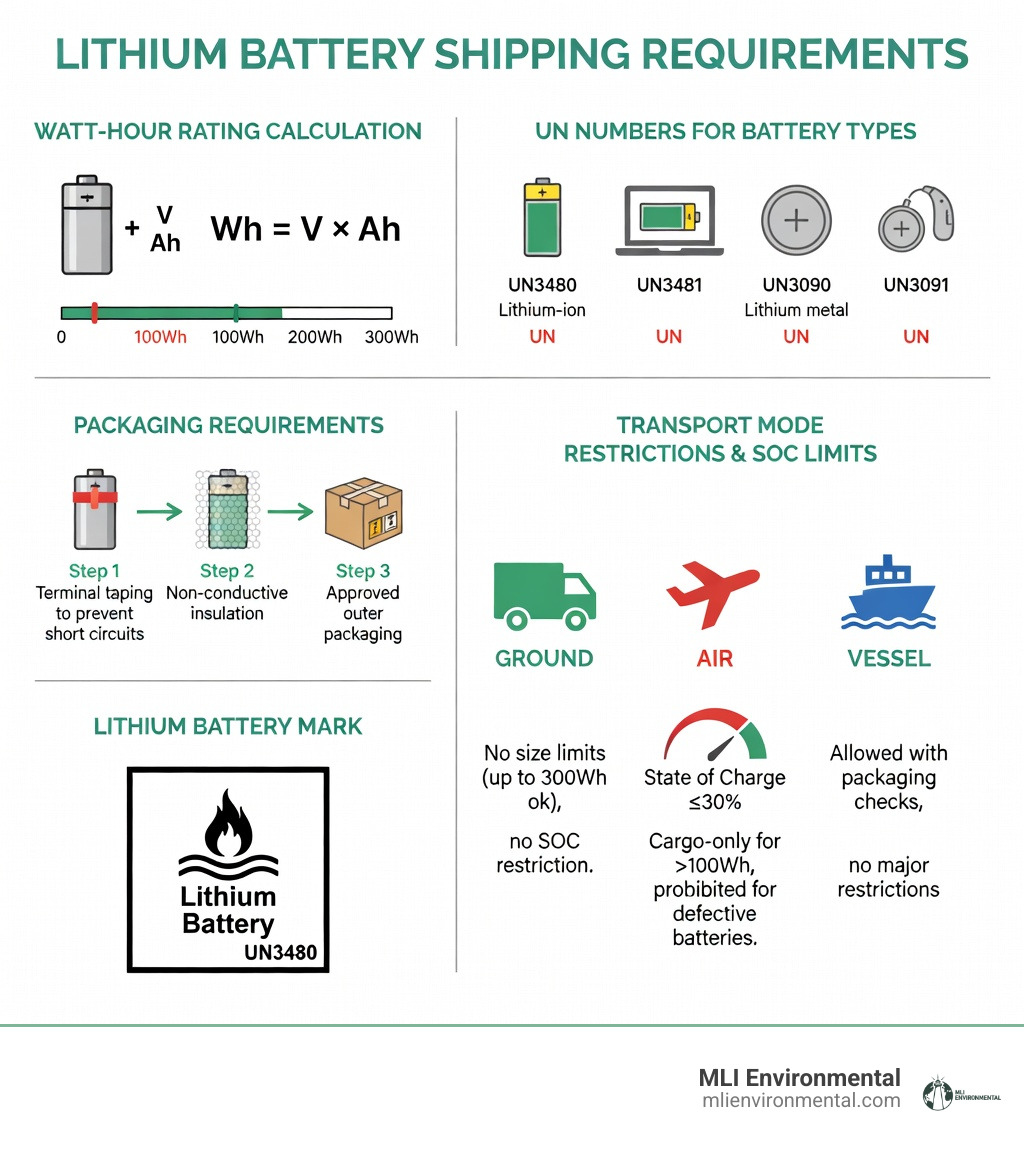
Watt-hours (Wh) = Volts (V) x Amp-hours (Ah)
If your battery is rated in milliamp-hours (mAh), divide that number by 1,000 first: Wh = (V x mAh) / 1,000
For example, a 3.8V smartphone battery with 3,000mAh would be: (3.8 x 3,000) / 1,000 = 11.4 Wh
This battery would fall well under the 100Wh threshold for air shipping and the 300Wh threshold for ground shipping. These thresholds are established based on Scientific research on battery safety to ensure that even if a small battery fails, the energy released is manageable.
UN ID Numbers and Proper Shipping Names
Every lithium battery shipment must be assigned a UN identification number. This tells carriers exactly what is inside the box.
- UN3480: Lithium-ion batteries (shipped by themselves).
- UN3481: Lithium-ion batteries contained in equipment or packed with equipment.
- UN3090: Lithium metal batteries (shipped by themselves).
- UN3091: Lithium metal batteries contained in equipment or packed with equipment.
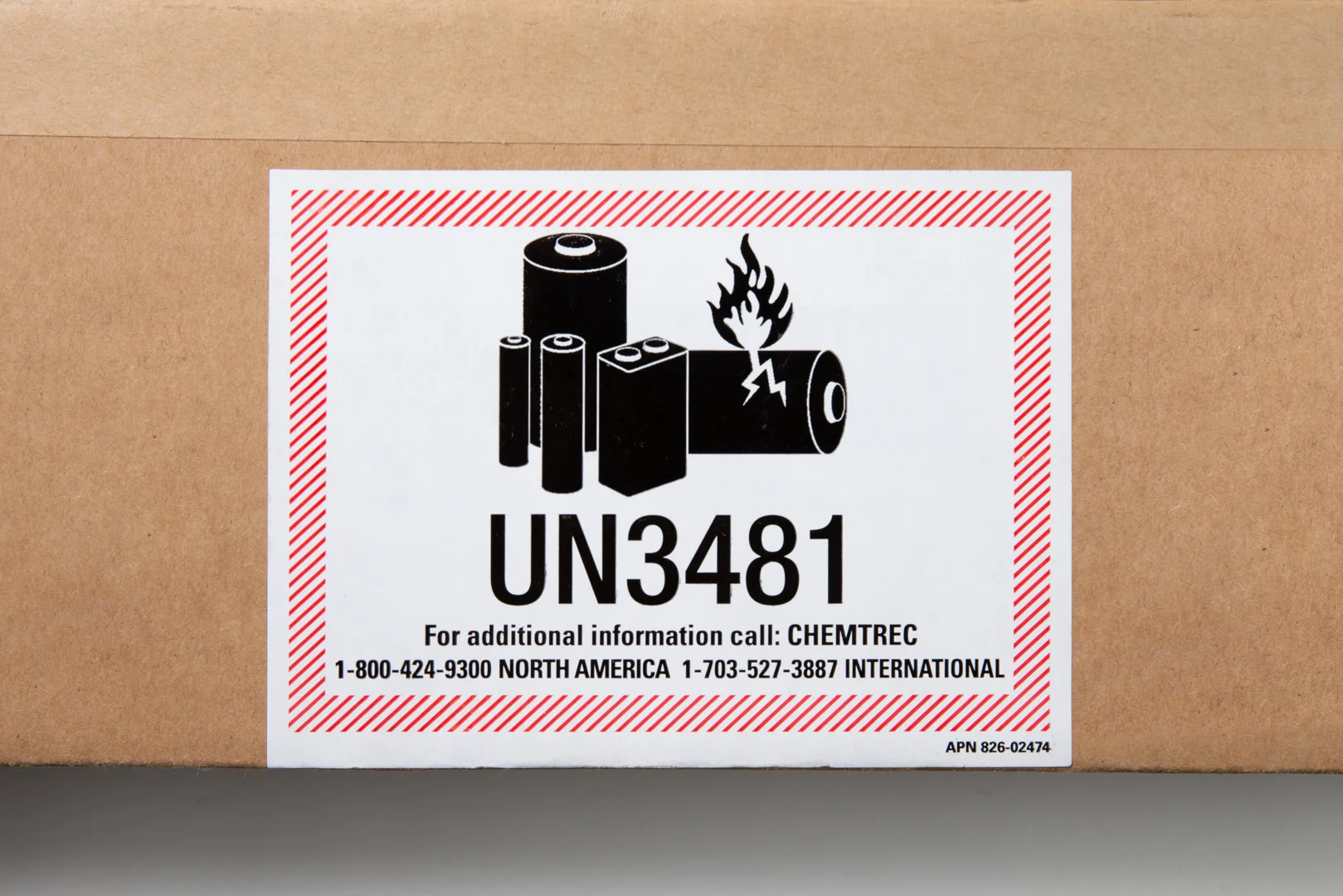
“Contained in equipment” means the battery is inside the device (like a built-in laptop battery). “Packed with equipment” means the battery is in the same box but not inside the device (like a power tool with a spare battery).
Packaging and Labeling Requirements for Consumer Electronics
The number one goal of lithium battery shipping packaging is to prevent a short circuit. If the battery terminals touch metal (like keys, tools, or even other batteries), they can create a spark that leads to a fire.
Step-by-Step Packaging Instructions:
- Protect Terminals: Cover battery terminals with non-conductive tape (like electrical tape) or place each battery in its own plastic bag.
- Prevent Movement: Use cushioning material like bubble wrap to ensure the device or battery cannot shift inside the box.
- Prevent Activation: For devices with batteries installed, ensure the power switch is in the “off” position and cannot be accidentally turned on.
- Rigid Outer Packaging: Never use padded envelopes or flimsy mailers for lithium batteries. Use a strong, rigid box that can withstand a 1.2-meter drop test.
For a deeper dive into general packaging standards, see our guide on How to ship hazardous materials.
Using the Lithium Battery Mark for Lithium Battery Shipping
Most small lithium battery shipments require the Lithium Battery Mark. This mark features a battery icon and the relevant UN number.
- Standard Size: The mark must be at least 100mm x 100mm.
- Small Package Size: If the box is too small, you can use a reduced size of 100mm x 70mm.
- Telephone Number: Currently, the mark requires a telephone number for more information. However, a recent regulatory change has initiated a phaseout of this requirement. By December 31, 2026, the telephone number will no longer be required on the mark.
Special Considerations for USPS, Air, and Damaged Goods
If you are a consumer in New England shipping a pair of wireless headphones via USPS Ground Advantage, you generally don’t need a full hazmat label. However, you must tell the clerk at the counter that the package contains lithium batteries. USPS will often apply a “Ground Only” or hazmat sticker to ensure the package doesn’t accidentally end up on a plane.
Air Shipping and State of Charge (SoC)
When shipping standalone lithium-ion batteries (UN3480) by air, they must be offered at a state of charge not exceeding 30% of their rated capacity. This is because a battery with less stored energy is significantly less likely to enter a violent thermal runaway state if it is damaged. This rule applies to cargo aircraft; standalone lithium batteries are generally prohibited on passenger planes.
Restrictions on Damaged, Defective, or Recalled (DDR) Batteries
This is the most dangerous category of lithium battery shipping. A battery is considered DDR if it shows signs of:
- Swelling or “puffing.”
- Leaking electrolyte.
- Extreme heat or discoloration.
- Being part of a safety recall (like the infamous Note 7).
DDR batteries are strictly forbidden from air transport. They can only be shipped by ground or vessel under strict DOT Special Permits. These shipments often require specialized “thermal event” packaging designed to contain a fire if the battery ignites during transit. For more on the environmental impact and safety of these hazards, the Sustainable Materials Management (SMM) Web Academy Webinar – Safe Transportation of Lithium Batteries provides excellent context.
Frequently Asked Questions about Battery Transport
Do I need hazmat training to ship small lithium batteries?
If you are shipping lithium batteries as part of your job (commercial shipping), the answer is generally yes. The U.S. DOT requires “hazmat employee” training for anyone who performs “pre-transportation functions,” which includes packing the box, labeling it, or preparing shipping papers. This training must be refreshed every three years (or every two years for air shippers under IATA).
What should I tell the USPS clerk when shipping electronics?
Always be transparent. Tell the clerk, “This package contains a lithium-ion battery contained in equipment.” They will ask if it is damaged or recalled. If it’s a standard consumer device in good condition, they will process it for ground transport.
Can I ship lithium batteries in a padded envelope?
No. Lithium batteries should never be shipped in padded envelopes or “poly mailers.” These do not provide enough protection against crushing or puncturing, which can lead to a fire. Always use a rigid cardboard box.
Ship Lithium Batteries Safely and Stay Compliant
Shipping lithium batteries doesn’t have to be a headache, but it does require diligence. By understanding the difference between small and fully regulated batteries, accurately calculating your watt-hours, and following strict packaging protocols, you can ensure your goods reach their destination safely and legally.
Whether you are shipping from Bangor, Maine, or Worcester, Massachusetts, staying compliant with 49 CFR and IATA regulations is your first line of defense against accidents and heavy fines. If you’re dealing with large-scale shipments or complex dangerous goods shipping needs, professional guidance is often the safest route.
At MLI Environmental, we specialize in making sense of these complex rules. Our certified professionals serve the entire New England region—from the tip of Aroostook County down through Manchester and Boston—providing the expertise needed for safe, compliant, and efficient hazardous materials logistics. Safety isn’t just a requirement; it’s a commitment to protecting your business and the people handling your cargo.