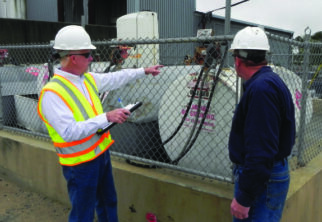
In March we began discussing how to be Ready for an EPA Inspection. Unless you have ever been audited by the EPA, you may not know what an EPA environmental audit is, what goes into an environmental audit, or who completes the environmental audit.
Did you know on average, each person in the United States produces an average of 4lbs of household hazardous waste each year? It is a common thought to believe that the “small” amount of hazardous household waste each individual produces makes such a m…
In 2015 Congress amended the FCPIA Act of 1990. This change has required the EPA and OSHA to increase their civil monetary penalties. Some of these penalties have increased to over $51,000 per violation.
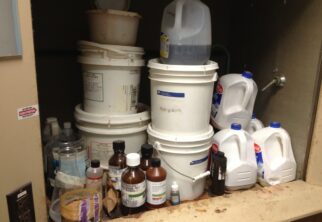
Ever walked into a schoolroom and smelled odors not common at home? Or maybe you opened a closet at the office and saw a trash pile of assorted containers? You ask yourself “Why weren’t these thrown out with the regular trash?” Or maybe you didn’t …
Got a unique solution or monolithic substance that is no longer virgin grade? Maybe you have a tote/drum of a material that has started to drip on a pallet of your storage room? Did you conduct a frequent survey of your storage rooms only to find the perso…
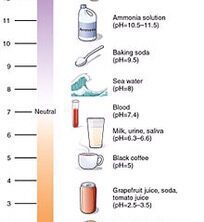
Why are acids dangerous? We use the pH scale to give one a relative scale of physical hazard to that of water, or H2O. The pH scale has a range of 0 to 14, with water having a pH=7, or neutral. A pH of 1 indicates an acid (i.e.
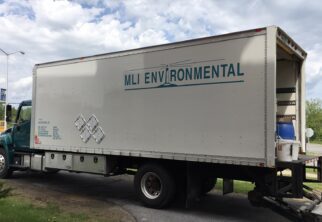
Commercial drivers that transport hazardous materials must do so in accordance with the U.S. Department of Transportation (DOT) regulations from the hazardous materials compliance handbook.
Recently, OSHA regulations started to require evaluation of the Refuse and Waste Collection Industry on the same grading basis as the food industry, assigning grades dependent upon injury and illness reports. In 2013, 33 workers died.