

Dangerous goods shipping is a highly regulated activity. Get it wrong, and your business faces massive fines, shipment delays, legal liability, and serious safety risks.
How to Ship Dangerous Goods (Quick Answer):
- Classify your material using the 9 hazard classes and Safety Data Sheet (SDS)
- Package in UN-Specification certified containers appropriate for your packing group
- Mark and label with UN numbers, proper shipping names, and hazard labels
- Complete documentation including shipping papers and Dangerous Goods Declaration
- Train employees in TDG, ICAO, or IMDG regulations depending on transport mode
- Select the right carrier and communicate hazards clearly
Over 1.25 million dangerous goods shipments are handled by air each year, and every one must comply with strict international regulations. The rules cover everything from classification to packaging, labeling, and training. A single mistake can lead to fines up to $100,000, imprisonment, or seizure of your goods.
This guide walks you through the process step-by-step. You’ll learn what dangerous goods are, how to classify them, what packaging to use, which documents you need, and how regulations differ by transport mode.
A dangerous good is any substance that poses a risk to health, safety, property, or the environment when transported. These can be everyday items like aerosols, paints, or batteries. The purpose of regulating dangerous goods shipping is to promote public safety and prevent incidents like explosions, fires, or toxic releases. For a deeper dive, explore MLI Environmental’s guide on Defining Hazardous Materials.
For shipments from states like Maine, New Hampshire, Massachusetts, Vermont, or Rhode Island, several key regulations apply:
- Transport Canada (TDG Act and Regulations): Governs all modes of transport for dangerous goods within, to, or from Canada. Find more at the TDG Act and Regulations.
- U.S. Department of Transportation (DOT): The Hazardous Materials Regulations (HMR) in 49 CFR Parts 171-180 are the primary authority for shipments in the U.S.
- International Civil Aviation Organization (ICAO): Develops the international standards for the safe transport of dangerous goods by air.
- International Air Transport Association (IATA): Publishes the Dangerous Goods Regulations (DGR), the industry’s practical guide for air shippers.
- International Maritime Organization (IMO): Develops the International Maritime Dangerous Goods (IMDG) Code for sea transport.
The Shipper’s Core Responsibilities
The consignor (shipper) is primarily responsible for compliance. It is not the carrier’s job to classify or pack your goods. Your core responsibilities include:
- Classification: Correctly identifying the hazard class and packing group.
- Packaging: Using appropriate, UN-certified packaging.
- Marking & Labeling: Applying all required hazard labels, UN numbers, and markings.
- Documentation: Preparing accurate and complete shipping papers, like the Dangerous Goods Declaration.
- Carrier Communication: Informing the carrier of the hazards.
Understanding these duties is the first step. For a full guide, see MLI Environmental’s resource on How to Ship Hazardous Materials.
Understanding the 9 Classes of Dangerous Goods
The UN categorizes dangerous goods into nine classes based on their primary hazard. This system is the foundation for all dangerous goods shipping regulations.
- Class 1: Explosives: Substances with an explosion hazard, like dynamite or ammunition. They are divided into six divisions based on risk.
- Class 2: Gases: Gases that can be flammable (propane), non-flammable/non-toxic (nitrogen), or toxic (chlorine). They require specialized containers. Learn more in MLI Environmental’s Hazardous Waste Materials Guide: Compressed Natural Gases.
- Class 3: Flammable Liquids: Liquids that easily ignite, such as gasoline, paints, or alcohol. See MLI Environmental’s Hazardous Waste Materials Guide: Flammable Liquids Classification.
- Class 4: Flammable Solids: Solids that are easily ignited, liable to spontaneous combustion, or emit flammable gases when wet. Examples include matches and sulfur. Find more in MLI Environmental’s Hazardous Waste Materials Guide: Flammable Solids.
- Class 5: Oxidizing Substances and Organic Peroxides: Substances that can cause or contribute to combustion (oxidizers) or are thermally unstable (organic peroxides). MLI Environmental offers insights into Hazardous Waste Materials Guide: Class 5 Common Oxidizers.
- Class 6: Toxic and Infectious Substances: Substances that can cause death or serious injury (poisons) or contain pathogens that cause disease (medical waste). Learn about these in MLI Environmental’s Hazardous Waste Materials Guide: Poison.
- Class 7: Radioactive Materials: Substances that emit ionizing radiation, requiring special precautions. MLI Environmental provides a Hazardous Waste Materials Guide: Radioactive Materials.
- Class 8: Corrosives: Substances like acids and bases that cause severe damage on contact with living tissue or other materials. Check out MLI Environmental’s Hazardous Waste Materials Guide: Corrosive Liquids.
- Class 9: Miscellaneous Dangerous Substances: A catch-all for hazards not covered in other classes, such as lithium batteries and dry ice. MLI Environmental digs into this category with their Hazardous Waste Materials Guide: Class 9 Hazardous Materials.
The Step-by-Step Process for Dangerous Goods Shipping
Shipping dangerous goods requires a systematic approach to ensure regulatory compliance. The process begins long before a package leaves your facility in Maine, New Hampshire, Massachusetts, Vermont, or Rhode Island.
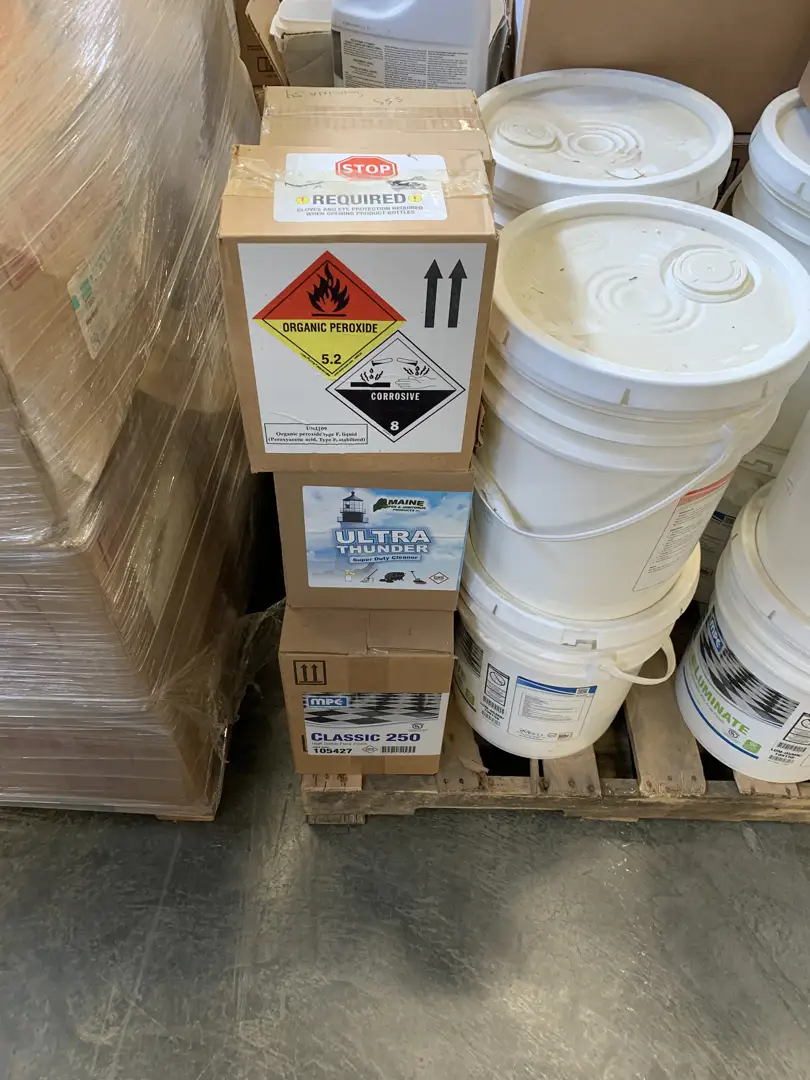
The first step is accurate classification. Assess your product to determine if it falls under any of the nine hazard classes. The Safety Data Sheet (SDS), specifically Section 14, provides this transportation information. If an SDS is unavailable, you must classify it yourself or consult an expert. Understanding your SDS is vital, as MLI Environmental explains in How to Properly Understand Safety Data Sheet.
Once classified, you’ll determine its Packing Group (PG), which indicates the degree of danger:
- Packing Group I: Great danger
- Packing Group II: Medium danger
- Packing Group III: Minor danger
This PG guides your choice of packaging. For Canadian shipments, consignors must retain proof of classification for five years. Similar record-keeping rules exist under US DOT regulations.
Step 1: Select Compliant Packaging and Containment
For dangerous goods shipping, you must use specialized, tested, and certified containers designed to prevent leaks, spills, or reactions during transport.

- UN-Specification Packaging: This is the standard. These packages are marked with a ‘UN’ symbol and codes indicating packaging type and performance level (e.g., ‘X’ for PG I, ‘Y’ for PG II, ‘Z’ for PG III).
- Closure Instructions: You must follow the manufacturer’s closure instructions precisely. Any deviation can invalidate the package’s certification. MLI Environmental offers comprehensive Hazmat Packaging Services to ensure this is done correctly.
- Prohibited Reuse: Reusing packaging for dangerous goods is generally prohibited unless it is specifically re-certified for the material.
- Single vs. Combination Packaging: Some goods require “single packaging” (one container), while others need “combination packaging” (inner containers within an outer one), depending on the hazard, PG, and transport mode.
- Carrier-Specific Requirements: Check with your carrier (e.g., FedEx, UPS) as they may have stricter packaging rules.
For a deeper dive, see MLI Environmental’s guide on Packing Hazardous Materials for Shipping.
Step 2: Master the Paperwork and Markings for Dangerous Goods Shipping
Accurate documentation and marking are the next crucial steps in dangerous goods shipping, providing vital information for handlers and emergency responders.
- Shipping Papers: For ground transport in the US, you need comprehensive shipping papers. MLI Environmental has an excellent Guide: Hazmat Shipping Papers to walk you through this.
- Dangerous Goods Declaration (DGD): For air and sea shipments, the DGD is a legally required document certifying that the shipment complies with international regulations. It must be typed or computer-generated.
- Key Information on Documentation: All documents must include:
- UN Number: A unique four-digit ID (e.g., UN1230 for Methanol).
- Proper Shipping Name: The official name from the regulations (e.g., METHANOL).
- Hazard Class/Division: The primary hazard (e.g., Class 3).
- Packing Group: (I, II, or III) indicating the danger level.
- Quantity and Type of Packaging: The net quantity and packaging type.
- 24-hour Emergency Contact Number: A phone number staffed around the clock by someone knowledgeable about the shipment.
- Hazard Labels: Diamond-shaped, colored labels on the package that visually communicate the primary hazard.
- Placards: Larger diamond-shaped placards displayed on the transport vehicle for bulk shipments.
- Other Markings: Packages must also show the consignor’s and consignee’s names and addresses.
Ensuring every detail is correct is paramount. For labeling requirements, refer to MLI Environmental’s 5 Hazardous Waste Label Requirements for Shipping.
Navigating Regulations by Transport Mode
The rules for dangerous goods shipping change depending on the transport mode (road, rail, air, sea). While principles are consistent, each mode has specific requirements. Fortunately, many regulations are harmonized with the United Nations Recommendations on the Transport of Dangerous Goods, Model Regulations, which helps streamline shipments from states like Maine, New Hampshire, Massachusetts, Vermont, and Rhode Island. For a comparison, see MLI Environmental’s article on Hazardous Ground Shipping vs. Air Shipping.
Shipping by Ground (Road/Rail) – TDG (and US DOT)
Ground transport regulations focus on vehicle safety, driver training, and secure loading.
- US DOT Hazardous Materials Regulations (HMR): For US shipments, the HMR (49 CFR) governs ground transport, including packaging, labeling, placards, shipping papers, and emergency response. Drivers often need special endorsements and must follow rules for routing and parking.
- Canadian TDG Regulations: For shipments in or through Canada, the TDG Regulations apply, mirroring many international standards.
- Reciprocity: The US and Canada have reciprocity for training and hazard communication, simplifying cross-border transport, though some exceptions exist.
- Exemptions: Both countries offer exemptions for small amounts of dangerous goods, such as “Limited Quantity” and “Excepted Quantity,” which reduce regulatory burdens.
- Segregation of Goods: Strict rules apply to prevent incompatible dangerous goods from being loaded together, which could cause dangerous reactions.
MLI Environmental specializes in compliant Hazmat Ground Shipping and can help steer these requirements.
Shipping by Air – ICAO/IATA
Air transport is the most stringent mode due to the high risks involved in an aircraft incident.
- ICAO Technical Instructions and IATA DGR: The International Civil Aviation Organization (ICAO) Technical Instructions provide the legal framework, while the IATA Dangerous Goods Regulations (DGR) serve as the user-friendly guide for shippers.
- Accessible vs. Inaccessible Goods: Cargo is designated as “Accessible” (ADG) or “Inaccessible” (IDG), which affects how and where it can be loaded on an aircraft.
- Lithium Batteries: These are heavily regulated due to fire risk. Rules depend on battery type, size, and how they are packed. Many carriers require pre-approval. MLI Environmental is experienced with shipments like Electric Bike Lithium Battery Shipping.
- Dry Ice: Used as a refrigerant (UN1845, Class 9), dry ice requires packaging that allows carbon dioxide gas to vent, preventing pressure buildup. Specific markings are also required.
- “Cargo Aircraft Only”: The most hazardous goods are prohibited on passenger aircraft and must fly on cargo-only flights, requiring a specific label.
Partnering with experts like MLI Environmental for Dangerous Goods Air Shipping is invaluable.
Shipping by Sea – IMDG Code
Shipping by sea involves different risks, related to long voyages and large cargo volumes.
- International Maritime Dangerous Goods (IMDG) Code: The international standard for shipping dangerous goods by sea, developed by the International Maritime Organization (IMO). It covers classification, packaging, labeling, and stowage on vessels.
- Marine Pollutants: Substances harmful to the marine environment require a specific declaration and may have additional stowage requirements.
- Container Packing: Proper securement and segregation of goods within shipping containers (CTUs) are vital to prevent cargo from shifting and causing incidents at sea.
Ensuring Compliance and Avoiding Penalties
In dangerous goods shipping, compliance is a legal and ethical imperative. Non-compliance can have devastating consequences for your business, public safety, and the environment. A proactive approach to risk management is non-negotiable.
Businesses in Maine, New Hampshire, Massachusetts, Vermont, and Rhode Island must ensure their processes align with US DOT, ICAO, and IMDG standards. This means regularly reviewing procedures and staying updated on regulatory changes. For common pitfalls, see MLI Environmental’s blog, 4 Ways Companies Fail DOT Hazmat Regulations & How to Stay in Compliance.
Regular audits are key to effective risk management, helping to identify compliance gaps and areas for improvement. MLI Environmental offers comprehensive Compliance Audits to help businesses stay on track.
The Critical Role of Hazmat Training
Proper training is the most important element in safe dangerous goods shipping. Regulations like US DOT HMR, Canadian TDG, ICAO, and IMDG all mandate it.
- Mandatory Training: Anyone performing a “hazmat function”—such as classifying, packaging, marking, labeling, or preparing shipping documents—must be trained.
- Certificate of Training: Employees must receive a certificate of training upon completion, which employers must keep on file.
- Who Needs Training: Training is required for shippers, carriers, handlers, and anyone who supervises these tasks.
- Recurrent Training: Knowledge must be kept current with recurrent training. US DOT (49 CFR) requires it every three years, while ICAO requires it every two years.
MLI Environmental provides expert Training Services to ensure your team is fully compliant.
Handling Incidents and Reporting Spills
Even with precautions, incidents can happen. A clear plan for handling spills and emergencies during dangerous goods shipping is critical to minimize harm and ensure proper reporting.
- Emergency Response Plan: Every company shipping hazardous materials needs a plan outlining procedures for containment, mitigation, and communication. MLI Environmental explains this in Why You Need a Hazmat Emergency Response Plan in Place.
- Emergency Response Assistance Plan (ERAP): An ERAP may be required in Canada for certain high-risk dangerous goods to ensure response capabilities are available.
- Emergency Contact: All shipping documents must include a 24-hour emergency phone number staffed by someone knowledgeable about the shipment.
- Reporting Requirements: Incidents meeting certain criteria (e.g., material release, injury, evacuation) must be reported to authorities like the National Response Center in the US or CANUTEC in Canada. For guidelines, consult MLI Environmental’s Guide to Hazardous Waste Spill Reporting Requirements.
Penalties for Non-Compliance
The consequences of non-compliance in dangerous goods shipping are severe.
- Fines: Penalties can reach hundreds of thousands of dollars per violation. Under the Canadian TDG Act, fines can be up to $100,000 per offense. US DOT penalties are also substantial.
- Imprisonment: Willful violations can lead to imprisonment.
- Stop-Work Orders and Seizure of Goods: Authorities can detain vehicles or seize non-compliant goods, causing significant operational and financial losses.
- Reputational Damage: Non-compliance can severely damage a company’s reputation and customer trust.
Understanding common violations is key. See MLI Environmental’s article on the Top 10 Most Common Hazardous Waste Violations.
Frequently Asked Questions about Dangerous Goods Transport
How do I know if my product is a dangerous good?
Check Section 14: Transport Information of the product’s Safety Data Sheet (SDS). It will state if the material is regulated and provide its UN number, proper shipping name, hazard class, and packing group. If you don’t have an SDS, you must compare the product’s properties against the criteria for the nine hazard classes defined in regulations like the TDG Regulations or 49 CFR. When in doubt, consult an expert.
Can I use my own box to ship dangerous goods?
No. For dangerous goods shipping, you must use UN-Specification certified packaging that is appropriate for the specific material and its packing group. Standard cardboard boxes or carrier-branded packaging are prohibited for regulated goods. The UN mark on the package is your proof of compliance. Specialized options like Hazmat DG Shipping Kits are a reliable choice.
Who is responsible if a shipment is not compliant?
The consignor (shipper) holds the primary legal responsibility. While carriers also have duties, the shipper is responsible for ensuring the shipment is correctly classified, packaged, marked, labeled, and documented before it is offered for transport. If a shipment is non-compliant, the shipper will face the penalties.
Ready to Ship Dangerous Goods Safely and Legally?
Dangerous goods shipping is complex, but it can be managed safely and compliantly with diligence and the right knowledge. The key is meticulous attention to classification, packaging, documentation, and continuous training.
Remember the key steps: accurately classify your materials, select certified UN-Specification packaging, master the required paperwork, and ensure your team is trained in the relevant regulations (US DOT, TDG, ICAO, IMDG). Proactive compliance and emergency planning are your best defense against incidents and penalties.
Don’t let the intricacies of hazardous materials transport intimidate you. Partnering with an expert like MLI Environmental simplifies the process. With certified professionals and a commitment to safety, MLI Environmental ensures your dangerous goods are transported efficiently and securely from Maine, New Hampshire, Massachusetts, Vermont, Rhode Island, and beyond.
Take the smart way to transport hazardous materials. Get a quote for your Dangerous Goods Shipping needs today.