

Why Lithium Battery Shipping Rules Are More Complex Than You Think
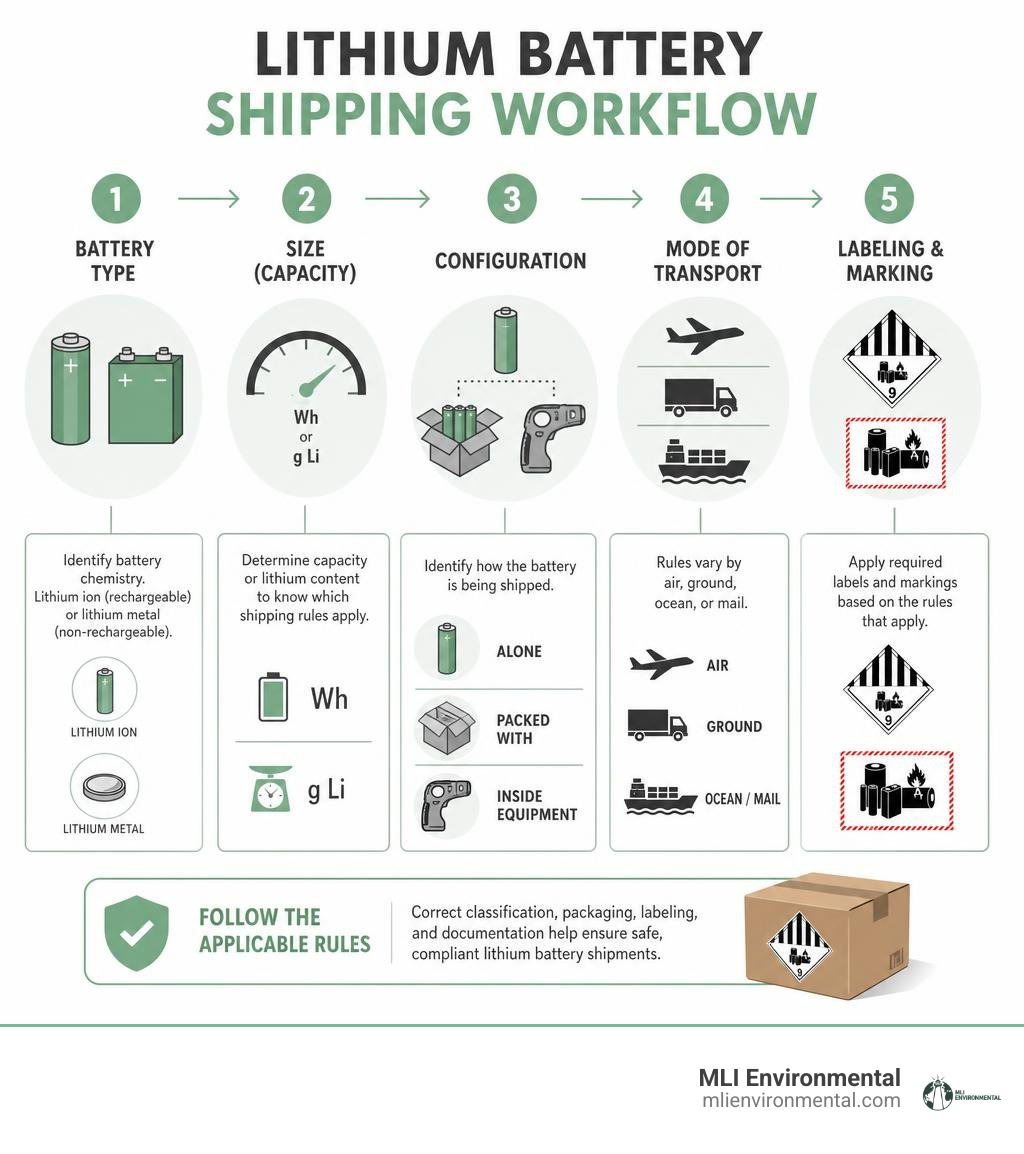
Shipping items with lithium batteries requires strict hazardous materials compliance, and the right rule depends on battery type, size, packaging configuration, transport mode, and condition.
| Factor | What It Affects |
|---|---|
| Battery chemistry | UN number, packing rules, size thresholds |
| Battery size | Whether full or reduced regulation applies |
| Configuration | Packing instruction and UN number |
| Transport mode | Quantity limits, labels, and paperwork |
| Battery condition | Whether shipment is allowed |
Lithium batteries are Class 9 miscellaneous hazardous materials under U.S. and international regulations. Even small batteries can overheat, catch fire, or enter thermal runaway, which is why regulators closely control how they move through air, ground, ocean, and mail networks.
If your business ships phones, laptops, power tools, medical devices, e-bikes, or replacement batteries, confirm the rules before handing the package to a carrier. This guide explains how to check the correct pathway for your shipment.
Understanding Lithium Battery Types and Size Thresholds
Start by identifying the battery chemistry and size. Lithium-ion batteries are rechargeable and measured in Watt-hours (Wh), while lithium-metal batteries are non-rechargeable and measured by grams of lithium content.
| Feature | Lithium-Ion Batteries | Lithium-Metal Batteries |
|---|---|---|
| Rechargeability | Rechargeable | Non-rechargeable |
| Measurement Metric | Watt-hours (Wh) | Lithium content (g) |
| Smaller Cell Limit | $le$ 20 Wh | $le$ 1 g |
| Smaller Battery Limit | $le$ 100 Wh | $le$ 2 g |
| Fully Regulated Threshold | > 100 Wh, or cells > 20 Wh | > 2 g, or cells > 1 g |
| U.S. Ground Exceptions | Cells $le$ 60 Wh; batteries $le$ 300 Wh | Cells $le$ 5 g; batteries $le$ 25 g |
Lithium-Ion vs. Lithium-Metal
- Lithium-ion batteries: Rechargeable batteries used in phones, laptops, e-bikes, and many electronics. If the Wh rating is not printed on the battery, calculate it by multiplying Volts (V) by Amp-hours (Ah).
- Lithium-metal batteries: Primary, non-rechargeable batteries used in watches, calculators, medical equipment, and specialty devices. Their shipment size is based on lithium content in grams.
UN 38.3 Testing
Every lithium cell or battery must pass UN 38.3 testing before it enters transportation. Shippers should keep or obtain the manufacturer’s UN 38.3 Test Summary for each battery. For broader context on these baseline requirements, see the complete guide to lithium battery shipping.
Determining Battery Configuration
Battery configuration determines the UN number and packing instruction:
- Standalone batteries: Replacement batteries, power banks, or bulk batteries shipped alone. Lithium-ion uses UN 3480; lithium-metal uses UN 3090.
- Packed with equipment: The battery is included in the same package but not installed in the device. Lithium-ion uses UN 3481; lithium-metal uses UN 3091.
- Contained in equipment: The battery is installed inside the device, such as a laptop, smartphone, or data logger. Lithium-ion uses UN 3481; lithium-metal uses UN 3091.
For detailed packing instructions and flowcharts, reference the IATA lithium battery guidance document.
Step-by-Step Guide to Shipping Items with Lithium Batteries Safely
Once you know the regulatory pathway, focus on safe execution.
PHMSA and DOT rules are designed to prevent physical damage, short circuits, and thermal runaway. For air transport, standalone lithium-ion batteries (UN 3480) must be shipped at a state of charge not exceeding 30% of rated capacity. For help deciding whether your shipment is fully regulated, read Can You Ship Lithium Batteries?.
Packaging and Labeling Rules
Use packaging that prevents movement, impact, and electrical contact:
- Protect terminals: Use non-conductive inner packaging, caps, or heavy-duty electrical tape.
- Prevent accidental activation: Power devices down and secure switches before shipping.
- Use rigid outer packaging: Fully regulated shipments may require UN specification packaging that meets Packing Group II performance standards.
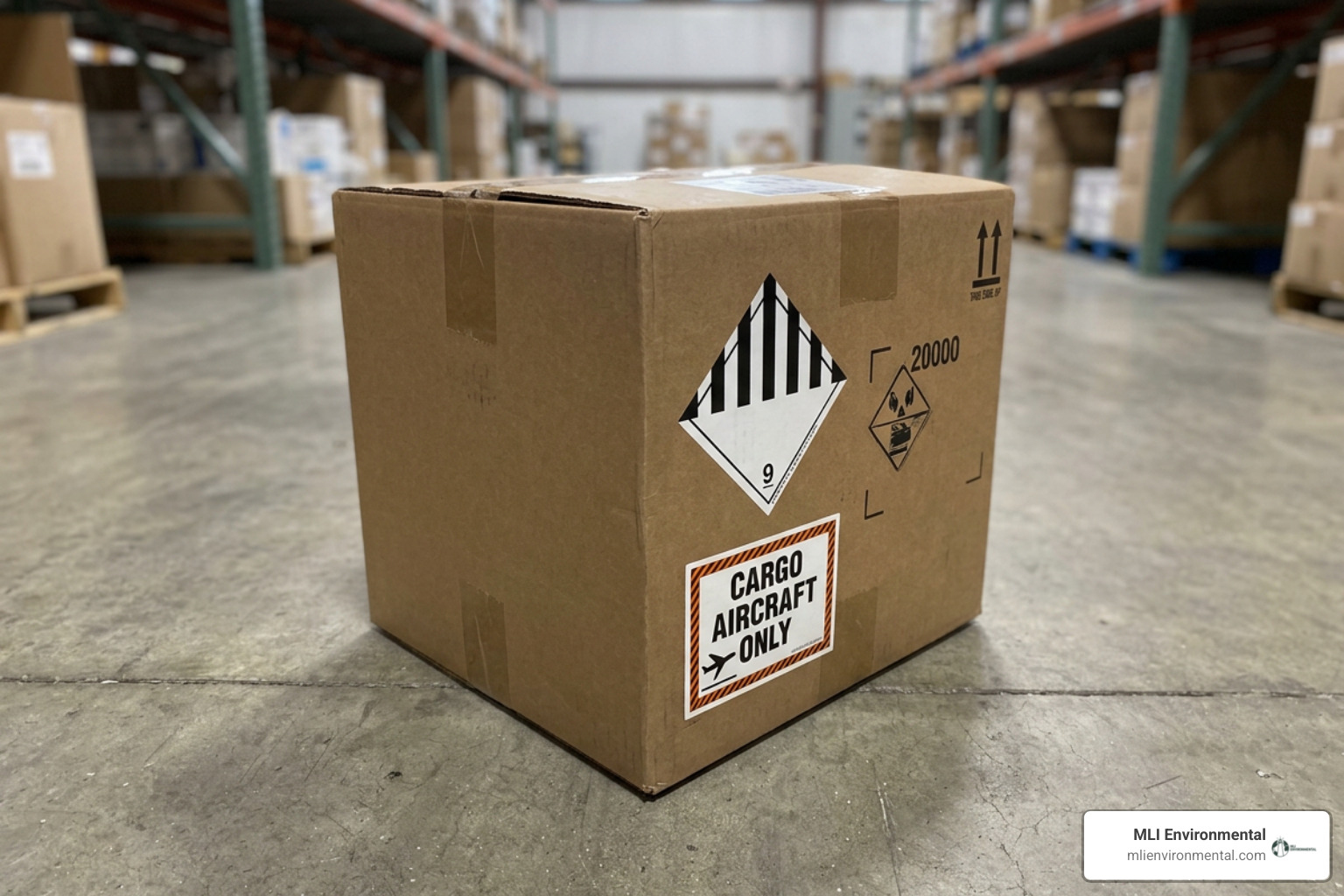
- Apply required marks and labels: Use the Class 9 lithium battery hazard label, lithium battery mark, and Cargo Aircraft Only label when required. The telephone-number requirement on the lithium battery mark is phasing out, with a final transition deadline of December 31, 2026.
For carrier-specific packaging detail, review UPS guidance on how to safely pack and ship batteries.
Mode-Specific Restrictions: Ground vs. Air vs. Ocean
Transport mode controls the rulebook:
- Air: Standalone lithium batteries (UN 3480 and UN 3090) are forbidden as cargo on passenger aircraft and must move on cargo aircraft with the required label. Section II air shipments of lithium-ion batteries are capped at 10 kg net weight per package on cargo aircraft.
- Ground: U.S. HMR rules allow a medium-battery exception for highway and rail only, including lithium-ion batteries up to 300 Wh and lithium-metal batteries up to 25 g when other conditions are met.
- USPS: Individual lithium batteries shipped without equipment are restricted to surface transportation and have a 5-pound mailpiece weight limit. Check the USPS lithium battery FAQ before mailing.
- Ocean: IMDG shipments must follow the applicable packing instructions, declarations, and placarding rules for dangerous goods.
For broader hazmat logistics planning, see shipping hazardous materials best practices.
Handling Special Cases: Damaged, Defective, Recalled, or End-of-Life Batteries
Damaged, defective, recalled, or end-of-life lithium batteries require extra caution because they carry a higher thermal runaway risk.
- No air transport: Damaged, defective, or recalled batteries are prohibited from passenger and cargo aircraft.
- Ground or vessel only: DDR batteries may move only by highway, rail, or vessel under strict DOT Special Permits.
- Specialized packaging: Use packaging designed to contain heat, sparks, and toxic gases, with non-combustible, electrically non-conductive cushioning.
- Recycling and disposal: End-of-life batteries may qualify for specific recycling or disposal exceptions, but they still require short-circuit prevention and compliant packaging.
For larger consumer batteries, such as e-bike batteries, read what you need to know about safely shipping electric bike batteries.
Frequently Asked Questions about Lithium Battery Shipping
What is the maximum state of charge for shipping lithium-ion batteries by air?
Standalone lithium-ion batteries (UN 3480) shipped by air must not exceed 30% state of charge. This does not apply to batteries installed in devices (UN 3481), though a lower charge is still a safety best practice.
Do I need special training to ship lithium batteries?
Yes. Employees who classify, package, label, or prepare shipping papers for dangerous goods need hazmat training. Air shipping under IATA generally requires recurrent training every 24 months, while DOT ground training is typically refreshed every three years.
Can I ship damaged or recalled lithium batteries?
Yes, but never by air. Damaged, defective, or recalled batteries can move only by ground or vessel under strict conditions and specialized packaging. For official guidance, consult the PHMSA lithium battery guide.
Get Expert Help Shipping Lithium Batteries Safely
Shipping items with lithium batteries requires careful classification, packaging, labeling, documentation, and training. A missed detail can lead to rejected shipments, fines, or serious fire risk.
Your Compliance Checklist
- Identify battery type: lithium-ion or lithium-metal.
- Confirm a certified UN 38.3 Test Summary is available.
- Determine whether the battery is standalone, packed with equipment, or contained in equipment.
- Calculate size in Watt-hours or grams of lithium.
- Verify transport mode, weight limits, and state-of-charge limits.
- Use approved packaging, terminal protection, Class 9 labels, and UN marks.
- Confirm staff have current hazmat training.
MLI Environmental helps businesses across Maine and New England manage dangerous goods shipping, hazardous materials logistics, packaging, documentation, and compliance. If you need help preparing a shipment, explore MLI Environmental’s dangerous goods shipping services.