
Understanding EHS Audits: Your Foundation for Workplace Safety
EHS audits are systematic evaluations of an organization’s environmental, health, and safety management systems, designed to identify hazards, verify compliance with regulations, and drive continuous improvement in workplace safety performance.
Quick Answer: What is an EHS Audit?
An EHS audit is a structured assessment that examines:
- Workplace conditions – Physical hazards, equipment safety, and environmental controls
- Documentation – Policies, procedures, training records, and incident reports
- Compliance status – Adherence to OSHA, EPA, and other regulatory requirements
- Management systems – How effectively your organization prevents and controls risks
- Improvement opportunities – Areas where safety and environmental performance can be improved
Are you prepared for your next inspection? While many businesses view EHS audits as a compliance necessity, they’re actually a strategic tool that goes far beyond checking boxes on a form. Think of an audit as a health checkup for your workplace—it identifies potential problems before they become serious issues, helps you avoid costly fines and penalties, and demonstrates your commitment to protecting employees and the environment.
The workplace is constantly changing. New equipment arrives, processes evolve, regulations update, and employee turnover happens. What was compliant last year might not be today. Regular EHS audits provide the systematic review needed to keep pace with these changes and maintain a safe, compliant operation.
Whether you’re a manufacturing facility handling hazardous materials, a school concerned about safety protocols, or any organization with environmental and safety responsibilities, understanding the audit process is essential. This guide breaks down everything you need to know about conducting effective EHS audits that protect your people, your business, and your reputation.
What is an EHS Audit and Why is it Crucial for Your Business?
An EHS audit is a thorough, systematic, and objective examination of an organization’s Environmental, Health, and Safety management systems and practices. Its primary goal is to assess how well a company is managing its EHS risks and complying with applicable regulations. This isn’t just about avoiding trouble; it’s about building a resilient, responsible, and efficient operation.
Regular EHS audits are crucial for several interconnected reasons that directly impact a business’s bottom line and long-term viability.

The Core Purpose: Beyond Compliance
While compliance is a significant driver for EHS audits, their core purpose extends much further. They are about proactively shaping a safer, healthier, and more sustainable workplace.
- Identifying Hazards: A primary function of EHS audits is to identify potential problems before they occur. This includes physical hazards, unsafe practices, and gaps in safety procedures. By inspecting the workplace for safety and health hazards, auditors can pinpoint risks that might otherwise go unnoticed. This proactive approach allows businesses to take appropriate corrective action, preventing incidents rather than reacting to them.
- Verifying System Efficacy: EHS audits don’t just look for hazards; they assess the effectiveness of the systems designed to manage those hazards. This means evaluating whether health and safety systems, policies, and tools are functioning as intended. For example, an audit might verify that emergency response plans are clearly articulated and that personnel know their emergency duties, or that hazardous waste management systems accurately track materials from generation to disposal.
- Ensuring Legal Compliance: One of the most direct benefits, compliance audits determine if a business adheres to applicable laws and regulations. This includes federal standards set by agencies like OSHA (Occupational Safety and Health Administration) and EPA (Environmental Protection Agency), as well as state and local environmental and safety requirements relevant to locations like Maine, New Hampshire, Massachusetts, Vermont, and Rhode Island. By providing a record of compliance, audits help organizations avoid violating regulations and paying fines.
- Driving Performance Improvement: EHS audits serve as a strategic tool for continuous improvement. They highlight areas of weakness, allowing businesses to refine their processes, update training, and implement more effective controls. This iterative process helps organizations move from merely meeting minimum requirements to achieving EHS excellence.
- Protecting Assets: This encompasses human, environmental, and financial assets. By reducing accidents and environmental incidents, EHS audits protect employees from injury, the environment from pollution, and the company from costly lawsuits, fines, and reputational damage.
The Tangible Benefits of Regular Audits
The advantages of conducting regular EHS audits are numerous and directly contribute to a company’s success:
- Reduced Insurance Premiums: Demonstrating a strong commitment to safety through consistent EHS audits and effective risk management can lead to lower insurance premiums. Insurers often view compliant and proactive companies as lower risk.
- Avoidance of Fines and Penalties: Regulatory violations can result in substantial fines, penalties, and even legal action. EHS audits help identify any potential violations of environmental, health, and safety (EHS) regulations, allowing businesses to take corrective action before they become serious and costly issues.
- Increased Operational Efficiency: Identifying and eliminating hazards and unsafe practices can streamline operations. For example, better waste management protocols identified during an audit can lead to more efficient disposal processes and reduced material waste. Integrating EHS audits with Hazardous Waste Management practices can ensure compliance and optimize handling.
- Stronger Safety Culture: Regular EHS audits increase employee safety, well-being, and morale. When employees see management actively investing in their safety, it fosters a culture of care and encourages greater participation in safety initiatives. This also helps improve staff awareness of safety regulations.
- Improved Reputation and Stakeholder Trust: A company known for its strong EHS performance builds trust with employees, customers, investors, and the public. This improved reputation can be a significant competitive advantage, attracting talent, business, and investment.
Navigating the Landscape: Types and Frequency of EHS Audits
Just as every business is unique, so too are the types of EHS audits required and their optimal frequency. Understanding the different categories and the factors influencing their timing is key to a robust EHS program.

Regulatory bodies like OSHA and EPA establish federal standards, which are often supplemented by state and local regulations in areas such as Maine, New Hampshire, and Massachusetts. Industry-specific standards, such as ISO 14001 for environmental management and ISO 45001 for occupational health and safety, also guide audit practices. A thorough risk assessment is usually the starting point for determining the most appropriate audit types and schedule.
Common Types of EHS Audits
EHS audits come in various forms, each serving a specific purpose:
- Compliance Audits: These are perhaps the most common type, focusing on whether a business is in full compliance with applicable federal, state, and local EHS laws and regulations. They often involve reviewing permits, licenses, training records, and operational procedures against legal requirements.
- Safety Program Audits: These audits dig into the effectiveness of a company’s overall safety program. They look for potential safety hazards in the workplace, assess the implementation of safety policies, and evaluate incident investigation processes and emergency preparedness.
- Environmental Audits: Focusing on environmental impacts, these audits identify potential environmental hazards and assess ways to reduce a company’s environmental footprint. This can include evaluating waste management practices, air emissions, wastewater discharge, and chemical storage. For specialized areas, Chemical Audits & Consultation can be invaluable.
- Management System Audits (ISO 14001, ISO 45001): These audits assess a company’s adherence to internationally recognized management system standards. ISO 14001 focuses on environmental management, while ISO 45001 (which replaced OHSAS 18001) is for occupational health and safety management. These audits ensure systematic processes are in place for continuous improvement.
- Specialized Audits: Depending on the industry, more specific audits may be necessary. For instance, School Facility Health & Safety Audits address the unique risks present in educational environments, from playground safety to chemical storage in science labs.
How Often Should You Audit?
There’s no universal standard for how often EHS audits should be performed; it largely depends on several factors:
- Risk Level of the Industry: High-risk industries, such as manufacturing or those handling hazardous materials, generally require more frequent audits than lower-risk environments like office-based organizations. The greater the potential for incidents, the more often a review is needed.
- Regulatory Triggers: Some regulations may mandate specific audit frequencies. For example, certain permits might require annual environmental compliance checks.
- Changes in Operations: Significant changes to processes, equipment, or facilities should trigger an audit to ensure new hazards are identified and controlled.
- Incident History: Following a serious accident or near-miss, a post-incident audit is critical to understand root causes and prevent recurrence.
- Company Policy and Goals: Many companies establish their own internal audit schedules based on their EHS objectives and commitment to continuous improvement.
- Guidance on Competent Persons: When considering internal audits, the concept of a “competent person” is crucial. A competent person, as defined by various regulatory bodies, is someone who has sufficient training and experience, or knowledge and other qualities, that allow them to assist properly in identifying and addressing EHS matters. This ensures the audit is conducted effectively and its findings are reliable. For further insight into internal audit requirements, resources like the HSE provide valuable guidance on the qualities of a competent auditor.
The Anatomy of an Effective EHS Audit: A Step-by-Step Guide
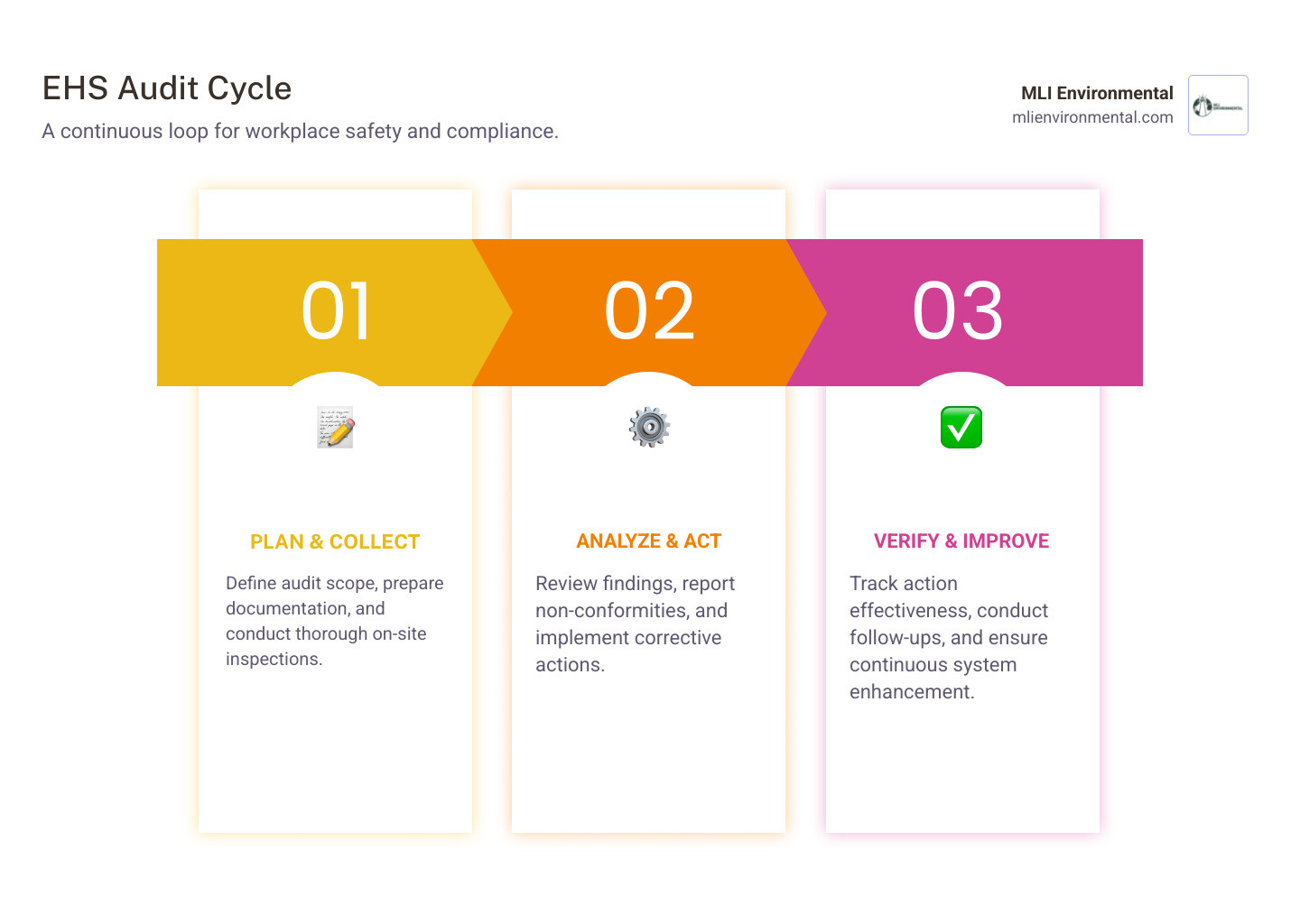
Conducting an effective EHS audit is a structured process, not a haphazard search for problems. It follows a lifecycle that involves careful planning, thorough execution, and diligent follow-up. Success hinges on clear communication and active employee involvement at every stage.
Step 1: Pre-Audit Preparation and Documentation
The foundation of a successful EHS audit is meticulous preparation. This phase sets the stage for a focused and efficient assessment.
- Defining Scope and Objectives: Before anything else, clearly define what the audit will cover. Will it be a comprehensive review of all EHS aspects, or will it focus on a specific area, like hazardous waste management or confined space entry? What are the desired outcomes? Identifying the areas to be covered and the relevant laws and regulations is paramount.
- Assembling the Audit Team: Determine who will conduct the audit. This could be an internal team or external consultants, each with their own advantages (discussed below).
Gathering Documents: This is a critical step. Collect all necessary documents that will be reviewed during the audit. This often includes:
- EHS policies and procedures
- Safety Data Sheets (SDS) for all chemicals
- Permits and licenses (e.g., air, water, waste)
- Training records for all relevant personnel
- Incident reports, accident investigations, and near-miss logs
- Previous EHS audit reports and corrective action plans
- Emergency response plans
- Equipment maintenance records
- Waste manifests and disposal records
- Occupational illness and injury reports (e.g., OSHA Form 300)
Having these documents organized and readily available can significantly streamline the audit process. Being prepared for regulatory scrutiny, like an EPA inspection, often involves having all your documentation in order. For more on this, consider insights from Ready for an EPA Audit?.
Step 2: The On-Site Audit Process
With preparation complete, the audit moves to the operational environment. This is where observation, interaction, and verification take place.
- Opening Meeting: The audit typically begins with an opening meeting involving key management and the audit team. This meeting establishes the audit’s scope, objectives, schedule, and clarifies communication protocols.
- Workplace Inspection: This involves physical walkthroughs of the facility to observe operations, identify potential hazards, and assess working conditions. Auditors will look for compliance with safety standards, proper equipment use, and adherence to established procedures. Resources like OSHA’s Hazard Identification guide provide excellent frameworks for systematic workplace inspections.
- Employee Interviews: Speaking with employees at various levels provides invaluable insights into daily practices, safety culture, and potential areas of concern that might not be evident from documentation alone. This helps understand safety practices and culture from the ground up.
- Record Reviews: Auditors will carefully review the gathered documents, cross-referencing them with observations and interview findings to verify compliance and identify discrepancies. For example, training records might be checked against actual practices.
- Closing Meeting: The audit concludes with a closing meeting where the audit team presents preliminary findings, discusses potential non-conformities, and outlines next steps. This is an opportunity for management to ask questions and understand the initial observations.
Step 3: Choosing Your Auditor: Internal vs. External
A critical decision in the EHS audit process is who will conduct the assessment. Both internal and external auditors offer distinct advantages.
| Feature | Internal Auditors | External Auditors |
|---|---|---|
| Cost | Generally more cost-effective | Often higher initial cost |
| Speed | Can be faster to mobilize and conduct | May have longer lead times |
| Internal Knowledge | Deep understanding of company processes and culture | Fresh perspective, less biased by internal politics |
| Objectivity | May be influenced by internal relationships | Highly objective and independent |
| Benchmarking | Limited to internal comparisons | Can benchmark against industry best practices and peers |
| Specialized Expertise | May have specific operational knowledge | Often possess broader industry and regulatory expertise |
Internal EHS audits are typically conducted by employees who are trained as auditors. As noted by the HSE, a “competent person” for internal audits should have sufficient training, experience, or knowledge to assist properly. This person can be an in-house health and safety team member.
External auditors are independent consultants or firms specializing in EHS audits. They bring an objective, fresh perspective and often possess specialized expertise across various industries and regulatory frameworks. This can be particularly beneficial for identifying subtle compliance gaps or providing insights into best practices. For companies seeking this objective, expert perspective, engaging in Third-Party Audits & Inspections is a common and effective strategy.
From Findings to Action: Maximizing Your Audit’s Value
The real value of an EHS audit isn’t just in identifying issues; it’s in what happens next. Turning audit findings into actionable improvements is where continuous progress is made. This involves structured corrective action, root cause analysis, and a commitment to ongoing review.
Common Challenges and How to Overcome Them
Despite the clear benefits, businesses often encounter problems when conducting EHS audits:
- Lack of Resources: This is a common challenge, whether it’s insufficient staff, time, or budget.
- Overcoming: Prioritize audit scope based on risk. Leverage technology like audit management software for efficiency. Consider external auditors for specialized tasks to free up internal resources.
- Employee Resistance/Lack of Engagement: Employees may be wary of audits, fearing blame or increased workload.
- Overcoming: Foster a culture of trust and non-punitive reporting. Emphasize that audits are for improvement, not punishment. Involve employees in the process, from interviews to identifying solutions. Ensure clear communication about the audit’s purpose and benefits.
- Insufficient Management Buy-in: If leadership doesn’t fully support EHS audits, they may not allocate necessary resources or act on findings.
- Overcoming: Highlight the tangible benefits: cost savings from avoiding fines, reduced insurance premiums, improved reputation, and improved operational efficiency. Frame EHS audits as a strategic investment, not just a compliance burden.
- Poor Follow-up: Findings are identified, but corrective actions are never fully implemented or tracked.
- Overcoming: Establish a clear Corrective Action Plan (CAP) with assigned responsibilities, deadlines, and a tracking system. Regular review meetings to monitor progress are essential.
- Fear of Reprisal: Employees may hesitate to report hazards or speak openly during interviews if they fear negative consequences.
- Overcoming: Implement and communicate a strong non-retaliation policy. Ensure a blame-free environment for reporting. Management must visibly support and act on employee input without targeting individuals.
Leveraging Technology for Modern EHS Audits
Technology is changing the way EHS audits are conducted, making them more efficient, accurate, and insightful:
- Audit Management Software: These platforms streamline the entire audit lifecycle, from planning and scheduling to tracking corrective actions. They centralize documentation, making it easily accessible for auditors and management.
- Mobile Data Collection: Auditors can use tablets or smartphones to conduct on-site inspections, instantly recording non-compliance issues with photos, descriptions, regulatory citations, and recommended corrective actions. This eliminates paper checklists and reduces data entry errors.
- AI-driven Analytics: Artificial intelligence can analyze vast amounts of audit data to identify trends, predict potential risks, and provide deeper insights into EHS performance. This allows for more strategic decision-making and targeted interventions.
- Digital Checklists: Moving from paper to digital checklists ensures consistency, makes updates easier, and allows for real-time aggregation of findings.
- Real-time Reporting: Dashboards and automated reports provide immediate visibility into audit findings, compliance status, and corrective action progress, enabling faster response and continuous monitoring.
Best Practices for Successful EHS Audits
To ensure your EHS audits are comprehensive and drive meaningful change, consider these best practices:
- Management Commitment: Leadership must visibly champion the EHS audit process, allocating resources and demonstrating a commitment to act on findings.
- Clear Communication: Maintain transparency throughout the audit, communicating its purpose, process, and findings to all relevant stakeholders, including employees.
- Worker Participation: Actively involve employees in inspections, interviews, and the development of corrective actions. Their frontline experience is invaluable for identifying practical solutions.
- Timely Corrective Actions: Address identified non-conformities and improvement opportunities promptly. Prioritize actions based on risk level and implement them efficiently.
- Regular Program Review: EHS audits should be part of a continuous improvement cycle. Regularly review the effectiveness of your EHS program and adjust your audit strategy as needed to ensure ongoing relevance and impact.
Frequently Asked Questions about EHS Audits
What is the difference between an EHS audit and a safety inspection?
The key difference lies in their scope and depth. An EHS audit is a systematic, comprehensive evaluation of an organization’s entire EHS management system, policies, and procedures against regulatory requirements and internal standards. It seeks to identify systemic weaknesses, verify compliance, and drive continuous improvement. Think of it as a holistic health check-up.
A safety inspection, on the other hand, is typically a more focused, routine physical check of the workplace at a specific point in time to identify immediate hazards, unsafe conditions, or non-compliant practices. It’s like a quick check for symptoms, often using a checklist for specific items like machine guarding, housekeeping, or PPE use. While inspections are a component of a good EHS program, they don’t dig into the underlying management systems that an audit does.
Can a business “fail” an EHS audit?
Audits don’t typically have a “pass/fail” grade in the traditional sense. Instead, they identify “non-conformities” (areas where the business is not meeting a standard or regulation) and “opportunities for improvement.” The goal of an EHS audit is to provide a snapshot of current performance and a roadmap for improvement. A business demonstrates success not by having a perfect audit report, but by acknowledging findings, developing a robust corrective action plan, and diligently implementing those actions. Therefore, a “failed” audit might better be described as an audit that revealed significant areas needing attention, which are then addressed through a corrective action plan to ensure continuous improvement.
What role do employees play in an EHS audit?
Employees are absolutely crucial to the success and effectiveness of an EHS audit. They are often the most knowledgeable about day-to-day operations, potential hazards, and the practical effectiveness of safety procedures. Their roles include:
- Providing Insights: During interviews and observations, employees offer valuable information about their work tasks, safety concerns, and suggestions for improvement.
- Identifying Hazards: Workers on the front lines are often the first to notice unsafe conditions or practices.
- Demonstrating Procedures: They can show auditors how tasks are performed and how safety protocols are (or aren’t) being followed.
- Implementing Corrective Actions: Employees are key to implementing any changes or corrective actions identified by the audit. Their buy-in and participation are essential for sustained improvement.
A successful audit relies on creating an environment where employees feel safe and encouraged to participate openly, without fear of reprisal, knowing their input is valued and contributes to a safer workplace for everyone.
Turn EHS Audits Into Your Next Compliance and Safety Win
EHS audits are far more than a regulatory hurdle; they are an indispensable strategic tool for any responsible business. By systematically evaluating environmental, health, and safety practices, companies can proactively identify risks, ensure compliance, and drive continuous improvement. This comprehensive approach safeguards employees, protects the environment, and improves a company’s reputation and financial stability. Moving beyond a simple checklist, EHS audits provide the insights needed to foster a culture of safety, efficiency, and unwavering commitment.
MLI Environmental, a trusted leader in hazardous materials and waste management, understands the critical role of robust EHS practices. With certified professionals specializing in international and domestic dangerous goods shipping, hazardous materials logistics, and waste disposal, MLI Environmental is dedicated to quick, safe, and compliant solutions. Their expertise ensures businesses can meet complex regulatory requirements and maintain the highest standards of safety.
Take the next step in strengthening your EHS program with professional Compliance Audits.