
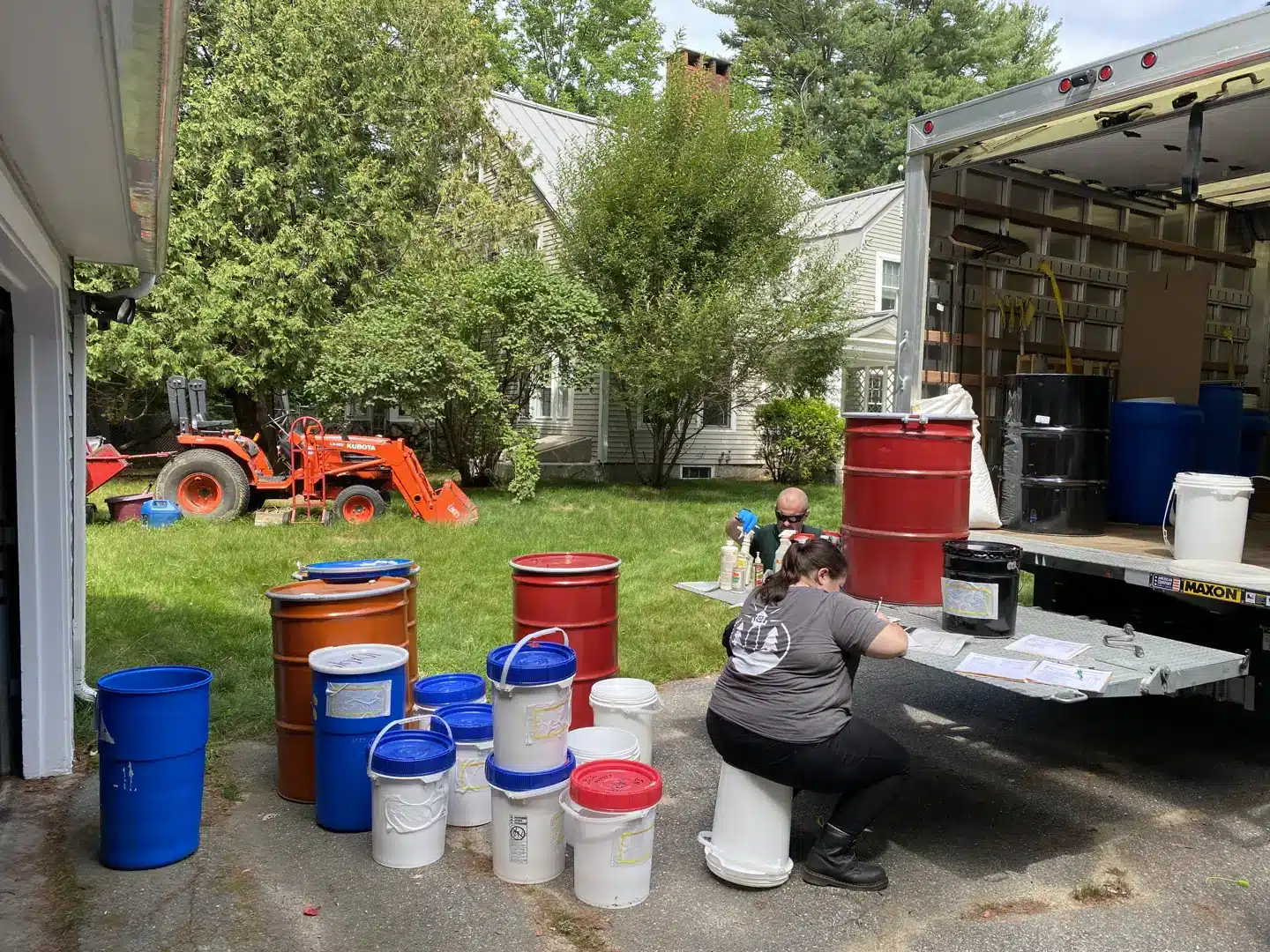
What Universal Waste Management Means for Your Business
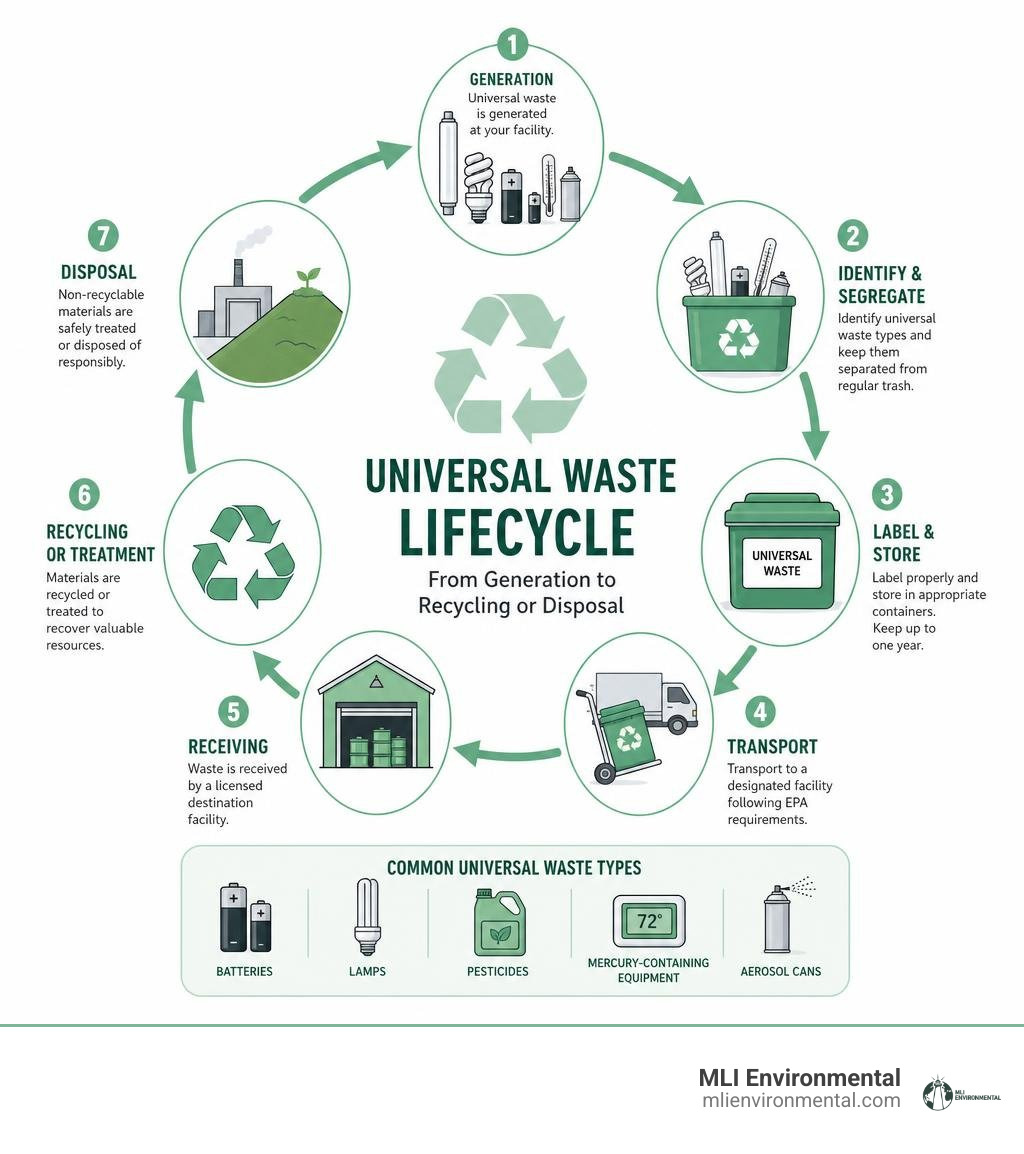
Universal waste management is the process of collecting, storing, labeling, transporting, and disposing of certain commonly generated hazardous wastes under simplified EPA regulations, making compliance more accessible for businesses of all sizes.
| Question | Answer |
|---|---|
| What is it? | A streamlined system for handling specific hazardous wastes, including batteries, lamps, pesticides, mercury-containing equipment, and aerosol cans |
| Who does it apply to? | Businesses, agencies, schools, and other organizations that generate these waste types |
| Key benefit | Reduced regulatory burden compared with standard hazardous waste rules |
| Storage limit | Up to one year on-site |
| Federal rule | 40 CFR Part 273 |
The EPA created this practical framework to keep common hazardous materials out of regular trash while encouraging proper recycling and disposal. Batteries, thermostats, fluorescent lamps, pesticides, and aerosol cans can create serious environmental and safety risks when they are mishandled.
This guide explains what qualifies as universal waste, who the rules apply to, how to store and label it correctly, and how to stay compliant at both the federal and state level.
What Is Universal Waste and How Is It Different From Hazardous Waste?
Universal waste is still hazardous waste, but it is common enough that regulating every office, retail store, school, or facility under the full hazardous waste framework would be impractical.
Standard hazardous wastes are governed by Resource Conservation and Recovery Act (RCRA) Subtitle C rules, which can involve strict tracking, short storage windows, and specialized transport manifests. Universal waste rules relax certain storage, transport, and recordkeeping requirements to make safe recycling and disposal easier.

Before managing any material, a business must perform a waste determination to see whether discarded items meet hazardous criteria such as toxicity, reactivity, ignitability, or corrosivity. MLI Environmental explains that process in Hazardous vs Non-Hazardous Waste Determination and breaks it down further in 5 Steps to a Hazardous Waste Determination.
Improper disposal can allow heavy metals like lead, cadmium, and mercury to leach into local water supplies, while lithium batteries can ignite and cause toxic fires in waste collection trucks and facilities.
Why the Universal Waste Rule Exists
The EPA finalized the Universal Waste Rule in 1995 to make compliance more practical for everyday hazardous items. By simplifying the rules, the program helps businesses increase collection and recycling, divert toxic materials from municipal landfills, and reduce the need for complex manifests for common items.
The Five Federal Categories of Universal Waste
At the federal level, the EPA recognizes five categories of universal waste.
| Category | Common Examples | Primary Hazard |
|---|---|---|
| Batteries | Lithium-ion, nickel-cadmium, lead-acid, metal hydride | Heavy metals, fire risk, corrosive electrolytes |
| Lamps | Fluorescent tubes, neon, high-intensity discharge (HID) | Mercury vapor |
| Mercury-Containing Equipment | Thermostats, barometers, mercury switches | Elemental mercury liquid and vapor |
| Pesticides | Recalled or unused agricultural/commercial pesticides | Acute toxicity, environmental runoff |
| Aerosol Cans | Spray paint, lubricants, cleaning solvents | Flammability, pressurized gas hazard |
For the official federal framework, review the EPA’s Universal Waste resources.
Batteries, Lamps, and Mercury-Containing Equipment
These are among the most common universal wastes found in workplaces.
- Batteries: Includes nickel-cadmium, small sealed lead-acid, and lithium-ion batteries. Lithium batteries require special care because they can short-circuit and catch fire.
- Lamps: Includes fluorescent, metal halide, neon, and high-pressure sodium bulbs that exhibit a hazardous characteristic, usually because of mercury.
- Mercury-containing equipment: Includes older thermostats, barometers, pressure gauges, and some electrical switches.
For practical program guidance, see MLI Environmental’s guide to Universal Waste Recycling Solutions.
Pesticides and Aerosol Cans
Pesticides include suspended, recalled, or unused pesticides managed through a waste pesticide collection program. Aerosol cans, added to the federal universal waste list in December 2019, include non-empty spray cans for paint, lubricants, and cleaners as long as the cans are intact and not actively leaking.
Regulatory Requirements for Universal Waste Management
Universal waste regulations are streamlined, but businesses still need to follow 40 CFR Part 273 to maintain compliance and avoid penalties. For an official walkthrough, see the EPA’s Introduction to Universal Waste training manual.
Handler Classifications in Universal Waste Management
Your requirements depend on how much universal waste you accumulate on-site at one time.
- Small Quantity Handlers of Universal Waste (SQHUW): Facilities with less than 5,000 kilograms (11,023 lbs) of universal waste on-site. SQHUWs generally do not need an EPA ID number and have minimal recordkeeping requirements.
- Large Quantity Handlers of Universal Waste (LQHUW): Facilities with 5,000 kilograms or more on-site at any point. This status remains for the rest of the calendar year. LQHUWs must obtain an EPA ID number, keep shipment logs, and provide employee training.
If your business is close to the threshold, MLI Environmental’s guide on How to Reduce Your Waste Generator Status can help lower regulatory burden.
Storage, Labeling, and Accumulation Rules
To keep universal waste status valid:
- One-year limit: Store universal waste on-site for no more than one year from the date generated or received.
- Dating containers: Mark containers with the accumulation start date or otherwise prove how long the waste has been stored.
- Clear labeling: Use accepted labels such as “Universal Waste—Battery(ies),” “Waste Lamp(s),” or “Universal Waste—Aerosol Can(s).”
- Safe packaging: Store wastes in closed, structurally sound containers that prevent leaks, breakage, or releases.
For related compliance basics, review MLI Environmental’s Hazardous Waste Generator guide.
Transportation, Disposal, and State-Specific Variations
Under federal rules, universal waste can often move without a hazardous waste manifest or licensed hazardous waste transporter, provided shipments still comply with Department of Transportation requirements. Transporters may store universal waste at a transfer facility for up to 10 days.
State rules can be stricter. Maine, for example, includes additional categories such as architectural paint, cathode ray tubes, and electronic waste, and it may require transport permits for larger universal waste shipments. Massachusetts and Vermont also have specific rules for electronics recycling and mercury-added products.
For regional details, read Universal Waste Disposal Regulations in New England: What Businesses Need to Know.
Frequently Asked Questions About Universal Waste
How long can a facility store universal waste on-site?
Both small and large quantity handlers can store universal waste on-site for up to one year. Containers should be clearly dated so the facility can prove when accumulation began.
Does universal waste count toward hazardous waste generator status?
No. When managed in compliance with 40 CFR Part 273, universal waste does not count toward monthly hazardous waste generator status. This can help businesses stay in a lower, less regulated generator category.
Can universal waste be disposed of in regular trash?
No. Universal waste is still hazardous waste. Fluorescent bulbs, lithium batteries, pesticides, and similar materials must go to an authorized handler, foreign destination, or permitted destination facility for recycling, treatment, or disposal.
Get Compliant Universal Waste Support From MLI Environmental
Universal waste management is easier when your business understands its handler status, labels containers correctly, and follows the one-year storage limit. These steps help protect the environment while reducing unnecessary compliance risk.
For businesses in Maine, New Hampshire, Massachusetts, and Vermont, MLI Environmental provides hazardous materials logistics and waste disposal services backed by certified professionals and quick, safe service.
Ready to clear out accumulated bulbs, batteries, and aerosol cans? Get professional universal waste solutions from MLI Environmental.