

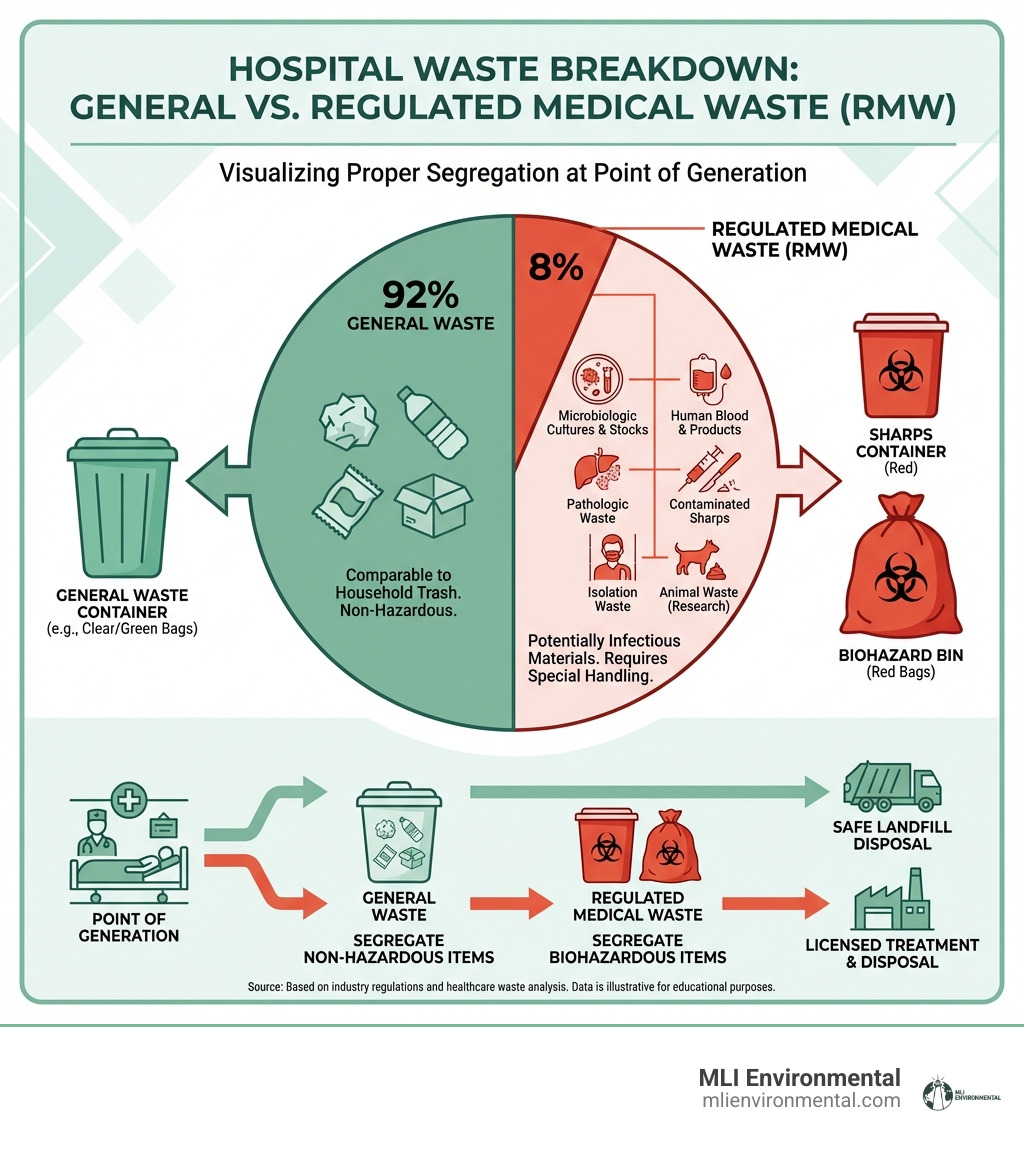
Biohazard waste in hospitals includes any waste that may be contaminated by blood, body fluids, or other potentially infectious materials. Despite common assumptions, less than 8% of all hospital waste is actually classified as regulated medical waste (RMW)—the rest is comparable to regular household trash.
Key Categories of Hospital Biohazard Waste
- Microbiologic cultures and stocks – laboratory specimens, viral cultures, bacterial isolates
- Human blood and blood products – liquid blood, serum, plasma, saturated items
- Pathologic waste – tissues, organs, body parts, surgical specimens
- Contaminated sharps – needles, scalpels, broken glass, any item that can puncture skin
- Isolation waste – materials from patients with highly communicable diseases
- Animal waste – contaminated bedding, tissues, and carcasses from research facilities
The U.S. healthcare system produces more than five million pounds of waste each year. This includes everything from needles used in routine vaccinations to tissue removed during surgeries, trace chemicals from IV lines, and supplies contaminated during patient care.
Here’s what matters most: Regulated medical waste is defined by regulation, not by proven infectivity. In fact, epidemiologic evidence shows that hospital wastes are not more infectious than residential waste. The primary risks come from sharps injuries during patient care—not from disposal practices.
Understanding exactly what counts as biohazard waste helps hospitals properly segregate, store, and dispose of these materials while staying compliant with federal and state regulations. Proper classification also prevents the unnecessary treatment of general waste as hazardous, saving money and reducing environmental impact.
Defining Biohazard Waste in Hospitals
When you walk through a hospital in Portland, Maine, or a clinic in Boston, Massachusetts, you see bins in various colors. While the red bags get the most attention, the definition of biohazard waste is more nuanced than “anything with a drop of blood on it.” At its core, biohazard waste—often legally referred to as regulated medical waste (RMW)—is waste that poses a potential risk to human health or the environment because it may contain pathogens.
The EPA Medical Waste Overview notes that while the federal government provides a framework, the primary responsibility for regulating medical waste shifted to individual states after the Medical Waste Tracking Act of 1988 expired in 1991. This means a hospital in Burlington, Vermont, might face slightly different documentation requirements than one in Providence, Rhode Island. Regardless of the specific state, the goal remains the same: ensuring Biohazardous Waste Disposal is handled with enough care to prevent the spread of disease.

Regulated Medical Waste Categories
To manage waste effectively, hospitals break RMW into several subcategories. This isn’t just for organization; different types of waste require different treatment methods.
- Microbiologic Cultures and Stocks: This includes cultures and stocks of infectious agents from research and clinical laboratories. Because these are concentrated forms of pathogens, they are often considered the highest risk.
- Human Blood and Blood Products: This covers liquid blood, serum, plasma, and other components. It also includes items “saturated” with blood that would release it if compressed.
- Pathologic Waste: This includes human tissues, organs, and body parts removed during surgery or autopsy.
- Contaminated Sharps: Any item that can easily penetrate the skin, such as needles, scalpels, and broken glass, if they have come into contact with infectious materials.
- Animal Waste: Specifically, carcasses, body parts, and bedding of animals that were known to have been exposed to infectious agents during research.
- Isolation Waste: Waste generated by patients who are isolated to protect others from highly communicable diseases (like Ebola or certain viral hemorrhagic fevers).
Is Hospital Biohazard Waste More Infectious Than Residential Waste?
It might come as a surprise, but according to epidemiologic evidence, hospital waste is generally no more infectious than the trash sitting in your kitchen bin at home. In fact, some studies suggest that residential waste can sometimes be more heavily contaminated with certain bacteria than hospital waste.
The CDC Guidelines for Regulated Medical Waste emphasize that there is no evidence suggesting traditional medical waste disposal practices have caused disease in the community. Most of the fear surrounding hospital waste is driven by public perception and aesthetic concerns rather than actual transmission risk. For example, during the early HIV epidemic, public anxiety led to much stricter policies on pathology waste and sharps, even though the actual risk of catching a virus from a landfill was virtually zero.
The real danger isn’t the waste sitting in a bag; it’s the accidental needlestick injury that can occur before the waste is even disposed of. This is why segregation and containment are the most critical parts of the process.
Proper Segregation and Containment Strategies
Proper segregation is the golden rule of Biomedical Waste Disposal. If you toss a regular soda can into a red biohazard bag, that entire bag must now be treated as biohazard waste. This drives up costs and creates unnecessary environmental strain. Conversely, placing biohazardous waste in a regular trash bin poses a safety hazard to janitorial staff and waste haulers.
Managing Sharps and Microbiology Cultures
Sharps are arguably the most dangerous category of waste because they provide a direct route for pathogens to enter the bloodstream through puncture wounds. Best practices for sharps management include:
- Point-of-Use Disposal: Sharps containers should be located as close as possible to where the needles are used.
- No Recapping: Most needle-stick injuries occur when healthcare workers try to recap a needle. It should go straight into the bin.
- Puncture Resistance: Containers must be hard-sided and leak-proof.
- Aerosol Prevention: For microbiological cultures, on-site decontamination (such as autoclaving) is often preferred. This prevents the risk of pathogens becoming airborne if a bag were to break during transport to an off-site facility.
Handling Pathology and Blood Products
Pathology waste requires a different level of “visual” management. Because it involves recognizable human tissues and body parts, it is almost always destined for incineration. This is done for both sanitary and ethical/aesthetic reasons.
- Secondary Containment: Liquid blood and fluid blood products should be placed in leak-proof containers. If a bag is used, it should be a “red bag” certified for tear resistance. If the outside of the bag becomes contaminated, it must be “double-bagged.”
- Labeling: All containers must be marked with the universal biohazard symbol. In states like New Hampshire or Massachusetts, specific state-level labeling requirements may also apply, such as “Incineration Only” for pathological waste.
Treatment and Disposal Methods for Hospital Biohazard Waste
Once biohazardous waste is collected, it must be treated to render it non-infectious before it can be sent to a final disposal site (such as a landfill).
| Treatment Method | How it Works | Best For |
|---|---|---|
| Autoclaving | Uses high-pressure steam (250°F) to kill pathogens. | Sharps, cultures, and most RMW. |
| Incineration | Burns waste at extremely high temperatures (1,800°F+). | Pathological, pharmaceutical, and trace chemo waste. |
| Microwaving | Uses microwave radiation to heat and disinfect waste. | Most RMW; not for pathology. |
| Chemical Treatment | Uses disinfectants like chlorine to neutralize pathogens. | Liquid waste and some solids. |
Autoclaving vs. Incineration
Autoclaving is the most common alternative to incineration. It is generally cheaper and more environmentally friendly because it doesn’t release the same level of emissions. Most RMW (about 90%) is suitable for autoclaving. However, it doesn’t reduce the physical volume of the waste as much as incineration does, and it doesn’t work for everything.
Incineration is still the “gold standard” for certain types of waste, particularly Pharmaceutical Waste Disposal. Before 1997, over 90% of all infectious waste was incinerated. Today, that number has dropped significantly due to stricter EPA emission standards under the Clean Air Act, which targeted pollutants like dioxins and mercury. Now, hospitals typically only incinerate what they absolutely have to—like body parts and certain toxic chemicals.
On-site vs. Off-site Disposal Options
Large hospitals in cities like Springfield, Massachusetts, or Worcester may have the space and budget for on-site autoclaves. This can save money on transport costs. However, on-site treatment requires significant maintenance, staff training, and regulatory permits.
Most healthcare facilities in New England choose off-site disposal. They partner with a licensed medical waste disposal company that picks up the waste, transports it in specialized vehicles, and treats it at a centralized facility. This shifts the operational burden to the experts, though the hospital still retains “cradle-to-grave” legal responsibility for the waste.
Regulatory Compliance and Cradle-to-Grave Responsibility
The concept of “cradle-to-grave” responsibility is a cornerstone of the Resource Conservation and Recovery Act (RCRA). It means that if your hospital generates a bag of biohazard waste, you are legally responsible for it until it is destroyed or safely buried in a landfill. If a waste hauler dumps your red bags in a forest in Central Maine, the hospital is the one facing the fines.
This is why the Importance of Regular Biohazardous Waste Disposal in Medical Facilities cannot be overstated. Consistent, documented disposal protects the hospital’s reputation and legal standing.
Federal and State Oversight
- EPA: Focuses on the environmental impact of disposal and emissions from incinerators.
- OSHA: Focuses on worker safety, particularly through the Bloodborne Pathogens Standard, which mandates PPE and sharps safety.
- DOT: Regulates the packaging and labeling of biohazardous waste for transport on public roads.
- State DEPs: In New England, agencies such as the Maine Department of Environmental Protection (DEP) and the Rhode Island Department of Environmental Management (DEM) set the specific “boots on the ground” rules for how long waste can be stored on-site before it must be moved.
Discharging Fluids to Sanitary Sewers
Can you just pour blood down the drain? In many cases, yes. Small amounts of blood and body fluids can be safely discharged into the sanitary sewer system. The pathogens in these fluids are typically inactivated by a combination of dilution, exposure to household chemicals in the sewage, and the secondary treatment processes at municipal wastewater plants. However, this should only be done if permitted by local ordinances and after consulting with the facility’s infection control committee.
Best Practices for Managing Biohazard Waste in Hospitals
Managing biohazard waste in hospitals isn’t just about following the law; it’s about building a culture of safety.
- Staff Training: Everyone, from surgeons to housekeeping staff, needs to know what goes in the red bag and what doesn’t.
- Waste Management Plans: Per 40 CFR § 60.55c, any facility using an incinerator (or a vendor who does) must have a written waste management plan. This plan should outline segregation, storage, and emergency procedures.
- Use of PPE: Handling biohazard waste should always involve appropriate personal protective equipment, including gloves, gowns, and face shields if splashing is a risk.
- Regular Audits: Periodically checking waste streams can reveal whether staff are overclassifying waste, leading to significant cost savings. Avoiding Hospital Hazardous Waste Violations starts with knowing what is actually in your bins.
High-Risk Waste Considerations
Some wastes require “extra” care. These include:
- CJD (Creutzfeldt-Jakob Disease): While prions are incredibly resistant to standard sterilization, standard RMW protocols are generally sufficient for disposal, though some facilities opt for incineration to be safe.
- Select Agents: These are biological toxins or pathogens (such as anthrax or Ebola) that pose a severe threat to public health. These often require on-site decontamination before they ever leave the lab.
- Toxin Exclusions: Small amounts of certain toxins (such as ricin or botulinum toxin) may be exempt from the strictest regulations if they fall below specific weight limits (e.g., less than 100 mg of ricin).
Frequently Asked Questions about Biohazard Waste
What is the most common disposal method for hospital biohazard waste?
While incineration was the standard for decades, autoclaving (steam sterilization) is now the most common method for treated regulated medical waste. It is effective for about 90% of the RMW stream, including sharps and cultures.
Who is legally responsible for biohazard waste from generation to final disposal?
The generator (the hospital or clinic) is responsible. Under the “cradle-to-grave” rule, the hospital remains liable for the waste even after it has been handed over to a transport company.
Can blood and body fluids be safely poured down hospital drains?
Yes, in most jurisdictions, small quantities of blood and infectious body fluids can be poured down utility sinks or toilets that are connected to a sanitary sewer system. The process of dilution and municipal wastewater treatment effectively neutralizes pathogens.
Identify, Segregate, and Manage Biohazard Waste the Right Way
Managing biohazard waste in hospitals is a complex but essential task for healthcare facilities across Maine, New Hampshire, and the rest of New England. By understanding that only a small fraction of waste is truly “regulated,” hospitals can focus their resources on the high-risk items that truly matter—such as sharps and microbiologic cultures.
Proper segregation, containment, and treatment don’t just keep you compliant with the EPA and OSHA; they protect your staff, your patients, and your community. Whether you are a large hospital in Boston or a small clinic in Northern Maine, having a robust Medical Waste Management strategy is the best way to ensure safety and efficiency.
MLI Environmental is a trusted leader in the hazardous materials and waste management industry. They specialize in international and domestic dangerous goods shipping, hazardous materials logistics, and waste disposal, known for their certified professionals and quick, safe service. If your facility needs a professional waste audit or a compliant disposal partner, the experts at MLI are ready to help.