
Acronyms are incredibly useful for shorthand communication, but they frequently lead to confusion when multiple organizations, products, and regulatory bodies share the same letters. The acronym tcsa is a prime example of this phenomenon. Depending on the industry, geographic region, or specific professional field, these four letters can stand for vastly different things.
The most common point of confusion, however, is not between different organizations sharing the acronym, but rather a simple typographical error. Many individuals searching for information on federal chemical regulations type tcsa when they actually mean TSCA—the Toxic Substances Control Act. Because TSCA is a major piece of federal environmental legislation that impacts thousands of businesses nationwide, this one-letter transposition can lead searchers down a rabbit hole of unrelated sports leagues, regional government associations, and technical hardware specifications.
To help clarify this landscape, it is helpful to look at the diverse sectors that utilize the tcsa abbreviation:
- Federal Environmental Regulation (The Common Mix-Up): The Toxic Substances Control Act (TSCA), administered by the Environmental Protection Agency (EPA), which oversees the manufacturing, import, and disposal of chemical substances.
- Government & Advocacy: Regional public service groups, such as the Tennessee County Services Association, which advocates for local county governments.
- International Compliance & Technology: Organizations like Technical Compliance South Africa, which focuses on electrical and telecommunications standards, or software compliance firms offering rapid SOC 2 certification paths for startups.
- Athletics & Community Programs: Youth sports organizations, including the Tri-Cities Soccer Association in Illinois, the Tennessee Christian Soccer Academy, and the Toombs County Soccer Association in Georgia.
- Academic & Professional Assessments: The Teacher Candidacy Skills Assessment, used by universities to evaluate the readiness of future music educators.
- Industrial Engineering: Hardware components like the TCSA Series current monitoring transducers manufactured by Littelfuse.
For businesses operating in New England—including Maine, New Hampshire, Massachusetts, Vermont, and Rhode Island—distinguishing between regional entities located elsewhere and the federal chemical regulations of TSCA is critical. If your primary concern is chemical safety, hazardous waste disposal, or regulatory compliance, your focus should be on the federal TSCA framework.
How Does the Toxic Substances Control Act (TSCA) Regulate Hazardous Chemicals?
The Toxic Substances Control Act (TSCA) is a foundational piece of United States environmental law passed on October 11, 1976. Enacted to protect public health and the environment, the law grants the EPA broad authority to track, test, and restrict chemical substances and mixtures that pose an unreasonable risk of injury to health or the environment.
Unlike other environmental laws that focus purely on waste disposal or emissions, TSCA regulates the entire life cycle of chemical substances—from pre-market assessment and manufacturing to distribution, use, and ultimate disposal. When the law was originally enacted, it grandfathered in more than 62,000 chemicals already in commerce, requiring the EPA to systematically evaluate them over time. Over the years, the EPA’s inventory has grown to include more than 75,000 industrial chemicals.
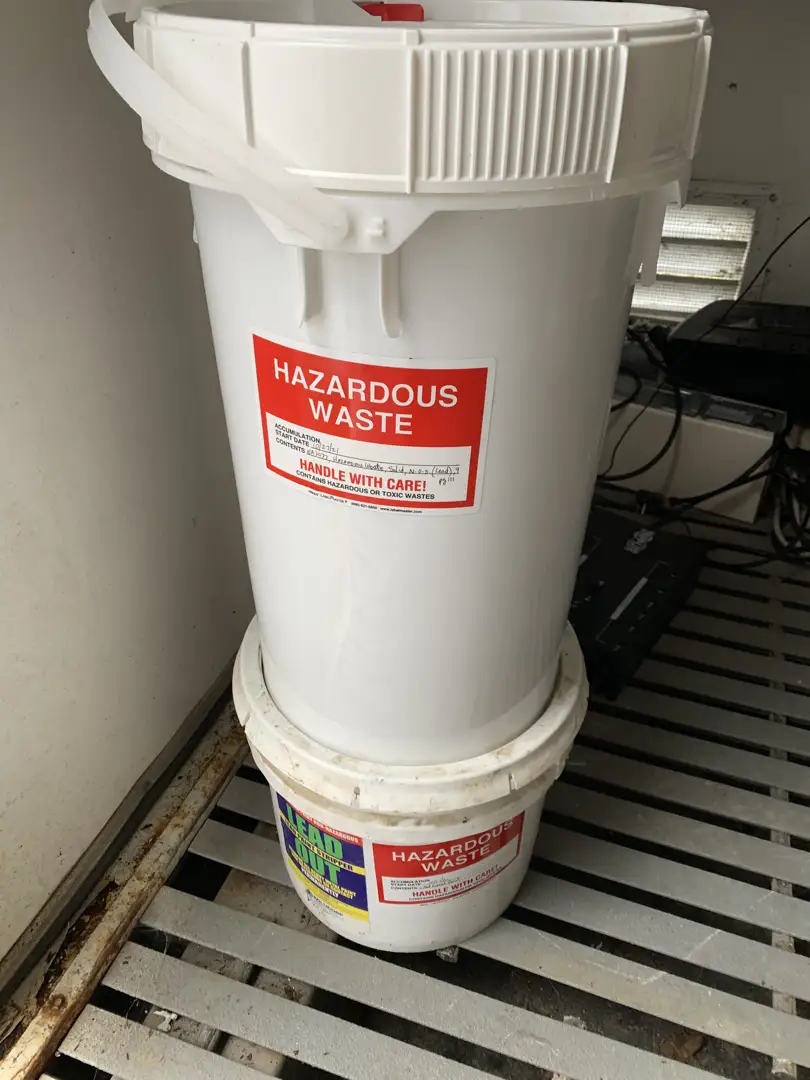
Several highly toxic, persistent, and bioaccumulative chemicals are heavily regulated under specific sections of TSCA. These include:
Polychlorinated Biphenyls (PCBs)
PCBs are synthetic organic chemicals that were widely used in electrical equipment, heat transfer systems, and specialized lubricants due to their non-flammability and electrical insulating properties. Because of their extreme environmental persistence and health risks, the commercial manufacturing of PCBs was banned domestically in 1979. Under TSCA, strict rules govern the storage, labeling, and disposal of PCB-containing materials. Specifically, liquid PCBs with concentrations greater than 500 parts per million (PPM) must be disposed of in specialized, TSCA-approved incinerators to ensure complete destruction.
Asbestos
Asbestos is a naturally occurring fibrous mineral known for its heat resistance and structural strength, historically used in building materials, insulation, and brake linings. Inhalation of asbestos fibers can cause severe, long-term lung diseases, including asbestosis, lung cancer, and mesothelioma. Under TSCA, the Asbestos Hazard Emergency Response Act (AHERA) was established to regulate asbestos management in schools, hospitals, and other public and commercial buildings. AHERA requires these facilities to maintain detailed management plans, implement safe handling and removal practices, and adhere to strict emission limits during abatement projects.
Lead-Based Paint
Lead is a highly toxic heavy metal that can cause neurological damage, developmental delays, and organ failure, particularly in young children. The EPA banned the use of lead-based paint in residential and public buildings in 1978. TSCA regulations require that individuals and firms performing renovation, repair, and painting projects in pre-1978 homes, child care facilities, and schools be certified and trained in lead-safe work practices. Furthermore, sellers and landlords of pre-1978 residential properties must disclose any known lead-based paint hazards to potential buyers or renters.
To maintain compliance with TSCA, manufacturers and importers of chemical substances must adhere to strict reporting guidelines. Under the EPA’s Chemical Data Reporting (CDR) rule, facilities are required to submit detailed reports quadrennially (every four years) if their production or import volumes reach 25,000 pounds or more for a specific reporting year. These reports must be submitted electronically using the EPA’s specialized e-PMN software, which handles premanufacture notices, biotechnology notices, and notices of commencement.
The consequences of failing to comply with TSCA regulations are severe. The EPA enforces these rules strictly, and noncompliance can result in civil or criminal penalties. Criminal fines can reach up to $50,000 per day of violation, and individuals responsible for willful violations can face up to one year of imprisonment.
For businesses located in New England—from Bangor and Portland, Maine, to Manchester, New Hampshire, Boston, Massachusetts, and Burlington, Vermont—navigating these complex federal regulations can be challenging. Partnering with a certified hazardous waste management professional like MLI Environmental ensures that your chemical inventory is properly assessed, reported, and disposed of in full compliance with TSCA and EPA guidelines. For a deeper dive into the history and structure of this legislation, read our comprehensive guide, Toxic Substances Control Act: What Is It?.
What Are the Main Objectives of Chemical Regulation?
The overarching goal of federal chemical regulation under TSCA is to establish a uniform, nationwide system for managing chemical risks. The main objectives of this regulatory framework include:
- Assessing New Commercial Chemicals: Before any new chemical substance can enter the U.S. market, manufacturers must submit a Premanufacture Notice (PMN) to the EPA. This allows the agency to evaluate the chemical’s potential health and environmental impacts before it is mass-produced.
- Regulating Existing Chemicals: The EPA is tasked with systematically reviewing chemicals that are already in commerce. If a substance is found to present an unreasonable risk to public health, vulnerable populations, or the environment, the EPA can place restrictions on its manufacture, processing, distribution, or use.
- Controlling Distribution and Use: TSCA gives the EPA the authority to limit or ban the distribution of high-risk specialty chemicals, ensuring they are only used in controlled, industrial settings where exposure can be minimized.
- Distinguishing Toxic vs. Hazardous Substances: It is important to distinguish between “toxic” substances regulated under TSCA and “hazardous” wastes regulated under the Resource Conservation and Recovery Act (RCRA). A toxic substance is defined by its chemical properties and its ability to cause harm if ingested, inhaled, or absorbed. A hazardous substance, while often toxic, is a broader regulatory classification under RCRA that includes materials exhibiting characteristics such as ignitability, corrosivity, reactivity, or specific listing criteria.
How Can Businesses Ensure Compliance and Safe Disposal?
Achieving and maintaining compliance with chemical regulations requires a proactive approach to facility management and waste disposal. Businesses should implement the following best practices:
- Conduct Thorough Chemical Inventories: Regularly audit your facility to identify any regulated substances, including older equipment that may contain PCBs, lead-based paint on structural surfaces, or asbestos insulation in older buildings.
- Implement Proper Labeling and Storage: Ensure that all regulated chemicals and chemical wastes are stored in secondary containment, clearly labeled with their contents and hazard characteristics, and protected from environmental exposure.
- Follow AHERA and Lead-Safe Protocols: If your facility is a school, hospital, or public building in New England, ensure you have an active AHERA management plan. Only hire certified lead-safe contractors for renovations in pre-1978 structures.
- Verify TSCA Certification Statements: When importing or exporting chemical shipments, ensure that accurate positive or negative certification statements are completed and filed. A positive statement declares that all chemicals in the shipment comply with TSCA, while a negative statement declares that the chemicals are not subject to TSCA rules.
- Partner with Certified Professionals: Managing high-concentration wastes, such as liquid PCBs requiring TSCA-approved incineration, is not something businesses should attempt on their own. Partnering with certified hazardous waste management professionals like MLI Environmental ensures that your waste is packaged, transported, and disposed of safely, legally, and efficiently.
How Can You Get Started with TSCA Compliance and Services?
Managing TSCA-regulated materials—such as identifying asbestos in an older facility, safely removing and disposing of high-concentration PCB transformers, or complying with quadrennial chemical data reporting—requires specialized expertise. Noncompliance is simply too costly, with civil and criminal penalties capable of devastating a business.
This is where MLI Environmental can help. As a trusted leader in the hazardous materials and waste management industry, MLI Environmental specializes in domestic and international dangerous goods shipping, hazardous materials logistics, and certified waste disposal.
Our team of certified professionals serves businesses, universities, laboratories, and industrial facilities throughout New England, with local service coverage in:
- Maine: Portland, South Portland, Coastal Maine, Central Maine, Western Maine, Bangor, Lewiston, and Northern Maine (Aroostook County).
- New Hampshire: Manchester, Concord, and surrounding communities.
- Massachusetts: Boston, Worcester, and Springfield.
- Vermont: Burlington and Montpelier.
- Rhode Island.
We provide the expert guidance and safe, efficient services you need to navigate EPA regulations, manage chemical inventories, and execute compliant waste disposal.
Protect your organization from regulatory penalties and ensure a safer working environment. Learn more about MLI Environmental’s hazardous waste management services and get a customized compliance solutions plan for your facility today.