

Why Proper Hazmat Shipping Kits Are Critical for Safety and Compliance
A hazardous materials shipping kit is a specialized, UN-certified packaging system designed to safely contain and transport dangerous goods in accordance with strict regulatory standards. These kits typically include:
- UN-certified containers (fiberboard boxes, steel drums, or plastic containers)
- Inner packaging with absorbent materials and cushioning
- Proper labeling with hazard class symbols and UN identification numbers
- Documentation materials for shipping papers and compliance records
- Secondary containment to prevent leaks during transport
In 2023, the U.S. Department of Transportation reported over 20,000 hazardous materials incidents, many stemming from improper labeling or miscommunication during transit. The consequences of non-compliance extend far beyond statistics—significant fines, shipment delays, prosecution, and potential liability for damages caused by accidents all pose serious risks to your business.
Using the correct hazmat packaging is not just legally required. It’s essential to protect handlers, carriers, the public, and the environment from potential harm. Every hazardous material—whether it’s flammable liquids like gasoline, corrosive substances like sulfuric acid, toxic chemicals like cyanide, or infectious substances like medical waste—requires packaging that matches its specific hazard class.
The shipping kit you select must undergo rigorous testing to earn UN certification. This includes drop tests, leak-proof testing, pressure testing, and stack testing to ensure the packaging can withstand the demands of transport by air, sea, or road.
Selecting the right kit depends on three key factors: the mode of transport, the hazard class of your material, and the quantity you’re shipping. Different regulations apply depending on whether you’re shipping domestically under DOT 49 CFR, internationally by air under IATA standards, or by ocean under IMDG codes.
Understanding the Hazardous Materials Shipping Kit and UN Certification
When it comes to moving dangerous goods, you can’t just grab any old cardboard box from the recycling bin and call it a day. A professional hazardous materials shipping kit is an engineered solution. The “UN” mark on a package is a universal language that tells carriers and emergency responders exactly what the package can handle.
In the United States, the Department of Transportation (DOT) regulates these shipments under Title 49 of the Code of Federal Regulations (49 CFR). If your shipment is heading out of Logan International Airport in Boston or is being shipped by cargo ship from the Port of Portland, you also need to be aware of IATA (International Air Transport Association) and IMDG (International Maritime Dangerous Goods) codes. These regulations are the “rulebooks” that dictate which hazardous materials shipping kit is acceptable for your specific substance.
Performance packaging is at the heart of these regulations. Unlike standard shipping boxes, performance-oriented packaging is designed and tested to stay intact even if things go south—like a pallet falling off a forklift or a sudden change in cabin pressure during a flight over the Atlantic.
For businesses in New England, from the labs in Worcester to the industrial hubs in Manchester, staying compliant means more than just following the law; it’s about operational integrity. You can find More info about hazmat packaging services to see how professional oversight ensures your goods meet these high bars. If you are just starting out, the Check the Box: Getting Started with Shipping Hazmat | US Department of Transportation resource is an excellent primer on your responsibilities as a shipper.
Essential Components of a Compliant Shipping System
A hazardous materials shipping kit is more than the sum of its parts. It is a “system” where every component works together to prevent a release. If one part fails, the whole system is compromised.
The Outer Packaging: 4G vs. 4GV
The most common outer packaging in a hazardous materials shipping kit is the fiberboard box. However, there is a massive difference between a 4G and a 4GV box.
| Feature | 4G Packaging (Standard) | 4GV Packaging (Variation) |
|---|---|---|
| Testing | Tested with a specific inner container. | Tested with a variety of inner containers. |
| Flexibility | You must use the exact bottle/can it was tested with. | Allows for different types of inner containers (glass, plastic, metal). |
| Requirements | Requires specific orientation and closures. | Requires extra absorbent material (like vermiculite). |
| Common Use | High-volume, consistent product lines. | Labs, hazardous waste disposal, and small-batch samples. |
Inner Liners and Secondary Containment
For liquids, a single bottle is rarely enough. A compliant hazardous materials shipping kit often includes heavy-duty plastic liners or pressure-resistant bags. These bags are designed to withstand the pressure differentials found in aircraft cargo holds. If a bottle leaks, the secondary containment keeps the mess inside the box and away from the pilot’s feet.
Absorbent Materials and Cushioning
If you’ve ever opened a hazmat box and found it filled with what looks like kitty litter, you’ve met vermiculite. This mineral is a staple in a hazardous materials shipping kit because it is non-combustible and can soak up many times its weight in liquid. In 4GV kits, the absorbent material also acts as cushioning to prevent the inner containers from knocking against each other during transit.
Selecting the Right Kit for Specific Hazard Classes
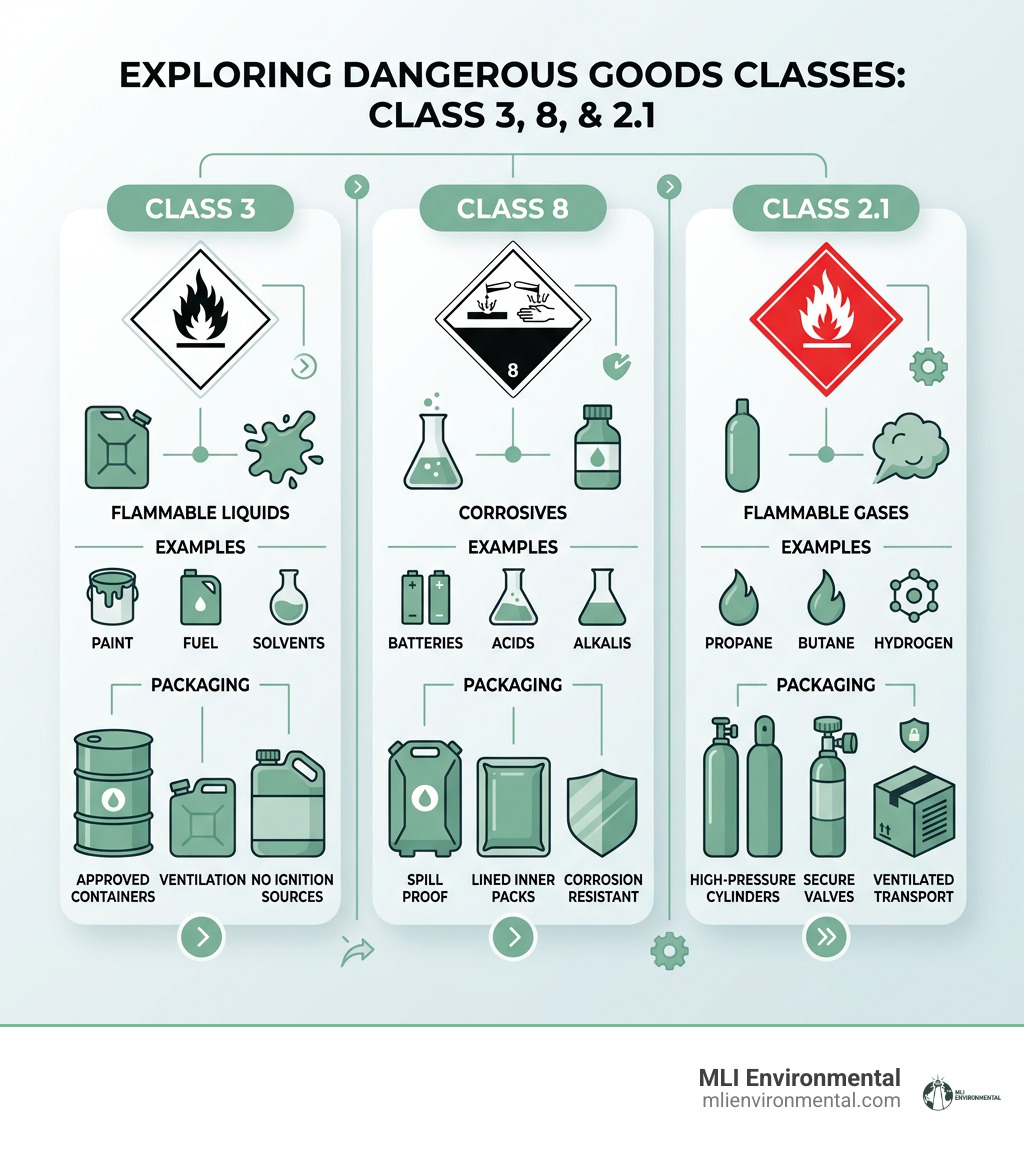
Not all “danger” is created equal. A kit designed for a gallon of paint (Class 3 Flammable Liquid) might be completely unsuitable for a bottle of nitric acid (Class 8 Corrosive). The first step in choosing your hazardous materials shipping kit is to identify your material’s “Basic Description” using the Hazardous Materials Table.
This table shows your UN number, Proper Shipping Name, Hazard Class, and Packing Group (PG I, II, or III). The Packing Group tells you the degree of danger:
- PG I: Great danger
- PG II: Medium danger
- PG III: Minor danger
Your hazardous materials shipping kit must have a UN rating that meets or exceeds the Packing Group of your material. For example, a box rated “X” can hold PG I, II, and III. A box rated “Y” can only hold PG II and III.
Learning How to ship hazardous materials involves matching these ratings perfectly. If you are shipping lithium batteries from Burlington or Springfield, you’ll need Class 9 kits designed to prevent short circuits and thermal runaway.
Selecting a Hazardous Materials Shipping Kit for Infectious Substances
Shipping biological samples—whether it’s a routine blood test or a suspected pathogen—requires a very specific hazardous materials shipping kit. These are divided into two categories:
- Category A (UN2814 or UN2900): These are infectious substances capable of causing permanent disability or life-threatening disease in humans or animals (e.g., Ebola or Anthrax). These require the highest level of triple packaging and specialized UN-certified boxes.
- Category B (UN3373): These are biological substances not in a form generally capable of causing serious disease (e.g., most diagnostic specimens). While less dangerous, they still require a specific hazardous materials shipping kit that includes a leak-proof primary receptacle, a leak-proof secondary packaging, and a rigid outer package.
Customizing Your Hazardous Materials Shipping Kit for Unique Loads
Sometimes, the “off-the-shelf” solution doesn’t cut it. If you are shipping a 500-lb piece of machinery containing hazardous residues or a unique chemical sample from a lab in Coastal Maine, you might need a custom hazardous materials shipping kit.
Customization can include:
- High-strength steel drums for volatile chemicals.
- Impact-resistant plastics (HDPE) for corrosive acids that would eat through metal.
- Heavy-duty fiberboard with custom inserts to keep fragile glass containers perfectly still.
- Plywood 4DV boxes for heavy or irregularly shaped items.
Regulatory Compliance and Rigorous Testing Standards
Before a hazardous materials shipping kit can be sold, it has to survive what we like to call the “Hazmat Olympics.” These tests are designed to simulate the absolute worst-case scenarios of global logistics.
- Drop Test: The package is dropped from various heights (up to 1.8 meters for PG I) onto a solid concrete floor. It must not leak.
- Stack Test: The kit is subjected to a load equivalent to the weight of identical packages stacked to a height of 3 meters for 24 hours. This ensures the bottom box doesn’t crush under pressure in a warehouse.
- Leak-proofness and Pressure Test: For liquids, the inner containers are subjected to internal pressure to ensure they won’t pop open at high altitudes.
- Cobb Test: This measures how much water the fiberboard absorbs. You don’t want your hazardous materials shipping kit turning into mush if it gets left out in a New England rainstorm.
Documentation and Marking
Even the best hazardous materials shipping kit is useless if it isn’t labeled correctly. Every package must display:
- The Proper Shipping Name and UN ID Number.
- Hazard Class Labels: The diamond-shaped stickers that tell handlers what’s inside.
- Orientation Arrows: For liquids, so the “this side up” rule is followed.
- Shipper and Consignee Information.
Additionally, you must provide a Safety Data Sheet (SDS) and accurate shipping papers. In the modern era, many of these are handled via the EPA e-Manifest system, especially for hazardous waste.
Frequently Asked Questions about Hazmat Shipping Kits
What is limited quantity packaging, and when does it apply?
“Limited Quantity” is a bit of a “get out of jail (mostly) free” card for small amounts of certain hazardous materials. If you are shipping very small containers—like 100ml bottles of a flammable cleaner—you may be exempt from the full UN-certified hazardous materials shipping kit requirement.
However, you still need “competent packaging” that can survive a 1.2-meter drop, and you must mark the box with the Limited Quantity “black diamond” mark. Not all hazard classes qualify for this, so always check the Hazardous Materials Table first.
What are the penalties for non-compliant hazmat packaging?
The DOT doesn’t have a very good sense of humor when it comes to “undeclared” or poorly packaged hazmat. Civil penalties can exceed $90,000 per violation, per day. If a leak causes an injury or an environmental disaster, you could face millions in cleanup costs, legal prosecution, and permanent damage to your company’s reputation.
In New England, where environmental protection is a top priority from the North Woods of Maine to the shores of Rhode Island, the local authorities are particularly vigilant. A single leaking hazardous materials shipping kit can shut down a sorting facility and lead to massive liability.
How do I dispose of a used hazardous materials shipping kit?
You can’t just toss a used hazmat box in the trash, especially if it contained a spill. Hazardous material packaging often requires specific disposal procedures to comply with RCRA (Resource Conservation and Recovery Act) regulations.
If the packaging is contaminated, it must be treated as hazardous waste itself. This often involves decontamination or hiring a third-party waste-disposal specialist to ensure it is incinerated or landfilled in accordance with EPA standards.
Hazmat Shipping from MLI Environmental
Shipping dangerous goods is a high-stakes game where “good enough” is never enough. Whether you are shipping from a university in Boston, a manufacturing plant in Lewiston, or a medical facility in Concord, the right hazardous materials shipping kit is your first line of defense against accidents and legal trouble.
At MLI Environmental, we pride ourselves on being the trusted leader for hazardous materials and waste management across New England. Our certified professionals understand the nuances of both domestic and international logistics. From providing the right kit to managing the entire shipping process, we ensure your dangerous goods reach their destination quickly and safely.
Don’t leave your compliance to chance. Secure your shipment with professional hazmat DG shipping kits and let the experts handle the heavy lifting. Whether it’s a small sample or a bulk shipment, we have the specialized knowledge to keep your business moving forward—safely.