

EHS training courses teach employees and managers how to follow environmental, health, and safety practices—especially in workplaces that handle hazardous materials or waste.
Effective EHS training helps businesses:
- Protect employees from preventable injuries and illnesses.
- Maintain compliance with OSHA, EPA, DOT, and related rules.
- Improve operations by reducing disruption and confusion.
- Prevent incidents that can lead to fines, cleanup costs, or downtime.
Think of EHS training as a practical safeguard for your people, workplace, and environment. It gives teams the knowledge to identify risks, respond to emergencies, and work safely every day.
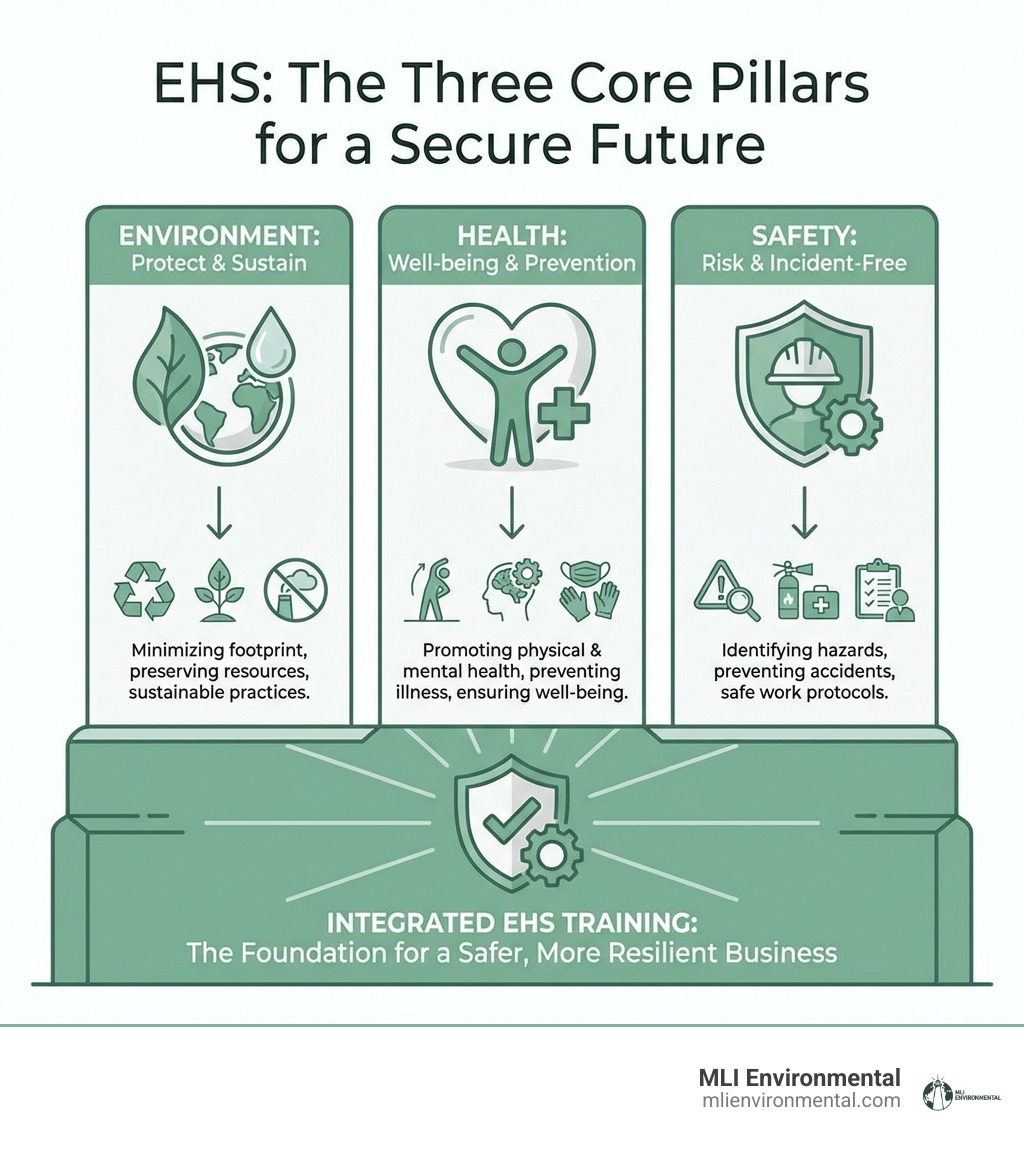
The Core Pillars of EHS: Why Training is a Critical Investment
Investing in comprehensive EHS training courses protects your most valuable assets: your people and your business. Strong environmental, health, and safety training does more than prevent accidents—it supports compliance, productivity, morale, and long-term risk reduction.
The Tangible Benefits of a Comprehensive EHS Program
A well-structured EHS program reduces workplace incidents and the costs that follow. When employees feel safe and understand expectations, productivity improves and safety becomes part of daily operations. Consistent safety conversations, including “toolbox talks,” help keep hazards, procedures, and accountability top of mind.
The High Cost of Inadequate Training
Neglecting EHS training courses can lead to preventable injuries, fatalities, regulatory fines, legal liability, shutdowns, higher insurance premiums, and reputational damage. For companies that handle hazardous materials, the risks also include contamination and expensive cleanup. Support from experienced EHS consulting specialists and routine compliance audits can help identify gaps before they become serious problems.
Building a Proactive Safety Culture
A strong EHS program moves beyond compliance and makes safety a core value. That requires:
- Employee empowerment: Giving workers the knowledge to identify hazards and speak up.
- Leadership commitment: Setting clear expectations and allocating resources.
- Continuous improvement: Reviewing incidents, safety data, and regulatory changes.
- A culture-first mindset: Making safety part of everyday decisions, not just inspections.
For hazardous materials operations, this proactive culture is essential to protecting people, property, and the environment.
Navigating the Landscape of EHS Training Courses
The world of EHS training is broad because every industry has different hazards, job roles, and regulatory requirements. Understanding the main types of EHS training courses helps businesses build a safer, more compliant program.
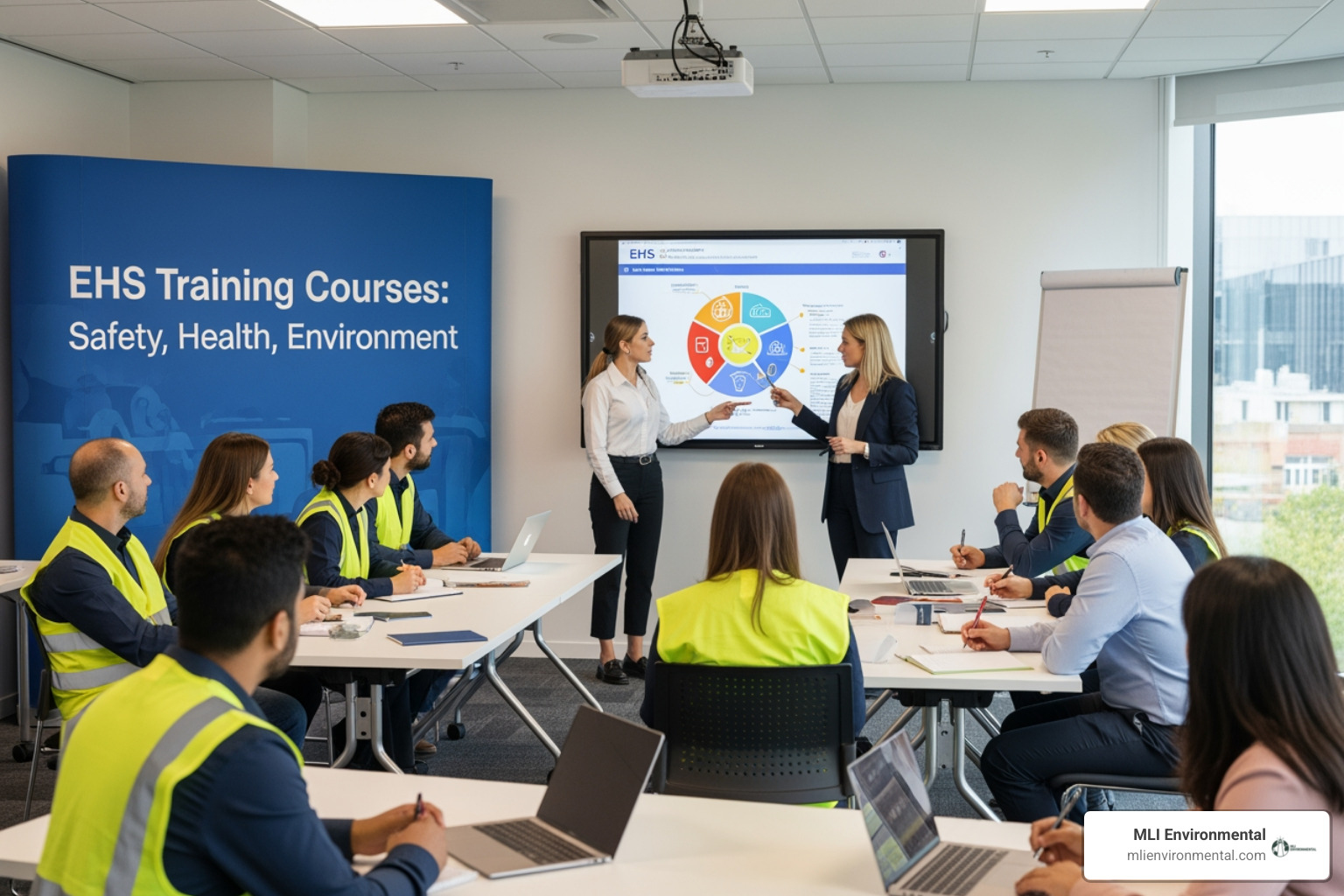
Foundational and General Industry Courses
These courses cover essential safety knowledge for many workplaces and are often tied to OSHA requirements.
- OSHA 10-Hour & 30-Hour: OSHA 10 introduces basic workplace safety for entry-level workers, while OSHA 30 gives supervisors and safety personnel deeper training.
- Hazard Communication (HazCom/GHS): Teaches employees how to read chemical labels and Safety Data Sheets (SDSs).
- Personal Protective Equipment (PPE): Covers proper selection, use, care, and maintenance of protective gear.
- First Aid & CPR: Provides life-saving skills for emergencies.
- Fire Safety: Covers prevention, extinguisher use, and evacuation procedures.
- Electrical Safety: Addresses electrical hazards, lockout/tagout procedures, and safe work practices.
Specialized EHS Training Courses for Hazardous Materials
For businesses like MLI Environmental that manage hazardous materials, specialized EHS training courses are both legally required and critical for safety.
- HAZWOPER: Applies to workers exposed to hazardous substances and includes 40-Hour, 24-Hour, and mandatory 8-Hour annual refresher training.
- RCRA Hazardous Waste Management: Covers waste classification, storage, and disposal; this guide explains the basics of compliant hazardous waste training.
- DOT Hazardous Materials Transportation: Required for employees involved in shipping hazardous materials and repeated every three years.
- IATA Dangerous Goods: Essential for air shipments, where DOT/IATA compliance support can help businesses meet complex shipping requirements.
These courses protect personnel, the environment, and the business while supporting compliance with hazardous materials regulations.
Industry-Specific Training Modules
Some industries need training tailored to their work environments and hazards.
- Construction Safety: Fall protection, scaffolding, excavation, and trenching hazards.
- Healthcare Safety: Bloodborne pathogens, infection control, and privacy requirements.
- Manufacturing: Lockout/tagout, machine guarding, and equipment safety.
- Oil & Gas Safety: Confined space entry, volatile chemicals, and emergency response.
Tailored training makes safety more relevant and effective across sectors, including hazardous waste management.
Ensuring Compliance and Regulatory Adherence
Effective EHS training courses are one of the primary ways businesses achieve and maintain compliance with environmental, health, and safety regulations.
Key Regulatory Bodies and Standards
In the United States, several federal and state agencies set and enforce EHS standards:
- OSHA: Sets and enforces workplace safety standards. Businesses can review requirements on the OSHA website.
- EPA: Regulates hazardous waste, air and water quality, spills, and other environmental risks.
- DOT: Oversees the safe transportation of hazardous materials by road, rail, air, and sea.
- RCRA: Provides the EPA framework for managing hazardous and non-hazardous solid waste.
- State agencies: States such as Maine, New Hampshire, Massachusetts, Vermont, and Rhode Island may enforce requirements that are stricter than federal rules.
Meeting and Documenting Training Requirements
Providing training is only part of compliance. Organizations also need clear documentation.
- Training records: Track course content, dates, attendees, and completion status for inspections.
- Certification management: Monitor expiration dates for HAZWOPER, DOT, and other credentials.
- Refresher schedules: Plan annual refreshers for training such as HAZWOPER and RCRA, plus triennial DOT refreshers.
- Proactive audits: Pair written safety plans with regular compliance audits to close training and documentation gaps before an incident or inspection.
Designing Effective and Engaging EHS Training
The goal of EHS training courses is not just to share information. Effective training changes behavior, improves hazard awareness, and helps employees apply safety procedures correctly.
The Power of Customization and On-Site Training
Generic courses often miss site-specific risks. The most effective training is customized to the workplace, job roles, and hazards employees actually face.
- Site-specific content: Training should begin with a hazard analysis of the facility.
- Role-based instruction: A forklift operator, chemical handler, and supervisor may each need different details.
- Hands-on practice: On-site training supports demonstrations for PPE use, spill response, and other practical skills.
- Less downtime: Onsite training services reduce travel time and help employees apply lessons immediately.
Leveraging Online Platforms for Flexible EHS Training Courses
Online training gives businesses flexibility, especially when employees work across multiple locations.
- Self-paced learning: Employees can move through material at a practical speed.
- Remote accessibility: Teams in locations such as Portland, Maine, or Boston, Massachusetts can receive consistent instruction.
- Centralized tracking: A Learning Management System (LMS) can deliver courses, track completion, and generate reports.
- Better engagement: Short modules, quizzes, and interactive elements can improve retention.
Future Trends in EHS Training
EHS training continues to evolve with technology and a stronger focus on human factors.
- VR and AR: Simulations can prepare workers for high-risk scenarios without real-world exposure.
- ESG integration: Training increasingly supports sustainability, ethics, and broader environmental goals.
- Psychological safety: Programs are beginning to address stress, mental health, and speaking up about concerns.
- Data-driven insights: Analytics can reveal knowledge gaps and help improve future training.
Frequently Asked Questions about EHS Training
These common questions can help businesses understand how EHS training courses fit into a compliant safety program.
How often is EHS training required?
Training frequency depends on the regulation, job duties, and workplace hazards. In general:
- Initial training is required before employees begin work involving specific hazards.
- Refresher courses are required for many programs, including annual HAZWOPER and RCRA refreshers and DOT hazardous materials training every three years.
- As-needed training is required when job duties change, new hazards appear, or procedures are updated.
Is online OSHA training legitimate?
Yes, online OSHA training can be legitimate when it comes from an OSHA-authorized provider. Participants who complete an authorized Outreach Training Program course receive an official Department of Labor card. Online training works well for knowledge transfer, but some topics still require hands-on, site-specific practice.
What is the difference between OSHA 10 and OSHA 30 training?
OSHA 10 and OSHA 30 are both part of OSHA’s Outreach Training Program, but they serve different audiences.
- OSHA 10-Hour: Designed for entry-level workers who need basic awareness of common workplace hazards.
- OSHA 30-Hour: Designed for supervisors, safety managers, and others with safety responsibilities.
- Industry focus: Both are available for Construction and General Industry.
Build a Safer Workplace With Expert EHS Training Courses
Comprehensive EHS training courses help businesses protect employees, maintain compliance, and build a stronger safety culture.
For organizations handling hazardous materials, the stakes are even higher. MLI Environmental brings experience in hazardous materials logistics, waste disposal, and dangerous goods shipping to make training compliant, practical, and relevant.
Explore MLI Environmental’s comprehensive training services to build a safer, better-prepared workforce.