
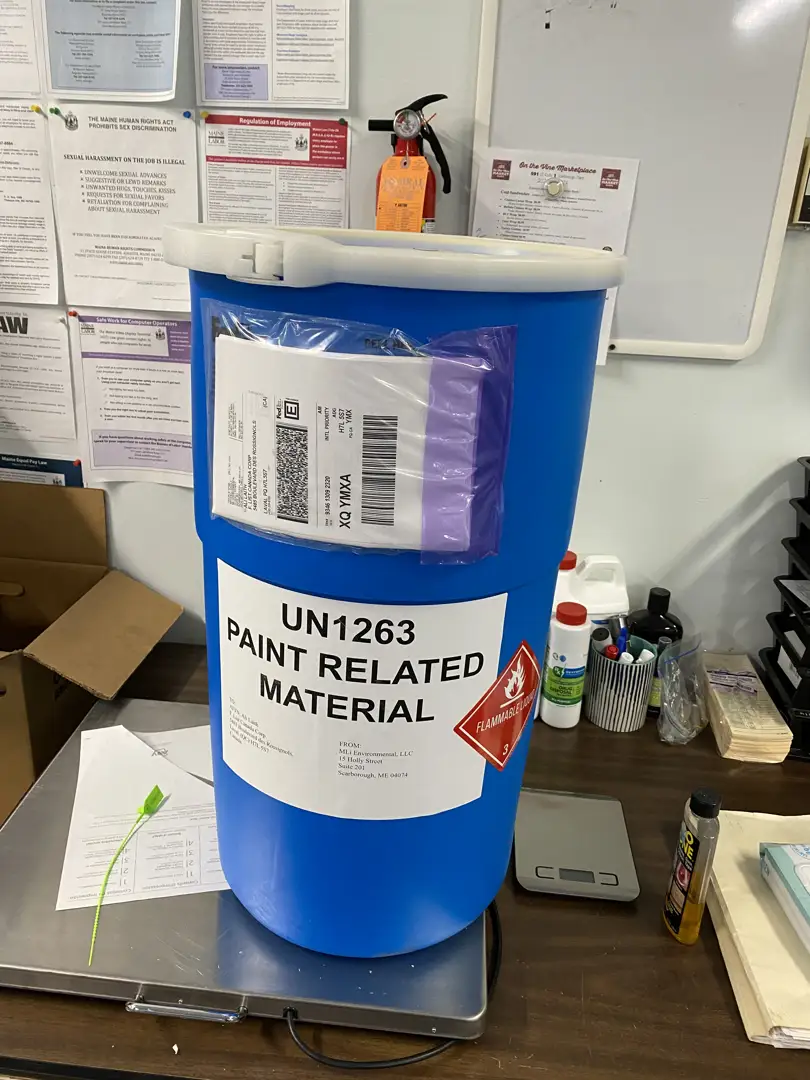
Dangerous goods documentation requirements are the set of legally mandated records, forms, and markings that must accompany any shipment of hazardous materials — by air, ground, or sea.
Here’s a quick summary of what’s required:
| Requirement | What It Means |
|---|---|
| Shipping Paper | Must list UN number, proper shipping name, hazard class, packing group, quantity, and emergency contact |
| Consignor’s Certification | A signed statement that the shipment is properly classified, packaged, and labeled |
| Package Markings | UN number, proper shipping name, and shipper/consignee address on the outside of the package |
| Hazard Labels | Diamond-shaped labels identifying the hazard class, affixed to each package |
| Emergency Response Info | A 24/7 phone number where someone knowledgeable about the material can be reached |
| Mode-Specific Docs | Air requires a Shipper’s Declaration; sea requires an IMDG-compliant document; ground follows 49 CFR |
If you ship hazardous materials — even occasionally — getting this paperwork wrong is costly. Under U.S. DOT rules (49 CFR), a single documentation error can trigger civil penalties, shipment refusal, or worse: a dangerous incident with no paper trail for first responders.
The rules aren’t simple. They vary by transport mode, material type, and destination. And they apply to you, the shipper, not just the carrier.
This guide breaks down everything you need to know — from mandatory fields on a shipping paper to training requirements and record retention.
Understanding the Core Dangerous Goods Documentation Requirements
At the heart of every hazardous materials shipment is the shipping paper. Think of it as the “passport” for your chemicals. Without it, your package isn’t going anywhere—at least not legally. According to 49 CFR Section 171.8, a hazardous material is any substance the Secretary of Transportation has determined poses an unreasonable risk to health, safety, and property when transported in commerce.
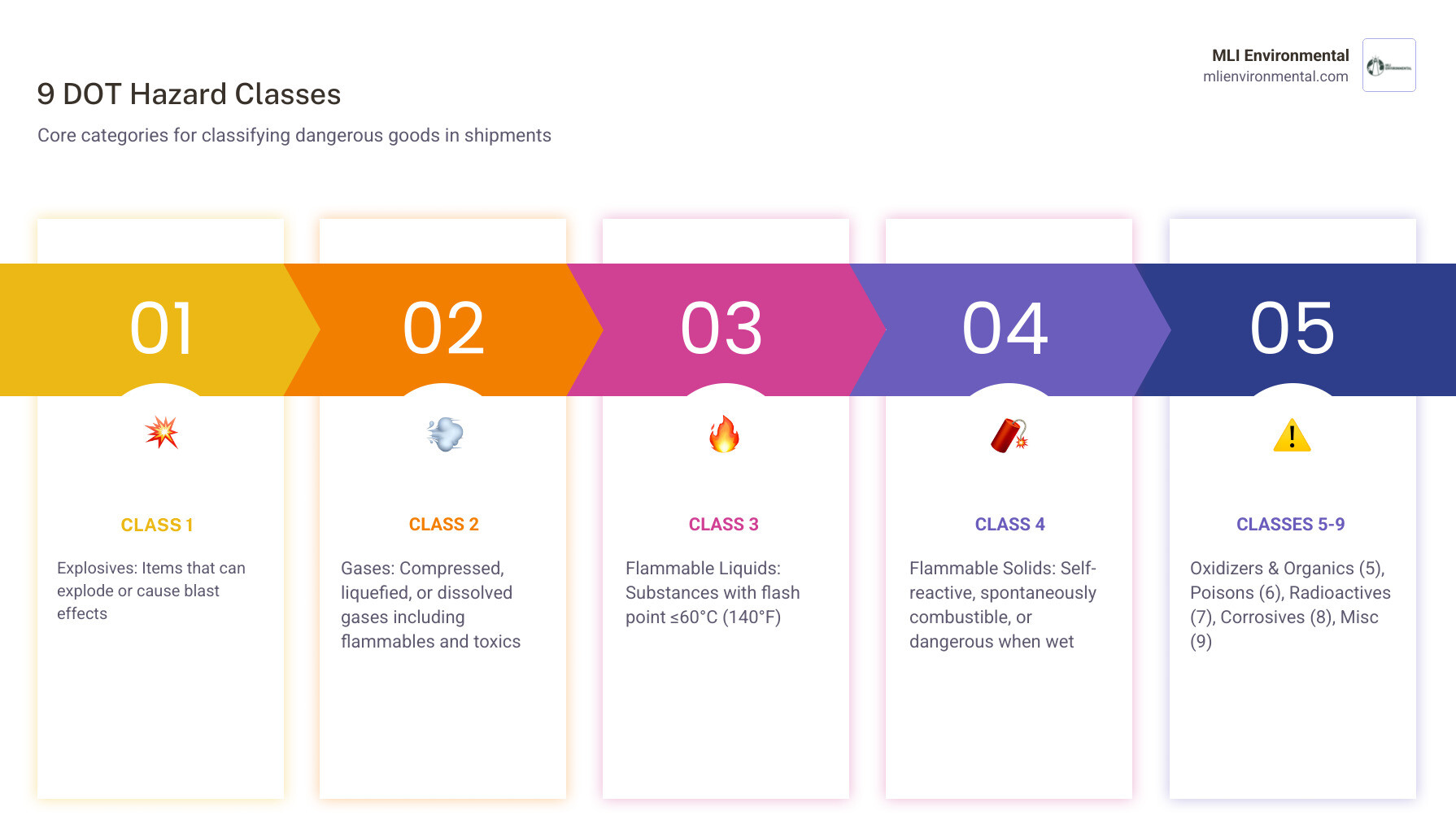
The process of meeting dangerous goods documentation requirements starts long before the truck arrives at your loading dock in Portland or Manchester. It begins with classification. You must think critically about your product: Does it fall into one of the nine DOT hazard classes? Your best friend in this stage is the Safety Data Sheet (SDS), specifically Section 14, which outlines transport information.
As the “consignor” (the person or company offering the goods for transport), the legal burden rests squarely on your shoulders. You are responsible for:
- Correctly identifying and classifying the material.
- Determining if the material is authorized for the intended mode of transport.
- Ensuring the shipping paper is completed accurately.
- Providing the carrier with the necessary emergency response information.
If you are shipping from a facility in Worcester or Springfield, you must ensure that the shipping paper is within the driver’s reach while they are wearing a seat belt and clearly visible to anyone entering the vehicle. This isn’t just a bureaucratic whim; it’s a safety measure so first responders can quickly identify what they’re dealing with in the event of an accident.
Mandatory Information and the ISHP Sequence
When it comes to the actual text on your shipping document, the DOT is very particular about the order of operations. You can’t just list the information in whatever way looks prettiest on your letterhead. You must follow the “ISHP” sequence.
According to 49 CFR Section 172.203, the basic description must appear in this exact order:
- I – Identification Number: The UN or NA number (e.g., UN1090).
- S – Proper Shipping Name: The name identified in the Hazardous Materials Table (e.g., Acetone).
- H – Hazard Class: The numerical hazard class or division (e.g., 3).
- P – Packing Group: Identified in Roman numerals (I, II, or III), indicating the degree of danger.
Beyond this “Big Four,” your documentation must also include:
- Total Quantity: The net or gross mass/volume of the hazardous materials.
- Number and Type of Packages: For example, “1 fiberboard box” or “2 steel drums.”
- Emergency Response Telephone Number: A 24/7 monitored line where a person (not an automated menu) can provide technical information about the material.
- Consignor’s Certification: A signed statement certifying that the materials are properly classified, described, packaged, marked, and labeled.
Failure to follow this sequence is one of the most common reasons for shipment delays. If you’re shipping out of Bangor or Burlington, double-check that your “I” doesn’t come after your “S.”
Mode-Specific Regulations: Air, Ground, and Sea
While the basic principles of dangerous goods documentation requirements remain consistent, the specific forms and rules change depending on how your goods are traveling. A shipment moving by truck through the White Mountains of New Hampshire has different paperwork than one flying out of Logan Airport in Boston.
| Feature | Ground (DOT 49 CFR) | Air (IATA/ICAO) | Sea (IMDG) |
|---|---|---|---|
| Primary Document | Bill of Lading / Shipping Paper | Shipper’s Declaration for DG | Dangerous Goods Declaration |
| Format | Flexible, but must be legible | Very strict (Red hatchings) | Strict IMO format |
| Emergency Phone | Required | Required | Required |
| Retention | 1-3 Years | 2 Years | 2 Years |
For ground transport, the rules are governed by the 49 CFR. However, if your shipment is heading overseas or across the country via express air, you must look toward the ICAO Technical Instructions and the IATA Dangerous Goods Regulations (DGR). Marine shipments follow the International Maritime Dangerous Goods (IMDG) Code.
Essential Dangerous Goods Documentation Requirements for Air Transport
Air transport is the most “high-stakes” environment for hazardous materials. Because of the unique pressures and risks of flight, the documentation is significantly more rigid. Shippers must use a specific form called the Shipper’s Declaration for Dangerous Goods (DGD).
Key air-specific requirements include:
- The “Red Hatchings”: The DGD form must have distinct red hatchings along the left and right margins.
- Aircraft Limitations: You must specify if the shipment is allowed on “Passenger and Cargo Aircraft” or is “Cargo Aircraft Only.”
- Net Quantity Limits: Air transport has strict limits on how much material can be in a single package. For example, certain infectious substances are limited to 50ml in a passenger plane but allow up to 4L in a cargo-only aircraft.
- IATA Certification: Only individuals who have received specific IATA training are authorized to sign the Shipper’s Declaration for air transport.
If you’re using a Guidance for Shipper’s Declaration to help fill out your forms, ensure you are using black text on a white background and that the form is printed in color to maintain those mandatory red edges.
Marking, Labeling, and Packaging Standards
Documentation doesn’t just live on paper; it lives on the package itself. In dangerous goods documentation requirements, there is a technical distinction between “marking” and “labeling.”
Marking refers to the text required on the package, such as the Proper Shipping Name, the UN Number, and the names and addresses of the shipper and consignee. For hazardous waste, this must also include the specific federal warning regarding improper disposal.
Labeling refers to the diamond-shaped, color-coded hazard placards (at least 4″ x 4″) that visually communicate the primary and subsidiary risks.
To ensure your goods arrive safely in Lewiston or Concord, you must use 49 CFR Part 173 packaging specifications. This often means using “UN-Specification” or “Performance Oriented Packaging.” These containers have been tested to withstand drops, pressure changes, and stacking. If the package requires orientation arrows (to keep liquids upright), they must be displayed on two opposite vertical sides.
If you are using an overpack (an enclosure used by a single shipper to contain one or more packages), you must mark the word “OVERPACK” on the outside and replicate all the markings and labels found on the inner packages, unless they are clearly visible through the overpack material.
Managing Dangerous Goods Documentation Requirements for Special Materials
Certain materials require “extra” attention on the paperwork. These aren’t your run-of-the-mill flammables; they have specific quirks that regulators watch closely.
- Lithium Batteries: These require specific handling marks and, in many cases, a declaration that they are not forbidden for transport on passenger aircraft.
- Infectious Substances: Category A substances (those capable of causing permanent disability or life-threatening disease) require the technical name of the pathogen in parentheses after the shipping name. Category A quantity limits are very strict for air travel.
- Radioactive Materials: Documentation must include the name of each radionuclide, the activity level, and the Transport Index (TI).
- Dry Ice: When used as a refrigerant, the net weight of the dry ice must be listed on the shipping paper and marked on the package.
- Residues: If you are shipping an “empty” container that still contains hazardous residue, the shipping paper must indicate “Residue – Last Contained” before or after the description.
Compliance, Training, and Record Retention
You can have the most perfect shipping paper in the world, but if the person who signed it isn’t properly trained, you are still in violation. The DOT defines a hazmat employee as anyone who performs a function that affects the safe transportation of hazardous materials—this includes the person filling out the paperwork, the person loading the truck, and even the person choosing the packaging.
Training is not a “one and done” event. Under 49 CFR, recurrent training is required every three years. If you are shipping by air, the ICAO/IATA rules are even stricter, requiring recurrent competency-based training every two years.
Once the shipment is gone, the paper trail remains. You can’t just toss those documents in the bin.
- Shippers: Must retain a copy of the shipping paper (or an electronic image) for two years after the material is accepted by the initial carrier.
- Hazardous Waste Shippers: Must keep manifests for three years.
- Motor Carriers: According to motor carrier shipping paper retention rules, carriers must keep shipping papers for one year.
In our modern age, electronic recordkeeping is perfectly acceptable, provided the records can be produced quickly during a safety audit or upon request by an inspector. Just make sure your digital filing system is as organized as your physical one!
Frequently Asked Questions about Dangerous Goods
What is the correct order for the dangerous goods description?
The correct order is the “ISHP” sequence: Identification Number (UN/NA), Proper Shipping Name, Hazard Class/Division, and Packing Group (if applicable). This order is mandatory and cannot be rearranged.
How long must I keep copies of shipping documents?
Generally, shippers must keep copies for two years. However, if you are shipping hazardous waste, the retention period increases to three years. Motor carriers are typically required to keep them for one year.
Who is responsible for signing the consignor’s certification?
The person who offers the hazardous material for transport is responsible. This should be a trained “hazmat employee” who has direct knowledge that the shipment has been prepared in full compliance with the regulations. It cannot be signed by someone who hasn’t been trained in the specific requirements for that mode of transport.
Get Expert Help With Dangerous Goods Documentation Requirements
Navigating dangerous goods documentation requirements can feel like trying to solve a puzzle where the pieces keep changing shape. Whether you are shipping from Portland, Maine, or Springfield, Massachusetts, the stakes are high. One missing UN number or an expired training certificate can lead to massive fines and safety risks.
At MLI Environmental, we specialize in taking the guesswork out of hazardous materials logistics. As a trusted leader in the industry, we provide the regulatory expertise and certified professional support needed to ensure your shipments are compliant, safe, and efficient. From international dangerous goods shipping to local waste disposal in Northern Maine or New Hampshire, we are here to help you master the paperwork so you can focus on your business.
For more information on how we can streamline your shipping process, visit our dangerous goods shipping services page. Don’t leave your compliance to chance—work with the experts who know the rules inside and out.