
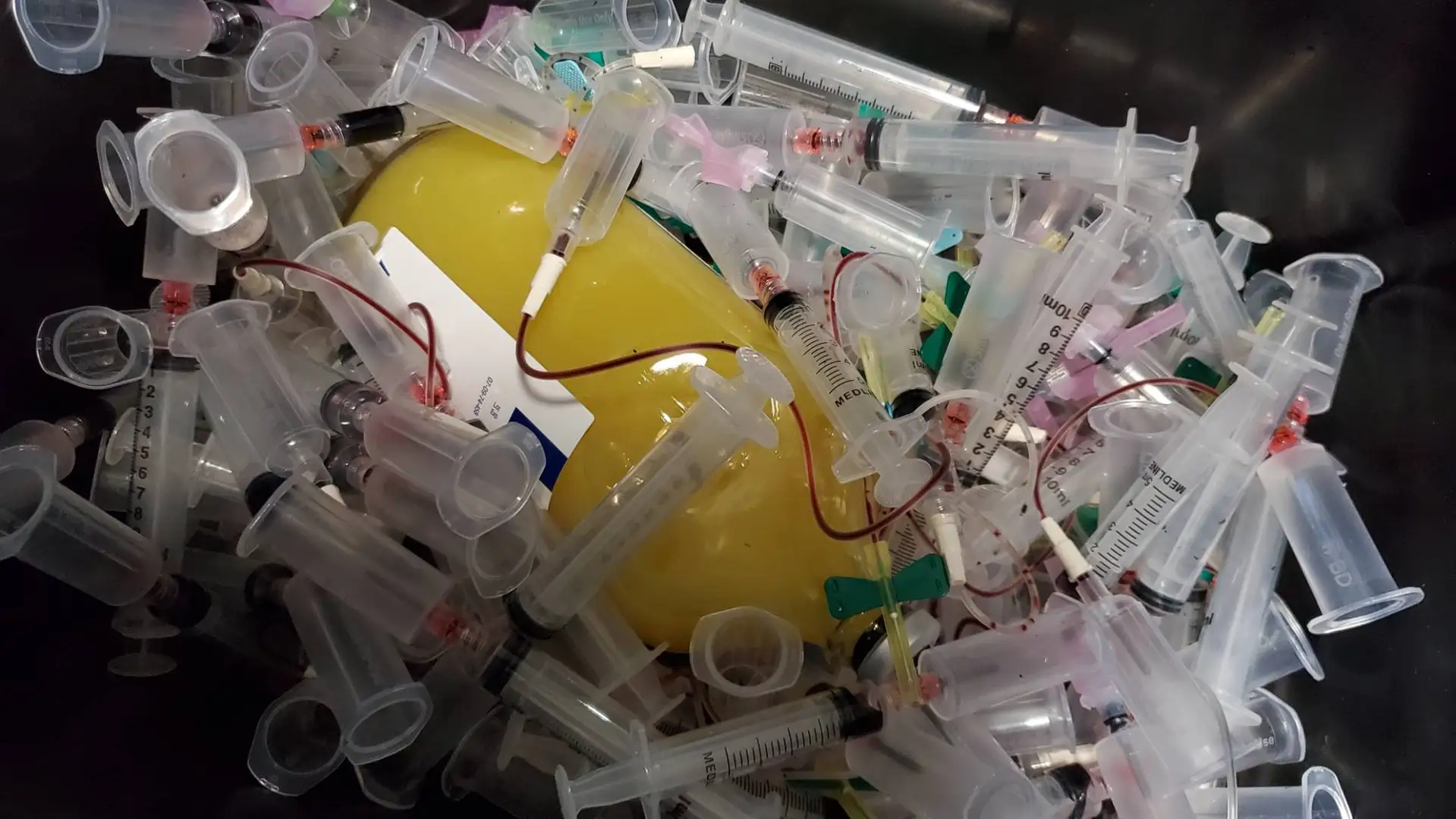
Medical waste disposal is the regulated process of safely handling, treating, and destroying contaminated materials generated by healthcare facilities—from hospitals and clinics to dental offices and veterinary practices. Here’s what you need to know:
Quick Overview:
- Volume: Healthcare facilities worldwide generate approximately 2 million tons of medical waste daily
- Hazard Level: 25% of healthcare waste is classified as hazardous, requiring specialized handling
- Primary Categories: Infectious waste, sharps, pathological waste, pharmaceutical waste, chemical waste
- Key Regulators: State environmental agencies, OSHA, DOT, and CDC
- Common Methods: Autoclaving, incineration, chemical disinfection, microwave treatment
- Legal Framework: Cradle-to-grave liability under RCRA regulations
The stakes are high. Improper disposal can expose healthcare workers to bloodborne pathogens, contaminate groundwater supplies, and result in significant legal penalties. Unlike regular trash, medical waste contains materials that may harbor infectious diseases—from used bandages and surgical gloves to scalpels and expired medications.
Since the 1988 Medical Waste Tracking Act sparked nationwide attention (after medical waste washed up on East Coast beaches), regulations have shifted primarily to state control. Each state now enforces its own medical waste management rules, creating a complex compliance landscape for healthcare providers.
The good news? With proper segregation, treatment, and certified disposal services, healthcare facilities can protect their staff, patients, and communities while staying fully compliant with federal and state regulations.
Understanding Medical Waste and Its Primary Categories
To manage medical waste disposal effectively, one must first understand what qualifies as “regulated.” Generally, medical waste is any waste generated during the diagnosis, treatment, or immunization of humans or animals. However, not all medical waste is created equal. About 75% to 85% is “general” waste (like office paper and food scraps), while the remaining 25% is hazardous and requires specialized care.
Infectious and Biohazardous Waste
This category includes any material suspected to contain pathogens (bacteria, viruses, parasites, or fungi) in high enough concentrations to cause disease. Common examples are cultures from lab work or waste from patients with infectious diseases. Proper Biohazardous Waste Disposal ensures these pathogens are neutralized before they can reach the public.
Pathological Waste
Pathological waste consists of human or animal tissues, organs, body parts, and body fluids removed during surgery or autopsy. Because of its nature, this waste is often handled with a high degree of sensitivity and usually requires incineration to ensure complete destruction. Understanding Biomedical Waste Disposal protocols is essential for facilities handling these materials.
Sharps
Sharps are items that can cause cuts or puncture wounds, such as needles, scalpels, lancets, and broken glass. These are arguably the most dangerous items in the waste stream because they can easily transmit bloodborne pathogens like HIV or Hepatitis B and C if they puncture a worker’s skin.
Pharmaceutical and Chemical Waste
This includes expired, unused, or contaminated drugs and vaccines. Some pharmaceuticals are particularly “bad news” for the environment. For instance, according to World Health Organization Dioxin Facts, improper incineration of certain chemical wastes can release dioxins—highly toxic compounds that can cause reproductive and developmental problems.
Other Specialized Categories
- Genotoxic Waste: Highly hazardous waste that may have mutagenic, teratogenic, or carcinogenic properties, such as cytotoxic drugs used in cancer treatment.
- Radioactive Waste: Materials contaminated by radionuclides, often from radiotherapy or nuclear medicine.
- General Waste: Non-hazardous waste that doesn’t require special handling but should still be minimized to reduce costs.
The Regulatory Landscape of Medical Waste Disposal
Navigating the rules for Medical Waste can feel like trying to solve a puzzle where the pieces keep changing shape. In the United States, there is no single federal agency that oversees all aspects of medical waste. Instead, a tag-team of agencies manages different parts of the process.
Federal vs. State Oversight
The Environmental Protection Agency (EPA) initially had a heavy hand in medical waste through the 1988 Medical Waste Tracking Act. However, after that act expired in 1991, the EPA shifted its focus. Today, the EPA primarily regulates medical waste through RCRA Regulations (Resource Conservation and Recovery Act), which focuses on the “cradle-to-grave” management of hazardous waste.
Most of the day-to-day regulation of medical waste disposal now happens at the state level. State departments of environmental protection and health departments set the specific definitions of what must be treated and how.
Key Federal Players
- OSHA: The Occupational Safety and Health Administration focuses on the people handling the waste. Their Bloodborne Pathogens Standard is the “gold standard” for worker safety, mandating specific OSHA Compliance Guidelines for labeling, packaging, and training.
- DOT: The Department of Transportation regulates how medical waste is moved on public roads. If it’s in a truck, it has to follow DOT rules for “Infectious Substances.”
- CDC: While not a regulatory agency with enforcement power, the CDC provides the infection control guidelines that most state rules are based on.
Cradle-to-Grave Liability
One of the most important legal concepts for healthcare administrators to understand is “cradle-to-grave” liability. This means that a facility is legally responsible for its waste from the moment it is generated until the moment it is completely destroyed. If a third-party hauler dumps your waste illegally, your facility—not just the hauler—could be held liable. This is why avoiding Hospital Hazardous Waste Violations is as much about choosing the right partner as it is about internal training.
State-Specific Compliance Requirements
In the New England area—covering Maine, New Hampshire, Massachusetts, Vermont, and Rhode Island—regulations can vary significantly from one border to the next. For example, Maine has specific rules regarding the licensing of facilities that treat medical waste, while Massachusetts has detailed requirements for “Large Quantity Generators.”
Because these rules are so localized, the Importance of Regular Biohazardous Waste Disposal in Medical Facilities cannot be overstated. Regular pickups prevent the accumulation of waste that might exceed state-mandated storage time limits (often 30 days for unrefrigerated waste).
While some facilities look toward the North Carolina Medical Waste Rules or the California Medical Waste Management Act as templates for rigorous compliance, New England facilities must ensure they are meeting their specific state DEP (Department of Environmental Protection) standards.
Best Practices for Safe Segregation and Sharps Handling
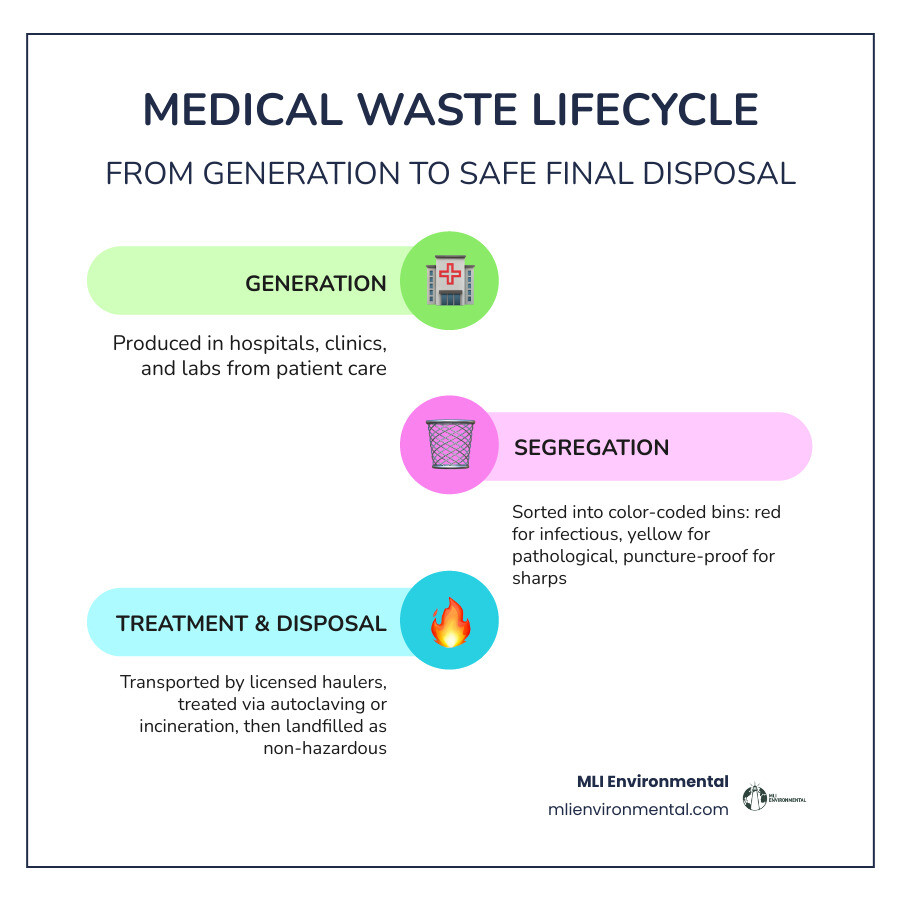
Proper medical waste disposal starts at the point of generation—the moment a nurse pulls a needle out of a patient’s arm or a surgeon removes a bandage. If you mix regular trash with infectious waste, you’ve just turned a whole bag of cheap trash into expensive medical waste.
The Power of Color-Coding
Effective segregation uses a color-coded system that everyone in the facility understands:
- Red Bags: For infectious waste like blood-soaked gauze and PPE.
- Yellow Containers: Often used for pathological waste.
- Puncture-Resistant Sharps Containers: Usually red or clear, these are for needles and blades.
- Blue or Black Bins: Typically reserved for pharmaceutical or chemical waste.
Sharps Safety: A Critical Priority
According to CDC Sharps Safety for Healthcare Settings, the most effective way to prevent injuries is to use “no-touch” mechanisms and engineered safety devices. Research shows that using high-quality, puncture-resistant containers can lead to an 87% reduction in needlestick injuries.
Sharps handling rules to live by:
- Never recap needles: This is when most injuries occur.
- Dispose immediately: The sharps container should be within arm’s reach of the procedure.
- The 3/4 Rule: Never fill a sharps container more than three-quarters full. Overfilled containers are a leading cause of “poke-through” injuries.
- Use resources: Organizations like Safe Needle Disposal Resources provide excellent training materials for staff.
Common Treatment and Medical Waste Disposal Methods
Once the waste leaves your facility, it doesn’t just go to a landfill. It must be rendered non-infectious through specific treatment technologies.
Autoclaving (Steam Sterilization)
Autoclaving is the most common method for treating medical waste. It works like a giant pressure cooker, using saturated steam at temperatures of at least 121°C (250°F) for a set period. This process kills bacteria, viruses, and spores, making the waste safe for a standard landfill. It is generally cheaper and more environmentally friendly than incineration because it doesn’t produce toxic emissions.
Incineration
Incineration is the “Dantesque inferno” of the waste world, with temperatures ranging from 1,800°F to 2,000°F. While EPA Medical Waste Information notes that incineration has declined in popularity due to emission concerns, it remains the only acceptable method for certain wastes, such as pathological parts and trace chemotherapy waste.
Other Methods
- Microwave Treatment: Uses high-frequency waves to heat the water in the waste, effectively “cooking” the pathogens to death.
- Chemical Disinfection: Often used for liquid waste, where chemicals like chlorine are added to kill microorganisms.
- Electropyrolysis: A high-tech method that uses thermal energy in an oxygen-free environment to break down waste.
| Method | Best For | Pros | Cons |
|---|---|---|---|
| Autoclaving | Infectious waste, sharps | Cost-effective, no emissions | Doesn’t work for chemicals/tissues |
| Incineration | Pathological, chemo waste | Complete destruction | High cost, air quality concerns |
| Microwaving | Standard infectious waste | Energy efficient | High initial equipment cost |
Sustainable Innovations in Medical Waste Disposal
The future of medical waste disposal is looking a lot greener. New technologies are emerging that prioritize the environment:
- Plasma Gasification: This uses a plasma torch to turn waste into “syngas” and a glass-like slag. The syngas can be used to produce clean energy.
- AI-Driven Segregation: Robotics equipped with AI can sort waste more accurately than humans, reducing the amount of “red bag” waste that is actually just general trash.
- Blockchain Tracking: This creates a tamper-proof digital record of the waste’s journey, ensuring perfect “cradle-to-grave” compliance.
- Enzyme-Based Treatment: Using specific bio-enzymes to break down organic waste into harmless byproducts.
Implementing these Sustainable Solutions for Healthcare can significantly reduce a facility’s carbon footprint while keeping costs in check.
Managing Pharmaceutical and Hazardous Medical Waste Disposal
Pharmaceutical waste is a particularly tricky category. If you’re a retail pharmacy or a hospital, you’re dealing with everything from expired aspirin to controlled substances.
DEA and EPA Requirements
The Pharmaceutical Waste Disposal process must satisfy both the EPA (for environmental safety) and the DEA (to prevent drug diversion). When dealing with opioids or other stimulants, following DEA Controlled Substance Disposal Guidelines is mandatory. This often requires “witnessed destruction” or the use of specific chemical sequestration systems that render the drugs non-retrievable.
Hazardous Waste Designations
Some pharmaceuticals are classified as “P-listed” waste (acutely hazardous) or “U-listed” (toxic). Managing Hazardous Pharmaceutical Waste requires a deep understanding of these RCRA lists. For more details, facilities should consult DEA Drug Disposal Information to ensure they aren’t accidentally committing a federal violation.
Chemotherapy Waste
Trace chemotherapy waste (empty vials, IV bags, and tubing) is usually managed as “yellow bag” waste and must be incinerated. However, “bulk” chemotherapy waste (full vials or large spills) is treated as hazardous chemical waste. Knowing how to handle Hazardous Drugs in Retail Pharmacy is essential for any pharmacist or technician to avoid toxic exposure.
Frequently Asked Questions about Medical Waste
Who regulates medical waste in the United States?
Medical waste is primarily regulated by state environmental and health departments. However, federal agencies like OSHA (worker safety), DOT (transportation), and the EPA (hazardous waste and emissions) all play significant roles. Facilities must also adhere to CDC Infection Control Guidelines to ensure best practices in patient environments.
How can healthcare facilities minimize waste generation?
- Conduct Waste Audits: See what is actually going into your red bags. You might find a lot of paper and plastic that belongs in the recycling.
- Improve Training: Ensure staff knows exactly what qualifies as medical waste.
- Switch to Reusables: Use reusable sharps containers and gowns where appropriate to reduce the volume of plastic sent to treatment.
- Standardize Segregation: Use clear signage and foot-pedal bins to make the right choice the easy choice.
What are the risks of improper medical waste management?
The risks are three-fold:
- Health Risks: Exposure to infectious diseases like HIV, Hepatitis, or Tuberculosis for workers and the public.
- Environmental Risks: Contamination of soil and water through “leachate” in landfills or toxic air emissions from substandard incinerators.
- Legal and Financial Risks: Heavy fines from OSHA or the EPA, and the potential for “headline risk” that can damage a facility’s reputation in the community.
MLI Environmental: Your Trusted Medical Waste Disposal Partner
Medical waste disposal doesn’t have to be a headache, but it does require a commitment to safety, compliance, and professional partnership. From the initial segregation in a Portland, Maine clinic to the final treatment of hazardous materials in a Boston hospital, every step in the chain matters.
MLI Environmental is a trusted leader in the hazardous materials and waste management industry. They specialize in international and domestic dangerous goods shipping, hazardous materials logistics, and waste disposal, known for their certified professionals and quick, safe service. Whether your facility is in Manchester, New Hampshire, or Burlington, Vermont, working with experts ensures that your “cradle-to-grave” liability is handled with the highest standards of care.
By staying informed about the latest regulations and technologies, healthcare providers can focus on what they do best—caring for patients—while leaving the complexities of waste management to the professionals. For more information on how to streamline your facility’s processes, check out our comprehensive guide on Everything You Need to Know About Medical Waste Disposal Services.